I want to start this week with the major news that Aidan Connolly will step down as executive director of New York’s Irish Arts Center. For 20 years, Connolly has been a leading voice in New York’s cultural life, making bold programming choices and bringing the community a beautiful, state-of-the-art building that has become an important home for Irish arts in the city. Under his leadership, the IAC team has transformed the organization into a world class institution with a truly cosmopolitan outlook. Great work, Aidan! Congratulations, and best wishes on your next chapter.
Congratulations, too, to the great Tommy Sands, who is being given the Lifetime Achievement Award at this year’s RTÉ Radio One Folk Awards in recognition of his career as a folk singer, songwriter, broadcaster and social activist. This is a well deserved honor for someone whose great good works over the years have touched so many in such positive ways.
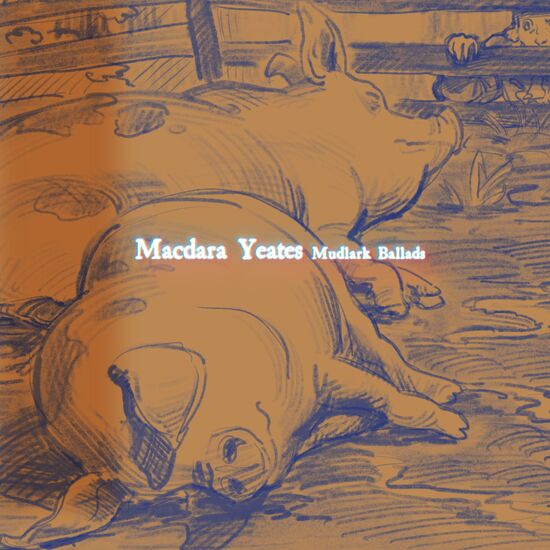
Speaking of the RTÉ Radio One Folk Awards, I’ve also learned that singer Macdara Yeates has been nominated for a pair of awards, in the “Best Traditional Folk Track” and “Best Folk Singer” categories. This is a fortuitous circumstance as I have “Mudlark Ballads,” his most recent album, in the media yoke this week and it gives me the opportunity to attest to the merit behind these nominations. “Mudlark Ballads” is the kind of singing album I really dig: well researched, well executed, and full of personality. If you love your traditional song served with a ton of style, this is an album for you. It’s a great one.

In my review of Yeates’s excellent 2024 album “Traditional Singing from Dublin,” (which was itself nominated for a pair of RTÉ Radio One Folk Awards and included in “MOJO’s” Top 10 Folk Albums of the Year list) I gave a bit about his background, focusing on his role in establishing of the Cobblestone Bar’s singing club called “The Night Before Larry Got Stretched.” This endeavor reinvented the traditional singing scene in Dublin and led to a number of well known groups and artists, including Landless, Lankum, Ye Vagabonds, OXN, Lisa O’Neill, John Francis Flynn and others. Yeates was also a member of the group Skippers Alley that yielded a number of outstanding musicians, including, but not limited to, fiddler Cathal Caulfield, about whose most recent album I wrote last week. Simply put, Yeates seems to have around many of the important musical developments that have shaped the Dublin scene over the last decade plus and it’s something you can hear in this album’s depth.
What I love about Yeates’s singing is his phrasing. He sings with a storyteller’s sensibility and within this he’s able to convey a very individualized sense of humor, joy and pathos. We got to know this about his approach on “Traditional Singing from Dublin,” and indeed, the minimally accompanied approach of his first album is how he opens his second. “The Lucan Dairy,” is delivered without instrumental backing and it gives him space to demonstrate the creativity in how he delivers a song, crowding the phrasing in places, letting it breathe in others and leaning on words and sounds (like “ass” and “hee-haw!”) to humorous effect. There’s a puckishness here that very much apparent throughout the album.
However, this opening track does foreshadow the kind of album he’s given us. The very first thing we hear after hitting “play” are not his words but the ambient sound of a bustling marketplace. This is an important difference between the two albums and if we listen forward to this one for a moment, we find Yeates has expanded his textural palette using instrumental arrangements that variously incorporate guitars, harmoniums, guitars, handclaps, kazoos, and more, to give each song a more defined identity. Although the arrangements are largely sparse in scope, they connect the album as a whole to contemporary practice, as in them I hear trace musical elements that echo releases from other artists.
Another thing I love about Yeates is his taste in song selection. His sources include interesting but less common material sourced from singers such as Frank Harte, Johnny Moynihan, Liam Weldon, Al O’Donnell and Fergus Russell and they’re all great. There’s also one that comes from Dublin schoolchildren and a pair taken from ballad sheets (of lesser known Dublin songs) held by the National Library of Ireland. Each one of these gives a conspicuous nod to his research curiosity, which is something you love to see in a singer.
From one of these ballad sheets comes “De May Bush,” a really interesting and unusual 18th century song that describes a violent clash between rival Dublin street gangs in preparation for their May Day celebrations. The delivery is energetic and aggressive and is set in a minimalist instrumental arrangement. It’s probably the album’s best track and might be considered the year’s best if it wins the RTÉ award for which it’s been nominated.
However, what I find enhances my attraction to this track is how Yeates has used the preceding track, “Stands a Lady,” to create a fascinating narrative contrast. An idyllic song of love and apparent loss, “Stands” opens, as the album did, with the sound of marketplace commerce. Yeates sings the song unaccompanied until a harmonium adds a drone about halfway through. When the song ends, the marketplace sounds continue but the harmonium cuts out, at which point Yeates goes into an ominous recitation that ends with the lines “Let no watch boy leave his pitch / When the May maids start their racket / Lest you lure your foe-men o’er the bridge / And the lanes run red with claret.” With these words, “De May Bush” begins, its lyrics full of anticipation and violence expressed beautifully in how Yeates sings them, completing a brilliantly archaic Dublin story arc. It’s great stuff.
A similar kind of arc begins with “Mrs Smyly,” a song making fun of the “soupers,” or the 19th century proselytisers who offered soup in exchange for religious conversion. The track again opens with the sounds of marketplace, then the song about Mrs. Smyly that wishes her back luck. After this, another recitation, this time about an execution in which the condemned asks for his friends to slit his throat after the hanging, thinking it might revive him. The track that immediately follows, “De Kilmainham Minit,” describes that scene in “Newgate Cant,” a dense 18th century prison slang. It’s a brilliant song with a dramatic and wryly humorous arrangement that that makes the spoken transition between the two tracks really shine.
.“Mudlark Ballads” is a truly great collection of songs and I’ve really only scratched the surface of what I could say about this album. Yeates is a fabulous singer with great personality, but he’s also a very smart one who can gets “inside” the songs and use them to say things beyond the content of their lyrics. There’s a lot going on with this one, anyway, and it’s one you absolutely want to have if Irish song is at all your thing. It’s one of the best albums of its sort to come along in a long time and an absolute top recommendation. To learn more and to purchase, visit https://macdarayeates.bandcamp.com/.