This week, Irish Arts Center is hosting two “ITMA: Drawing from the Well” concerts. These concerts will preview “Across the States: An Irish Cultural Atlas of America,” a project documenting 250 years of Irish music, song and dance in the U.S. and will feature exceptional and culturally significant artists from Ireland and New York, including Brian Conway, Brendan Dolan, Rose Conway Flanagan, Maeve Flanagan, Kieran Flanagan, Ivan Goff, Katie Linnane, Edwina Guckian, Matt Molloy, Doireann Ní Ghlacáin, Caitlín Nic Gabhann, Hannah O’Brien, Liam O’Connor, Ciarán Ó Maonaigh, Seán Potts, Sophie Ryan, and Diarmuid Ó Meachair. The “Cultural Atlas” is a remarkable project in scope and will draw new refreshed attention to this country’s importance in the story of Irish music. The Atlas will launch on itma.ie later this year.
Next up is "The Return of the Irish Concert,” which will take place on Sunday, Oct. 18, at 3 p.m. at St. Malachy’s Church on 1429 N. 11th St in Philadelphia. This year, St. Malachi’s is celebrating its 175th anniversary and this concert is being held to honor the late, great Mick Moloney, who for decades was the concert’s organizer and in support of the church’s ongoing charity mission. The event will bring together a great crew of musicians, including Brendan Callaghan, Donie Carroll, Kevin Crawford, Rob Curto, Darin Kelly, Rosaleen McGill, Gerry Timlin, Cillian Vallely, and myself. In addition, Paul Keating will be there to serve as the afternoon’s emcee. I hope to see you there to help support this great cause! For more information, contact Donie Carroll at ducksymusic@gmail.com.

In other news, Emmet Henry died in Ireland on Oct. 7. Henry bartended in New York's East Village for many years and was a beloved figure in the traditional music scene here, in particular for his stalwart support of the legendary Monday night Irish session at Mona’s, which was hosted by Patrick Ourceau and Eamon O'Leary. It ran late into the morning, attracted the best in New York City, and was a first stop port of call for top tier musicians from the world over. Sessions never fully work without a bartender who is totally committed to the music, and Henry was exactly that, a man who went above and beyond for the tunes. That’s his shout of "last call!" at the beginning of track 17 on the brilliant "Live at Mona’s" album, https://patrickourceau.bandcamp.com/. May he rest in peace.
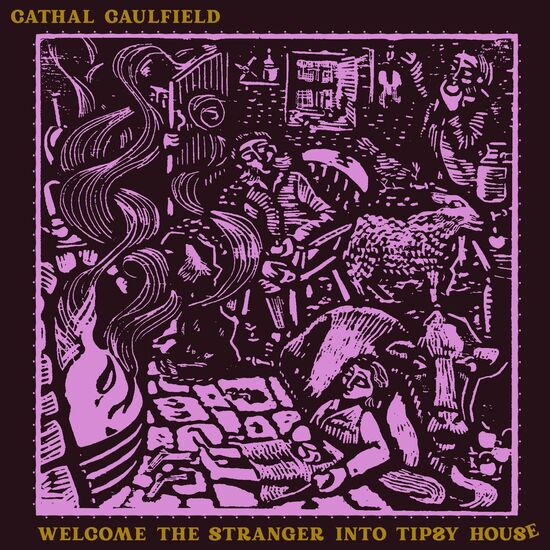
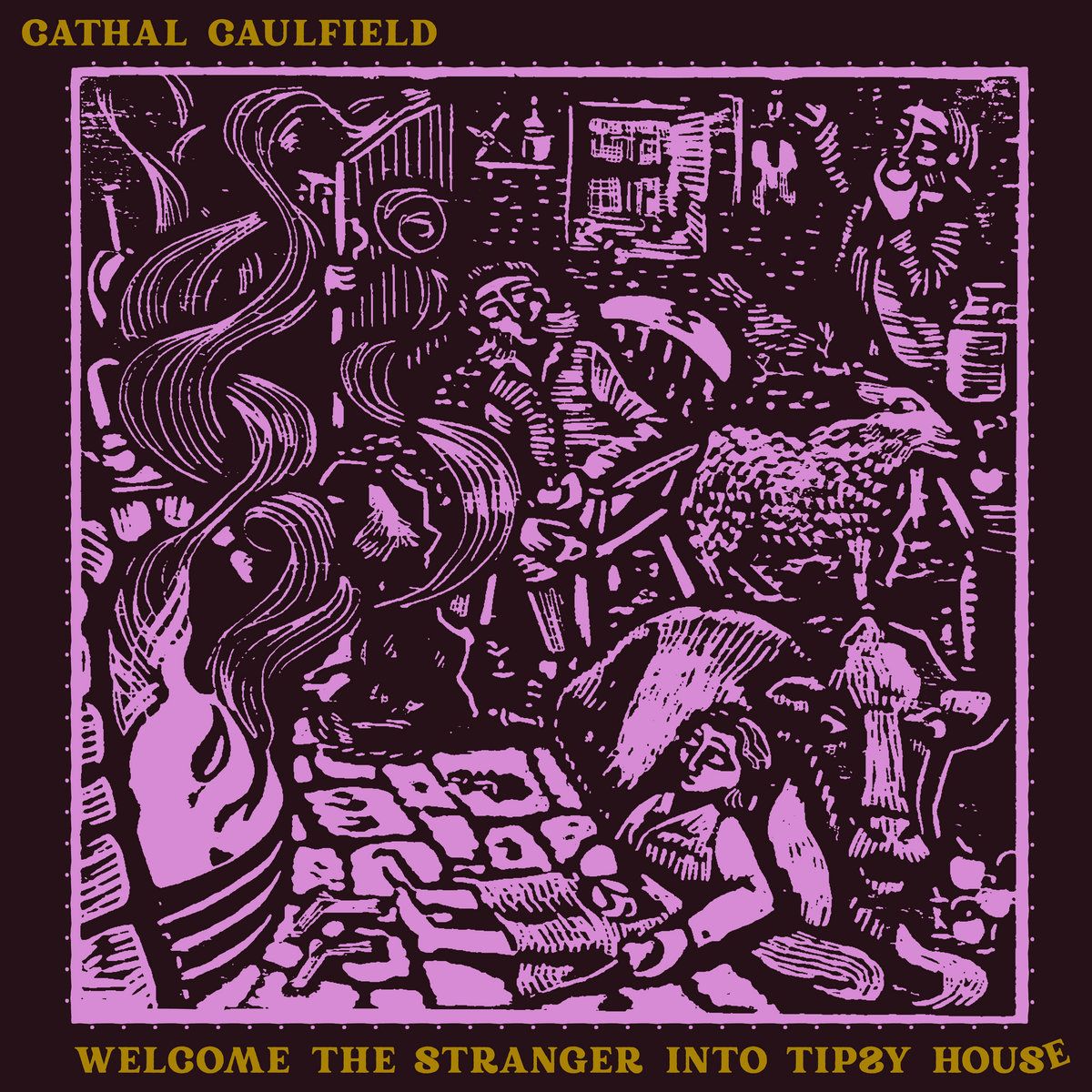
In the media yoke this week is Cathal Caulfield’s “Welcome the Stranger Into the Tipsy House,” his solo debut. It’s an outstanding album of mostly solo fiddle music that reflects an intriguing facet of Ireland’s contemporary traditional music scene. I think it’ll delight fans of serious fiddle playing and is an album readers of this column will want to check out.
Born in Dublin but living in Mayo, Caulfield learned from some of the music’s finest, including Aoife O’Connor, Liam O’Connor and Ciarán Mac Aoghdháin. However, he points to a longstanding Wednesday night session at the Cobblestone in Dublin, hosted by fiddle players Jesse Smith (who wrote one of the album’s forewords) and in particular, Mick O’Grady, as something that gave his music special inspiration. Another of Caulfield’s formative experiences was as a member of Skipper’s Alley (https://skippersalley.bandcamp.com/), the well-known Dublin-based based group that included a bevy of very fine musicians — John Francis Flynn, Macdara Yeates, Patrick Cummins, Caoimhin Ó Fearghail and others.
Although Caulfield he has a strong background in the music, he’s distinguished himself in many ways here. The first thing I notice is the distinctive, somewhat “gritty” tone he’s able to pull from his fiddle. It animates the superb lift and gorgeous style in his playing, with the bite giving the album its compelling voice. In addition, the three songs on this album reveal a quite individual singing voice that, in both tone and phrasing, provides an interesting match to his fiddle playing. The music here feels very developed in a way that suggests this album was something of an inevitability.
It opens with "Welcome the Stranger / …," a set of unusual reels played with a captivating bounce and fascinating ornamentation. Caulfield's playing is great, and an auspicious start to the album. I also appreciate how this track is described in the liner notes, which are very well done, because they show how these tunes reflect his connection to a deeper tradition, and also how he combines tune variants and makes the music his own.
There are quite a few other instrumental standouts. “Batt Henry’s Favourite / …” barndances are fabulous. Taken from prewar 78rpm discs, he plays the tunes with a really wonderful rhythm that not only captures the spirit of the source material, but leaves him adequate space to be himself. “The Aughavas / …” and “Éist le Fuaim na hAbhann agus Gheobhaidh tú Breac / …” are another couple of lovely tracks. Caulfield’s very active playing is superb on both and he makes great hay with the fairly unusual tunes he’s working with. (I especially dig the vocal accompaniment on the latter.)
The album includes three guests, Sarah Flynn (concertina) Fionnán MacGabhann (uilleann pipes), and Catriona Kennedy (fiddle), each of whom appears on one track. Flynn’s appearance on “Napoleon's Retreat / …” is lovely. Caulfield reigns himself in to a degree to find very sweet common ground between with Flynn. The track with MacGabhann, “Murphy’s Monaghan Twig / …” has a classic “pipes and fiddle” sound that will really attract many listeners with Caulfield once again finding the right common ground with his counterpart. “Dwyer’s / …,” on which Kennedy features, pays tribute to Jesse Smith and Mick O’Grady’s influence and has a feeling different but no less enjoyable than the other two guest tracks. Just gorgeous stuff.
The vocal tracks are excellent as well. Caulfield has a light tenor voice that trails off with a slight warble on his held notes in a way that feels very sean-nós-y. Each song here his delivered with fiddle accompaniment, which gives them an interesting sound and of the three, my preferences are “The Winding River Roe” and “The Cailín Deas.” Both are very engaging tracks that convey the kind of “lonely” sensibility that singers in Connemara and Appalachia sometimes share.
“Welcome the Stranger Into the Tipsy House” is a brilliant album. It leans heavily into Caulfield’s personal style, as a solo album should, but his choice of repertory and his careful attention to how it “connects” him are both individual and memorable. But mostly, it just sounds like he’s having fun with his music and not worrying too much about being anything other than himself, which feels very genuine and is lovely to hear. The album releases this Friday, Oct. 16 and is highly worth checking out, especially if you love very traditional fiddle music with a unique, gorgeous style. Visit here for further details and to purchase.