The taking of the Census on Sunday, April 18, 1926, was a notable news story in the Irish Free State. The release exactly 100 years later of the information gathered made an even bigger splash back home this past spring.
The gap of 15 years since the previous census was made available, after the usual 10-year interval, and the fact that it was the first census administered by an independent Irish government added to the interest. Also, there was new information not asked for in the 1901 and 1911 Censuses – most notably a section called “employment” in addition to “personal occupation.”
This is of particular interest in urban communities as workers travelled to their job and their employers’ names are listed; and, unless already of sufficient prominence, their addresses are, too. These names and addresses reveal fascinating social history at the level of the family.
In 1926, one could opt to fill out the Irish-language version of the census form, which is what the political leader of the defeated forces in the recent Civil War did.
Éamon de Valera, 43, was living with his wife, Sinéad, 47, on Serpentine Avenue, Ballsbridge, Dublin. They first met when he enrolled in an Irish-language class she was teaching for the Gaelic League. Now 16 years married, they had seven children, who were ages 15 down to 3.

A 26-year-old servant is also listed as living with the family. Her first name was Úna and she was from Granard, Co. Longford, the town where, as history buffs know, his late nemesis Michael Collins had planned to marry in 1922.
In the “personal occupation” box, de Valera said “Teachta Dála” — TD, that is, or Dáil deputy. He wrote nothing in the “employment” box; that’s not surprising as he was a Sinn Féin abstentionist TD, and not showing up for work.
He objected to the Oath of Allegiance to the king, a provision in the 1921 Anglo-Irish Treaty backed by Collins that historians feel did most to trigger the Civil War. However, the month after the Census was taken, de Valera formed Fianna Fáil with his closest lieutenants, which soon became the country’s largest party, though not before it ditched abstentionism. Later, as head of government he abolished the Oath of Allegiance.
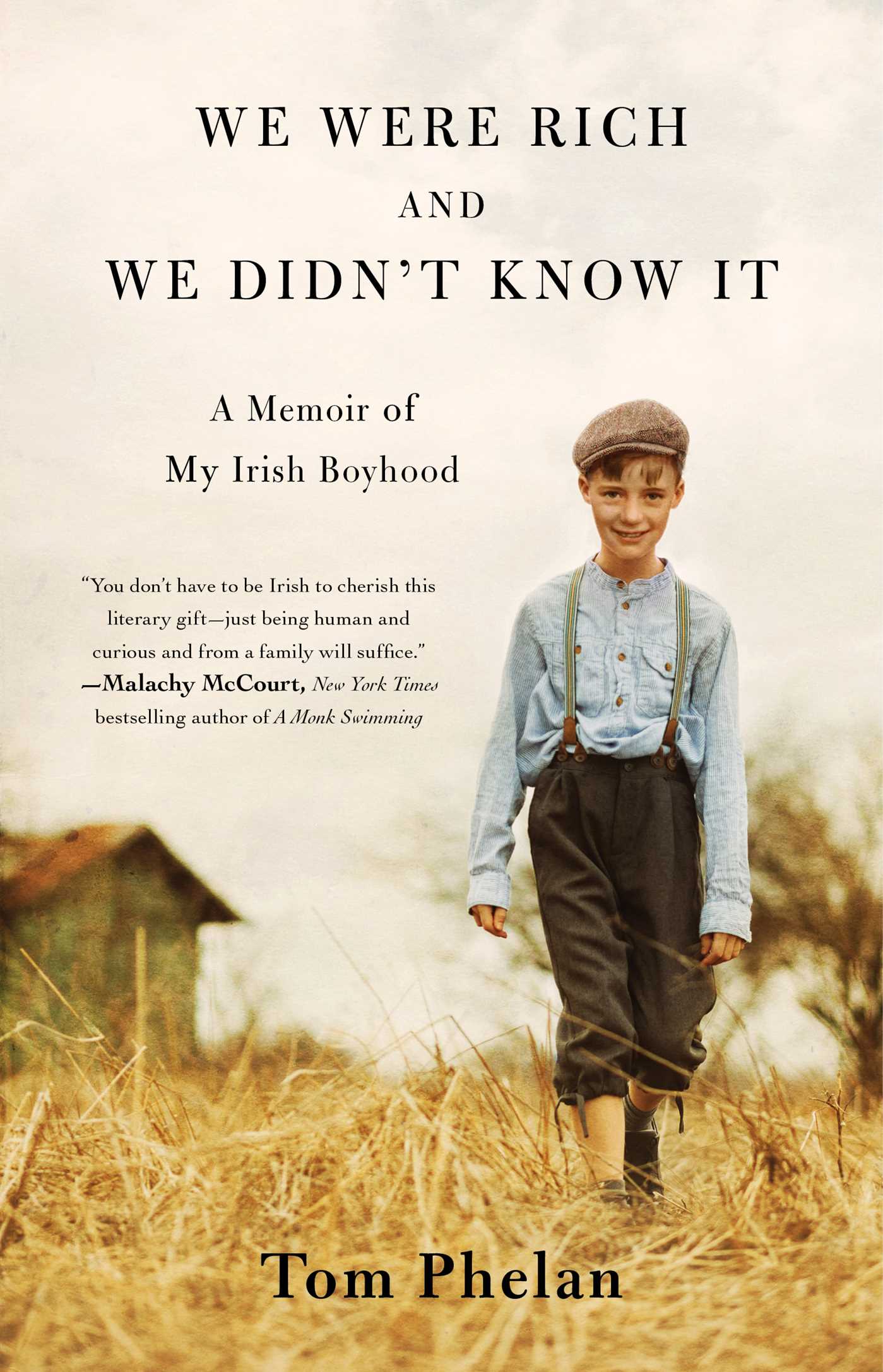
It’s known from her husband Tom’s memoir of his childhood, “We Were Rich and We Didn’t Know It,” that Patricia Mansfield Phelan’s father-in-law didn’t like de Valera very much. John J. Phelan, known as JohnJoe, particularly objected to his children being distracted by the prime minister’s arrival in Mountmellick for an election rally, always a colorful occasion, at the expense of vital work on the farm.
Mansfield Phelan was one of four prominent members of the Long Island-based Irish Family History Forum that the Echo asked in April about what they would look for in their first perusal of the newly released Census. She expressed a particular interest in JohnJoe’s father, her husband’s grandfather Michael.
“In the 1911 Irish census, Michael Phelan, 51, was living on the family farm in the townland of Strahard in County Laois with his wife and four young children,” she said. “However, he was not the head of household; his older brother, Cornelius, was. Michael’s occupation was mistakenly given as ‘farmer’s son’ instead of ‘farmer’s brother.’”
She wondered if in the 1926 census, “will Michael be head of household? Will there be any farm laborers living in the household?”
Mansfield Phelan later reported back, “In the 1926 census, Michael Phelan, 66, was now the head of household, while his older brother Cornelius, 82, was described as Michael’s brother. There were no farmhands in the household.
“Only two of the four children born to Michael and his wife, Annie, were living in the house.”
One of them was JohnJoe, age 20. His occupation was “assisting on father’s and uncle’s farms.”
Said Mansfield Phelan, “His employers were Michael and Cornelius, each of whom owned 30 statute acres.
“It was a huge surprise to discover that the 60-acre family farm had once been divided. None of John J.’s descendants, including his son Tom, my husband, had any knowledge of this.
“Why the farm was split is a matter for much conjecture,” said Mansfield Phelan, the Irish Family History Forum’s vice president for programs,
Family help
Working for relatives was very common in rural Ireland, as Maureen Winski-Maloney could see when she viewed the 1926 Census form for her mother’s family. She fully expected to find her mother, who was born in 1925, and she did. “She is listed with her parents and her older brother living in Carrickleck, Co. Meath,” she said.
“Also listed in that household was my grandmother’s brother John Thomas Kieran working as a farm laborer for my grandfather. I also found John Kieran with his wife and his 9-year-old brother-in-law living a few townlands away in Meath Hill, Co. Meath. So, John Thomas was counted twice in the census.
“I then looked up my great-grandparents and found them living where I expected in Dunheeda, Co. Meath and their youngest daughter Margaret was listed as being employed by my grandfather as a general domestic servant. So, in 1926 two of my grandmother’s siblings were working for her and her husband.”
Folks back home
For Frank McKenna, it was also a question of checking in to find updated information. “My paternal grandmother Mary Ellen Donaghy McKenna was born in July 1896 in Buncrana, Co. Donegal. She and her sister Madge immigrated to New York in 1924,” the IFHF’s executive vice-president said in April.
They left behind their parents – father Bernard Donaghy and mother Grace McLaughlin Donaghy and many brothers and sisters, and he assumed they’d all still be there two years later.
“Looking forward to finding out,” he said at the time.
He wasn’t disappointed, adding, “Bernard, however, reportedly aged by 20 years [at 67] instead of the 15 years [62] that Grace had in the intervening 15 years!
“It was confirmed that siblings Patrick, Bridget, Teresa and Annie stayed on the farm and that two other brothers had moved on to neighboring areas in Buncrana, Donegal.
“They all stayed Roman Catholic — no surprise there,” McKenna said.
Search goes on
Slightly under 93 percent of the 26-county area of independent Ireland gave their religion as Catholic.
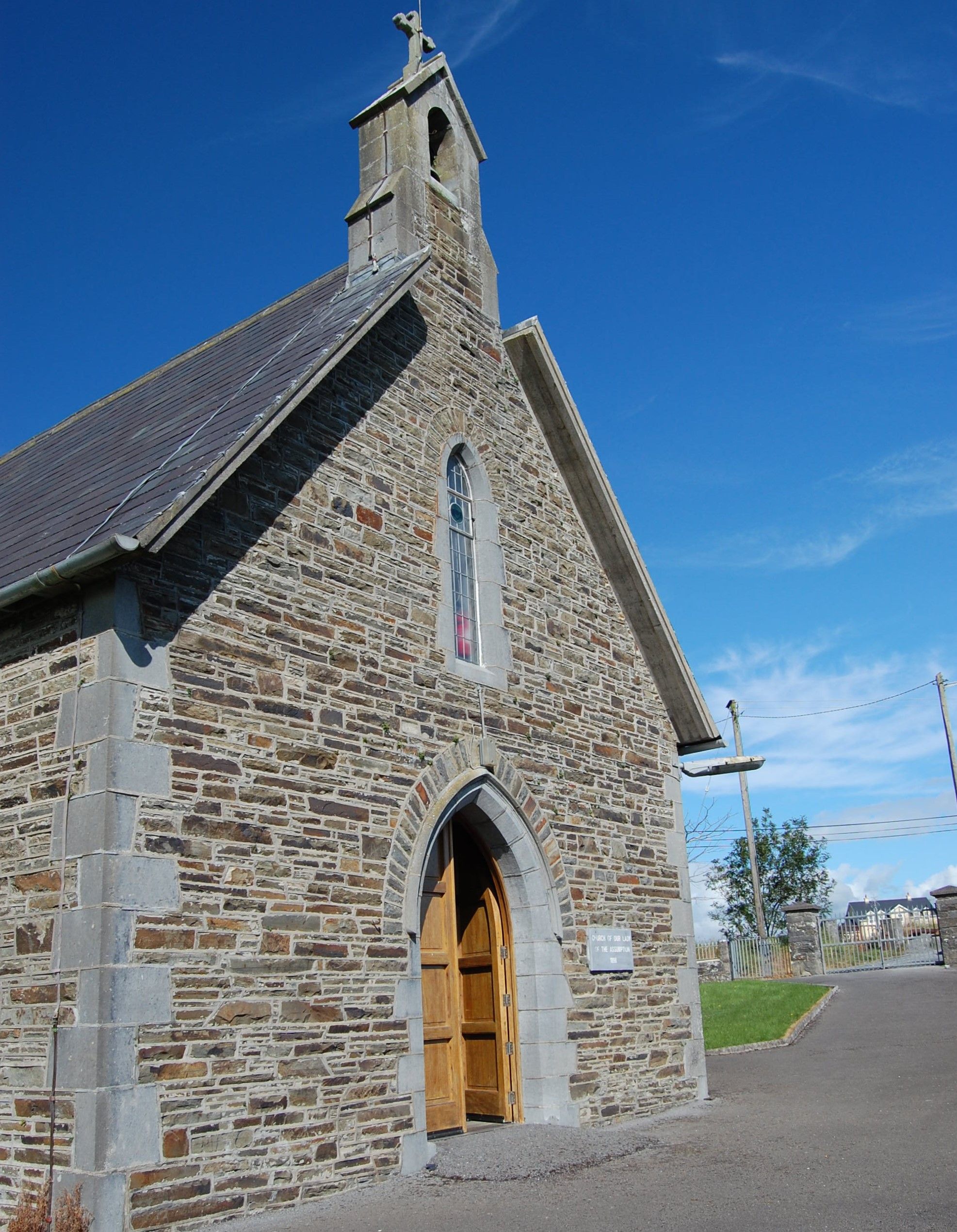
Among the things that Joanne Dillon knew were fairly certain about her maternal great-aunt Jane Lynch was that she attended the Assumption Church in Rathea. Born in 1880, she attended the Rathea National School where her father Michael Lynch was the first schoolmaster.
Back in April, Dillon said, “In the 1901 Census, I found Jane, also a teacher, visiting Kirby cousins, also teachers, in a nearby townland.
“In 1911, Jane was living with her brother Patrick, a hardware merchant in Killorglin, Co. Kerry; she was probably there to help out after the untimely death of his first wife and infant son.
“No occupation is listed for Jane in 1911 — just a line drawn next to her name. One year later, Patrick married for the second time. And Jane seems to have disappeared. Did she marry? Emigrate?” Dillon asked in April. “What happened to my great aunt Jane? I hope the 1926 Census provides me with a clue.”
So far, Dillon has been disappointed, after looking for her in Kilorglin, Rathea and several other locations in the county.
“Finally, I searched by Jane Lynch with no location listed, which produced a list several pages long of every recorded Jane Lynch living in the Irish Free State in 1926. My next step will be to identify those on this list who are about the same age as my great aunt was then – 46 – to see if any of them bear a resemblance to my Jane.”
“I turned to artificial intelligence, using an AI program called CoPilot. But still no results beyond what I already know,” said Dillon, chairperson of the Publicity Committee, IFHF. “The mystery of my great Aunt Jane continues!
“Where did she go?”