The Ring of Kerry, the 110-mile coastal route (N70) around the Iveragh Peninsula, is one of the most popular driving routes in all of Ireland. There’s evidence of the region's unique heritage and culture everywhere, from standing stones to beehive huts and stone circles, and the natural beauty of the region often comes with descriptors like “scene stealing” and “breathtaking.” Both seem inadequate when you see the area in person, especially If you venture off the route to tour the Skellig Ring (R565) like I did a few weeks ago.
After leaving The Skellig Six18 Distillery in Cahirsiveen, it was only a matter of minutes before the sign to the Valentia Island ferry in Renard Point appeared. As per the sign, I was headed “to the edge of Europe” or, more specifically, one of Ireland’s most westerly points. Mine was one of only three cars on the ferry, so I had a front row seat for our approach to Knightstown, the main village built around the harbor of the tiny island (7 miles long, 2 miles wide, population 600). Knightstown is one of the few “town-planned” villages of Ireland, laid out in the early 1830s by Scottish architect Alexander Nimmo on commission by the Knight of Kerry.
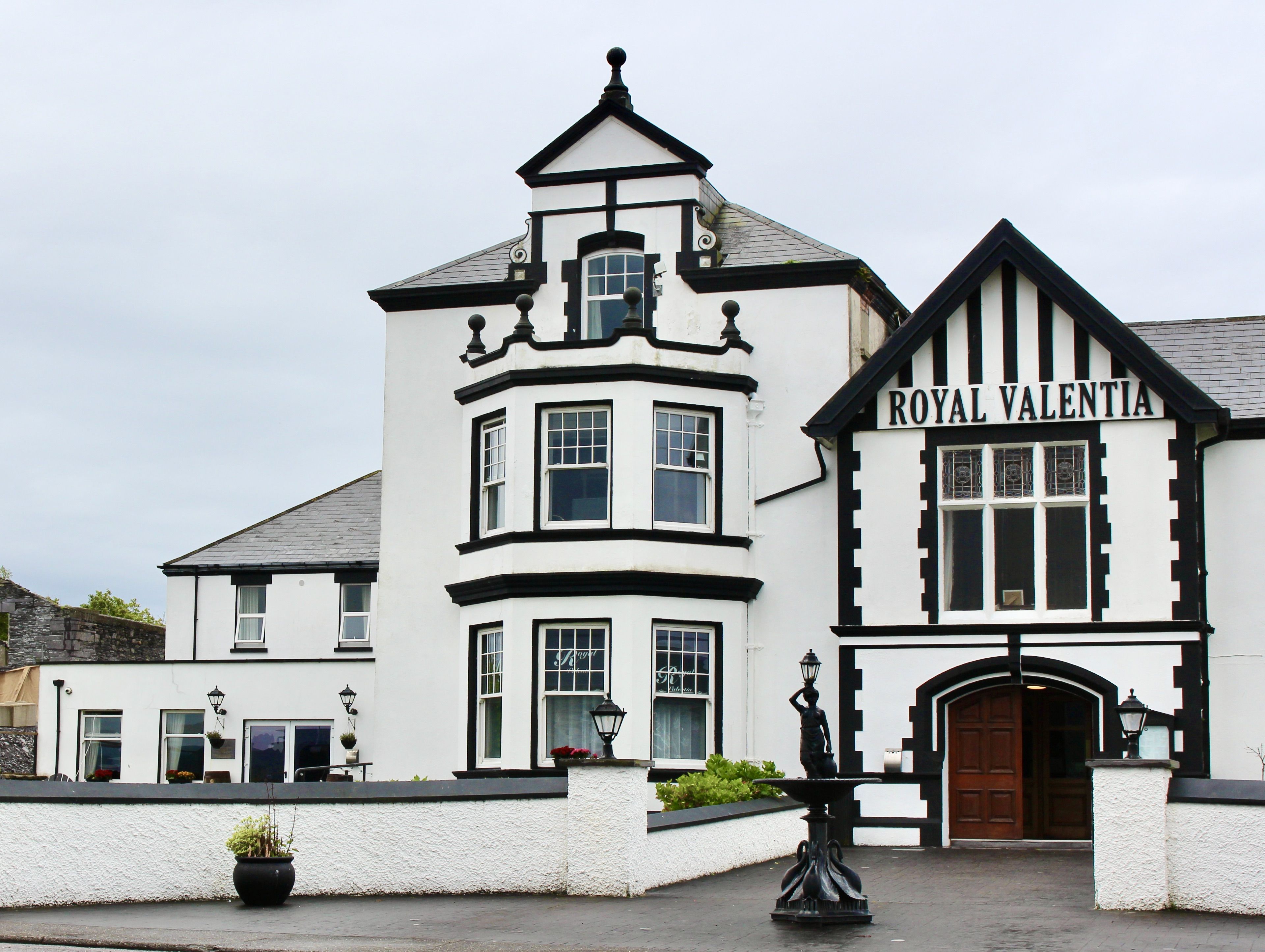
I popped into the seafront’s most prominent building, the 200-year-old Royal Valentia Hotel (royalvalentia.ie), where the bar and restaurant appeared to be the social center of the village on the day I visited. I was offered a table near the fireplace, which even on a Sunday in June was a welcome touch on a dreary day. I’m a big fan of an Irish toastie (grilled cheese sandwich, sometimes with ham) and the Royal Valentia’s version made with Irish bacon and brie on grilled ciabatta bread turned out to be a perfect lunch. Afterwards, I drove out to the Lighthouse at Cromwell’s Point, operating since the 1840s, and to the Transatlantic Cable Visitor Experience. The modest-but-impressive museum tells the story of how modern communication was born when the first cable was successfully laid linking Europe (Valentia Island) to North America (Heart’s Content, Newfoundland) in the 1860s.

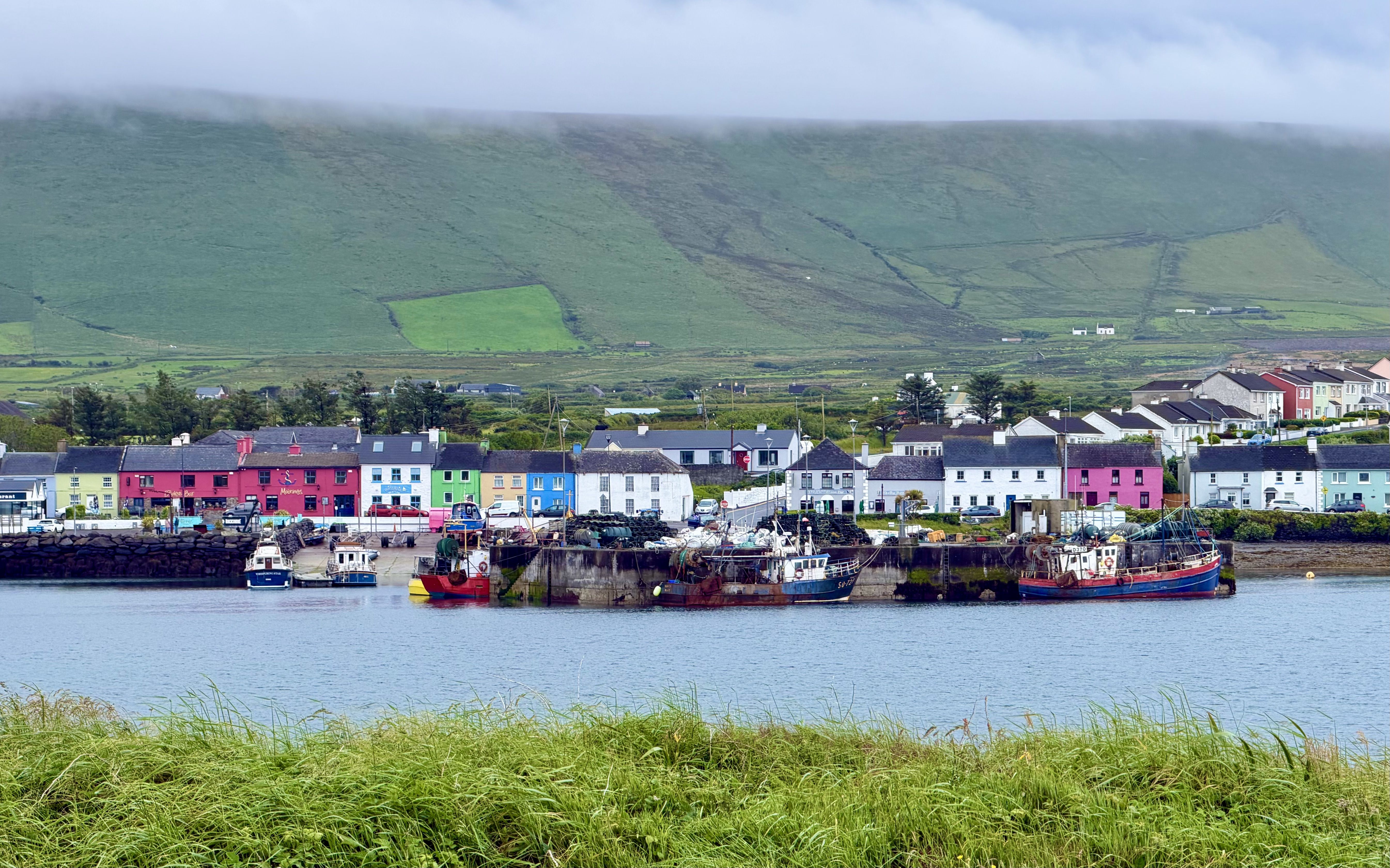
Portmagee village.
Back on the R565, I headed to the mainland fishing village of Portmagee via the O'Neill Memorial Bridge. I was a little short on time, and my scheduled tour to the Skelligs was cancelled due to weather, so The Skellig Experience Visitor Centre, located just before the bridge, was a decent alternative. You can view exhibits on the life and times of the monks who lived on nearby Skellig Michael, check out the local wildlife that still populate the rock, and learn about aspects of local life. The location, too, is also a great vantage point to capture a photo of the candy-colored, picture-perfect village of Portmagee, often described as “a little piece of heaven.”
Tiny Portmagee (population 112) is the home of Irish music and set dancing in the area, has several lively bars and restaurants, and it’s only a 5-minute drive to the spectacular Cliffs of Kerry, the ridge of rock that stands over 1000 feet above the Atlantic. Again, if can’t manage a boat tour to the Skelligs, views from the cliffs, the nearest point on the mainland, are terrific.
My destination though was the Spirit of the Sea Experience at Portmagee Whiskey (portmageewhiskey.com), an “experience” not a distillery! James Murphy, who founded the company with his brother John in 2017, led my tour, which is as much about village history as it is about Irish whiskey. In fact, the two are the reason the brothers created the experience, and the chapters in the story are woven together creatively in the tour through the three geodesic domes located on their family property called Barrack Hill.
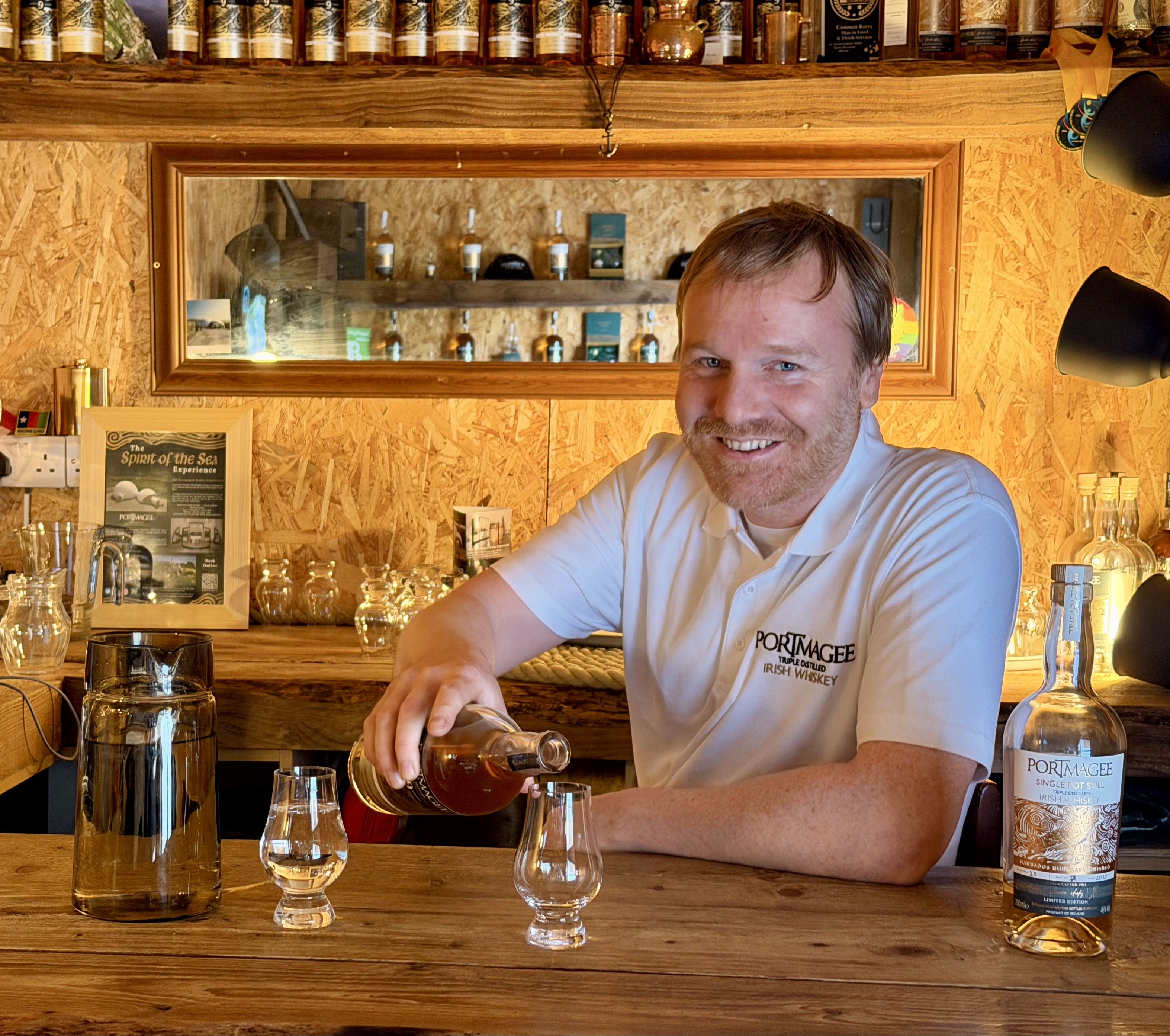
James Murphy.
Portmagee village was founded by Captain Theobald Magee, a notorious 18th century adventurer who was famed for his smuggling voyages to Barbados and beyond. The many inlets around the southwest coast provided great cover for a smuggling operation, and Magee’s trade in contraband spirits, textiles, tea, and tobacco was very lucrative. The Barbados rum casks he would have smuggled into Portmagee were the same ones he would use to smuggle locally made poitín and whiskey out of Ireland to France, Spain, and Portugal.
When the Murphy brothers first started their business – at the time they were working with Stuart McNamara, an international whiskey blogger, and the late Brian Watts, head distiller at Great Northern Distillery in Dundalk, Co. Louth — they were looking for a unique blend for their first release. Barbados rum casks were the answer! They were selected specifically to link Portmagee’s smuggling origins and for the unusual finish they provided for their first release in 2018. At the time of release, Portmagee 9, a blend of 9-year-old single grain whiskey and 13-year-old single malt, was the only rum cask-finished whiskey on the market.
The brothers continued to work with Watts and McNamara (he’s now their Master of Whiskey) using the facilities at the Great Northern for distilling their subsequent expressions: Portmagee Small Batch Whiskey, a blend of single malt and single grain whiskeys released in very small batches; and Portmagee Single Pot Still, a crafted single pot still whiskey.
While the defining character of the brand is the rum cask finish, I learned that there’s a third chapter in the story – Seine boat racing, a tradition of coastal rowing that’s been popular in the South Kerry area since the late 1800s. Seine boats, timber-built boats that hold 12 oarsmen and a coxswain, were originally used to haul fish captured in floating nets. Today, the boat is the centerpiece of summer regattas around the Skellig Coast, with the final race of the season always held in Portmagee.
For every generation of the family who has lived on Barrack Hill, a member of the Murphy family has had a place on the team, and this aspect of village life is also celebrated in the whiskey “experience” here. Even the label and design of the bottle, created by artist Gillian Murphy, are part of the [unfinished] story. The brothers have planning permission and are in the initial stages of building a micro-distillery at their current location, a move that will further their plan for each bottle to be a “brand ambassador” for their village.
Margaret Johnson’s “Recipes” page alternates with “Ireland Hopping: Adventures in Food, Drink, and Travel.” For further details on her work, or to order a signed cookbook, visit irishcook.com.