If you went back to the beginning of the just completed World Cup and asked yourself this question: "What in all of this is the golden goal?
Well, there might have been several answers. But one that probably meets the moment is that the golden goal would be that the tournament passes off peacefully, there is, at the end, a worthy winner, and billions of people around the world can point to golden memories, or at least one.
In this regard the just concluded FIFA World Cup succeeded. 48 teams from all over the globe battled one another in three countries for a trophy that truly represents said globe.
Of course, there are myriad reasons to complain, point the finger, dispute referee calls and, given the turgid nature of the final, pose the question as to whether the two best teams in the competition actually played on the day.
This is a valid question. The winning side, Spain, won the shots on goal count by the proverbial mile but could only score once. The losing side and defending World Cup champions, Argentina, couldn't even get a shot on goal worthy of the description.
For sure, many of the games earlier in the tournament were a much better spectacle. The third place game the day before between France and England delivered ten goals - and all without an overblown half time show.

But that is the nature of the World Cup. You can win in the beautiful game by playing beautifully. You can win by playing ugly. You can also lose ugly as Argentina did. Still, the most abiding memory of this team will remain Lionel Messi's tears at the end of it all.
Over the five weeks of the tournament people around the world were treated to some spectacular football/soccer. We will long remember the extraordinary heroics of Cape Verde and Dublin's Pico Lopez anchoring the island nation's defense. We will long remember Curacao, Norway's rowing fans, the skills of players from Egypt and Morocco, the wins and eventual loss by the USA, the sights and sounds of packed stadiums from Mexico City to Kansas City, from Los Angeles and San Francisco to Vancouver. And of course the final in what was labeled for the tournament New York/New Jersey Stadium.
And as for the final, the game for all the marbles and the golden (mostly gold at any rate) trophy that replaced the older one awarded in perpetuity to Brazil after they won it for a third time.
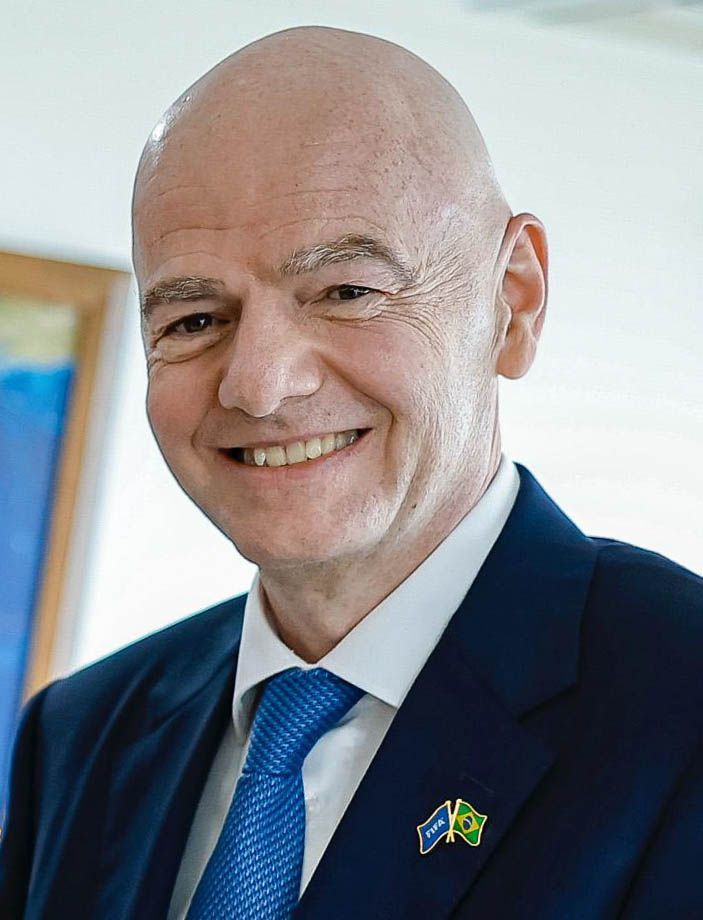
This was a moment that FIFA president Giovanni "Gianni" Infantino had been waiting for. As the New York Times put it: "The 2026 World Cup almost belonged to Gianni Infantino. It was the FIFA president’s vision in dazzling technicolour: multiple host nations, 104 matches, full stadia despite exorbitant ticket prices, an additional 16 teams to take the overall tally to 48, and projected revenues of more than $10billion (£7.4bn)."
Despite his Italian name Infantino is actually Swiss. Perhaps that gave him an extra leg to stand on when he awarded President Trump a peace prize.
Either way, Infantino will go down as both villain and hero depending on one's perspective. On final day he played the role of chief usher as he coaxed his pal President Trump off the stage as the Spanish team celebrated a win in a game that will not be delivering much to the tournament highlight reel.
But it's all over now. The 48 teams of 2026 are already planning how to gain entry to the 2030 World Cup. So are all the teams who did not make this year's grand assembly of nations. The 2030 tournament will be primarily played in Portugal, Morocco and Spain. The trophy, then, can stay put in Espana until Spain retains it, or some other team wins it.
Passionate soccer minds are already turning towards 2030. And that is the golden goal at the end of it all: looking back with fond memory, looking ahead with fierce hope