Amid all the alarming reports of fires, floods and heat domes around the world in recent weeks and months there was a report that, in only a slightly amusing way, took the breath away.
And that concerned camels in the desert wastes of Africa. The camels, it would appear, are having an ever tougher time in trying to bear rising heat. Well, if the camels are having a hard time of it, what about us humans? Suffice it to say all too many humans are having a hard and harder time of it too.
Back in the early months of the year, March specifically, the first big fire report of 2026 came out of Nebraska. The "Morrill Fire" - named after one of the four Nebraska counties it scorched - raced 70 miles across the state's landscape in one day. It was the largest recorded single wildfire in modern Nebraska history, as well as one of the largest in United States history.
In the end, when it was finally contained on March 25th, the Morrill Fire had burned 643,361 acres. This page checked around for a comparative area and came up with County Roscommon. The Morrill Fire would have burned every square foot of Roscommon - plus an additional 15,000 acres or so.
That was just one of the fires in Nebraska this year, one of the fires in the United States, one of the fires in North America, one of the fires in the world.

Meanwhile, parts of Texas were being ravaged by floods, ice sheets and glaciers across the globe continued to retreat, and the oceans continued to rise. It might well be the case, indeed probably is, that we are facing the greatest challenge to the nature of our existence, indeed our actual existence, in recorded human history.
Last week there was an astonishing photo on the front page of the New York Times. It showed a couple sitting in deckchairs on the beach in Lacanau, southwestern France. They are looking across a stretch of water at a wildfire. The two appear relaxed, but it is hard to imagine that they actually were. The fire had the appearance of an exploding atomic bomb. This could well be the news picture (taken by Getty Images) of the year. Then again it was taken in July and "fire season" is now a twelve month phenomenon. So more to come.
The fires that have threatened major European cities such as Madrid and Bordeaux have brought home to Europeans the fact that they are inhabiting a widening continental fire zone that pays no heed to national boundaries. And national leaders are sounding the alarm and seeking new ways to respond. As well they should.
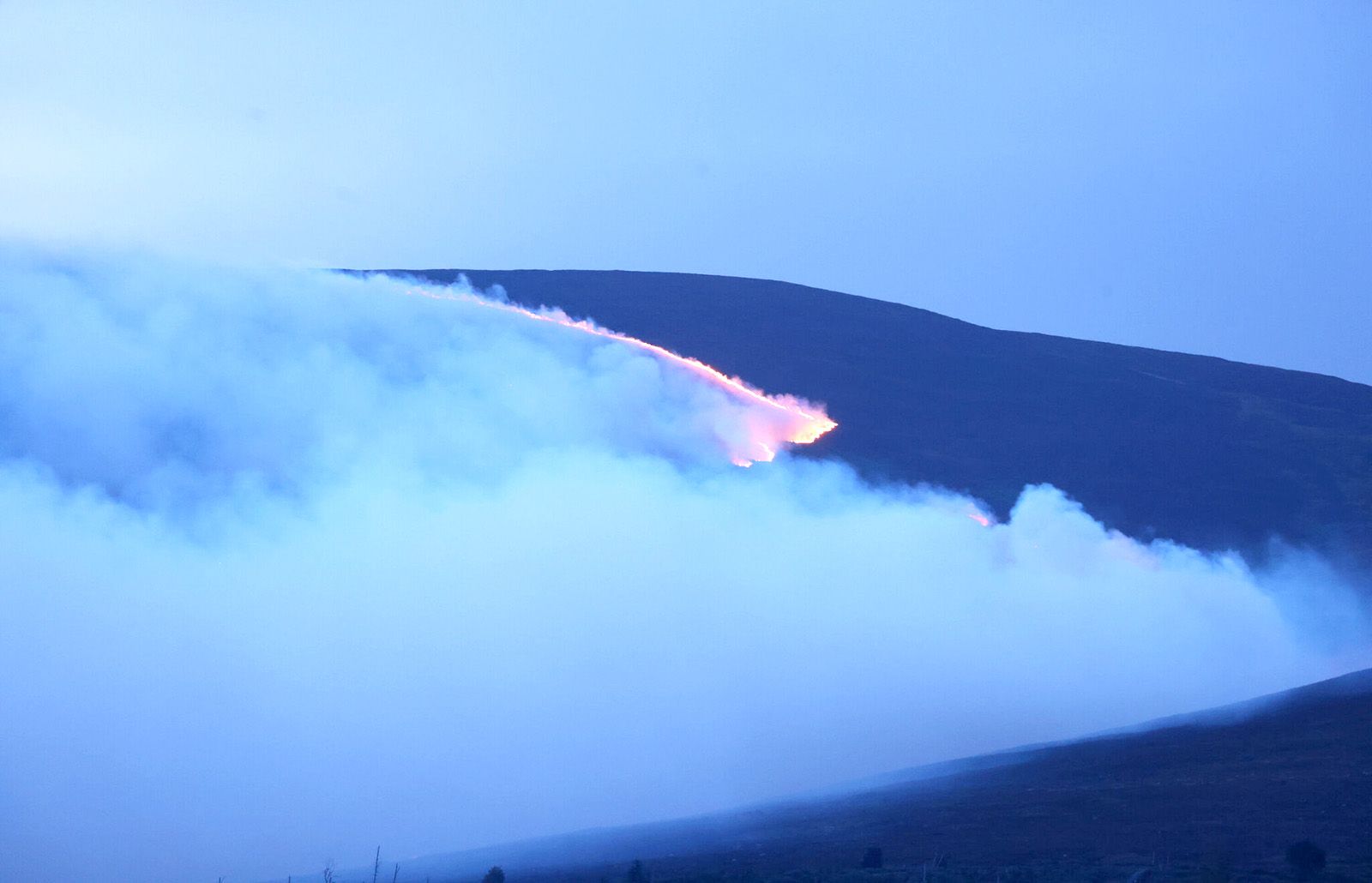
Climate change, one way or another, is everywhere. Off Europe's continental landmass there have been fires in Britain and Ireland. Ireland is in a state of drought and there have been fires in various counties. One of the most damaging has been on Slievenamon in County Tipperary. It burned gorse before spreading to forestry plantations.
Thankfully it is not close to the scale of infernos in Europe or North America, but the fire on the iconic mountain has been a stark reminder that nowhere is safe or immune to the effects of shifting climate.
Across the Atlantic in North America fire continues to ravage the Canadian boreal forests. There have been fires in Northern Minnesota and now there are raging infernos in both Washington State and Oregon. We are reminded, amid this hell, of the extraordinary courage of firefighters and other emergency workers.
All these fires are producing "filthy" smoke, as President Trump would describe it. And, indeed, millions of people have been breathing smoke in recent weeks as the summer of '26 unleashes a pall covering vast swathes of the western hemisphere.
We will not even bother to focus here on the deliberate burning of the Amazon rainforest. That is another story altogether.
Most fires are caused by lightning strikes or human carelessness. Regardless of precise cause the results end up being the same: bad, very bad.
It would be appropriate here to say that it is time for all of us to get our act together on climate change and its encroaching devastating effects. But that would suggest that we actually have an act to get together. We don't.
The pace of change is far greater than humanity's seeming ability to react in a coordinated way. And with the United States not being even an official recognizer of global climate change the prospects for the remainder of 2026, and the years to follow are, to say the least, not encouraging.
Willful ignorance will not prevent the future flames.