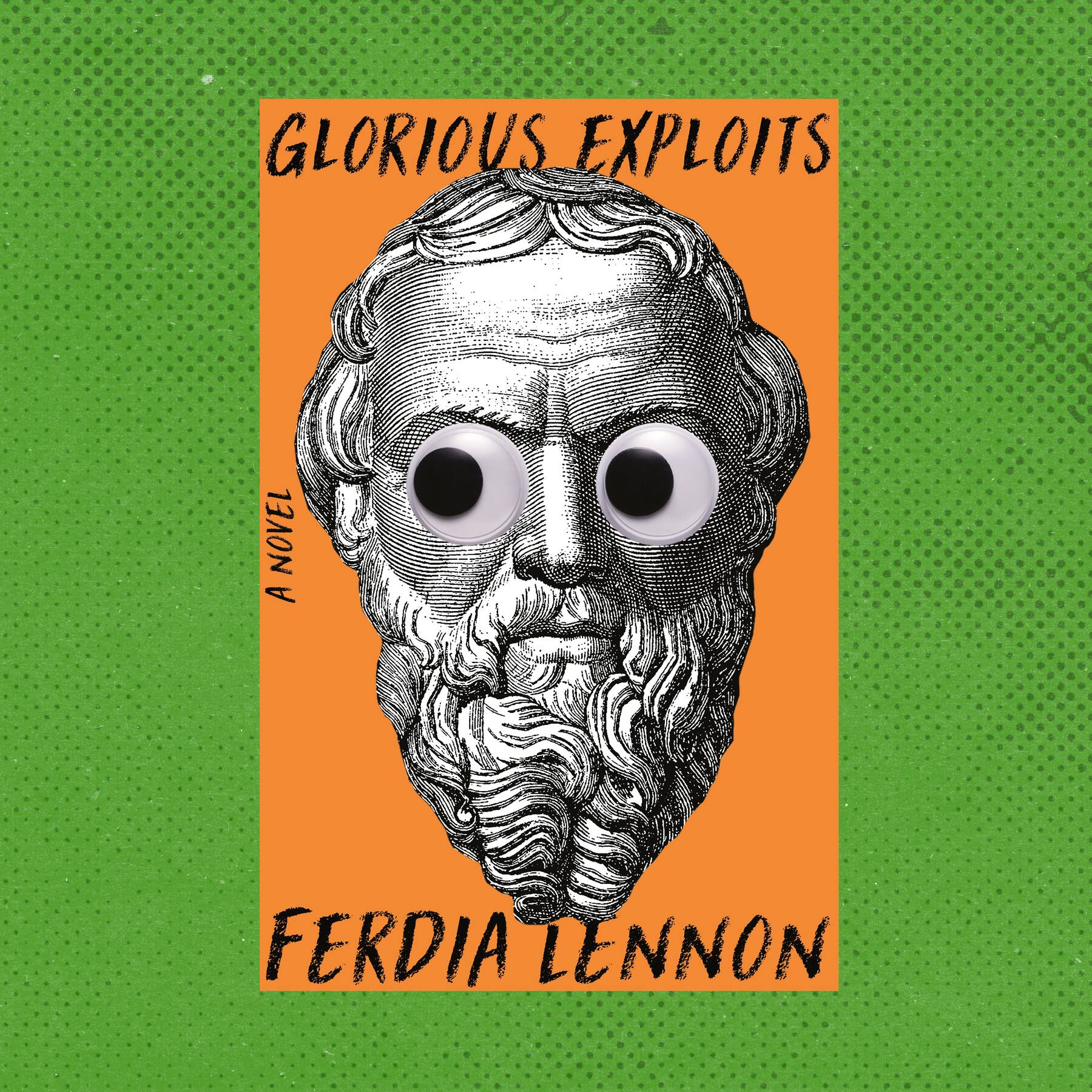
I just read the brilliant debut novel of Irish-born Ferdia Lennon, a talented novelist who manages to combine the Syracuse of 412 B.C. with modern Dublin, not an easy feat. Lennon, however, is such a gifted storyteller that he entertains his readers by narrating his novel with the language of working-class Dubliners, while recreating the classical world and offering insights into the duality of human nature.
Lennon has been justly called, “one of the most exciting new writers in Irish literature.” Born in 1988 to an Irish mother and a Libyan father, he grew up in Tallaght, Co. Dublin, and studied History and Classics at University College Dublin, before doing a postgraduate degree in creative writing at the University of East Anglia. His debut novel, “Glorious Exploits,” has become popular in part because of Lennon’s ability to combine his deep knowledge of antiquity with his powerful narrative ability. “Glorious Exploits,” which became a bestseller, was adapted for radio (BBC4) and won the 2025 Rooney Prize for Irish Literature, the Bollinger Everyman Wodehouse Prize for Comic Fiction, the Waterstones' Debut Fiction Prize and the Authors' Club Best First Novel Award.
Lennon’s debut novel finds humor in a very dark situation. Set in 412 BC, in the aftermath of the disastrous Sicilian Campaign, the story deals with the thousands of captive Athenian soldiers languishing in an abandoned quarry in Syracuse and slowly starving to death. In this grim setting, two unemployed potters, Gelon and Lampon, who speak with distinctive Dublin expressions, decide to stage Euripides’s “Medea” with the prisoners themselves as actors. It is a novel simultaneously about the cruelty of warfare and the redemptive power of art. Some critics have found the juxtaposition of combining amusing narration with heavy themes too jarring, but Lennon manages to deftly combine humor and pathos.

Lennon is a master storyteller, and the plot is never predictable, taking unforeseen twists and turns that keep the reader glued to the story. With beguiling narration, Lennon transforms a dark episode of the Peloponnesian War into a meditation on friendship, loss and humanity in the face of barbarity, creating a tale novel showing how theater and art can kindle human empathy and compassion, even in the darkest of times.
When asked to explain his fascination with the Peloponnesian War Lennon said, “I think it’s the unique combination of the familiar and the foreign. There are elements of 5th century BC Athens that remain remarkably relevant today. It was the birthplace of democracy, drama, comedy, philosophical systems that we still read and study… Ancient Greece, and especially 5th century BC Athens, has the strange quality of seeming both distant and utterly modern at the same time. At the same time, however, there are aspects of this society that are completely foreign to us: slavery, the fact that, despite democracy, only male citizens had the right to vote, or the organization of Sparta, which is almost reminiscent of an Orwellian, militaristic society. This is precisely what fascinates me: on the one hand we recognize ideas and institutions that continue to profoundly influence our daily lives and on the other hand we encounter a world that constantly reminds us that it is two and a half thousand years away from our own. It is this coexistence of the familiar and the unfamiliar that I find so fascinating.”
I was so taken by Lennon’s take on the ancient world that I read “Glorious Exploits” in a day. It is light and fun, but at the same time it tackles far deeper and more troubling themes. Discover for yourself why Lennon’s debut album has become both a bestseller and the winner of so many prestigious awards.