Part 1
Jay Gatsby is one of literature’s most iconic figures. He’s thought of, too, as one who’s quintessentially American — being self-made and reinvented.
It’s assumed that there was a real-life model or inspiration for F. Scott Fitzgerald’s titular protagonist, and so, of course, people would like to know who that person was.
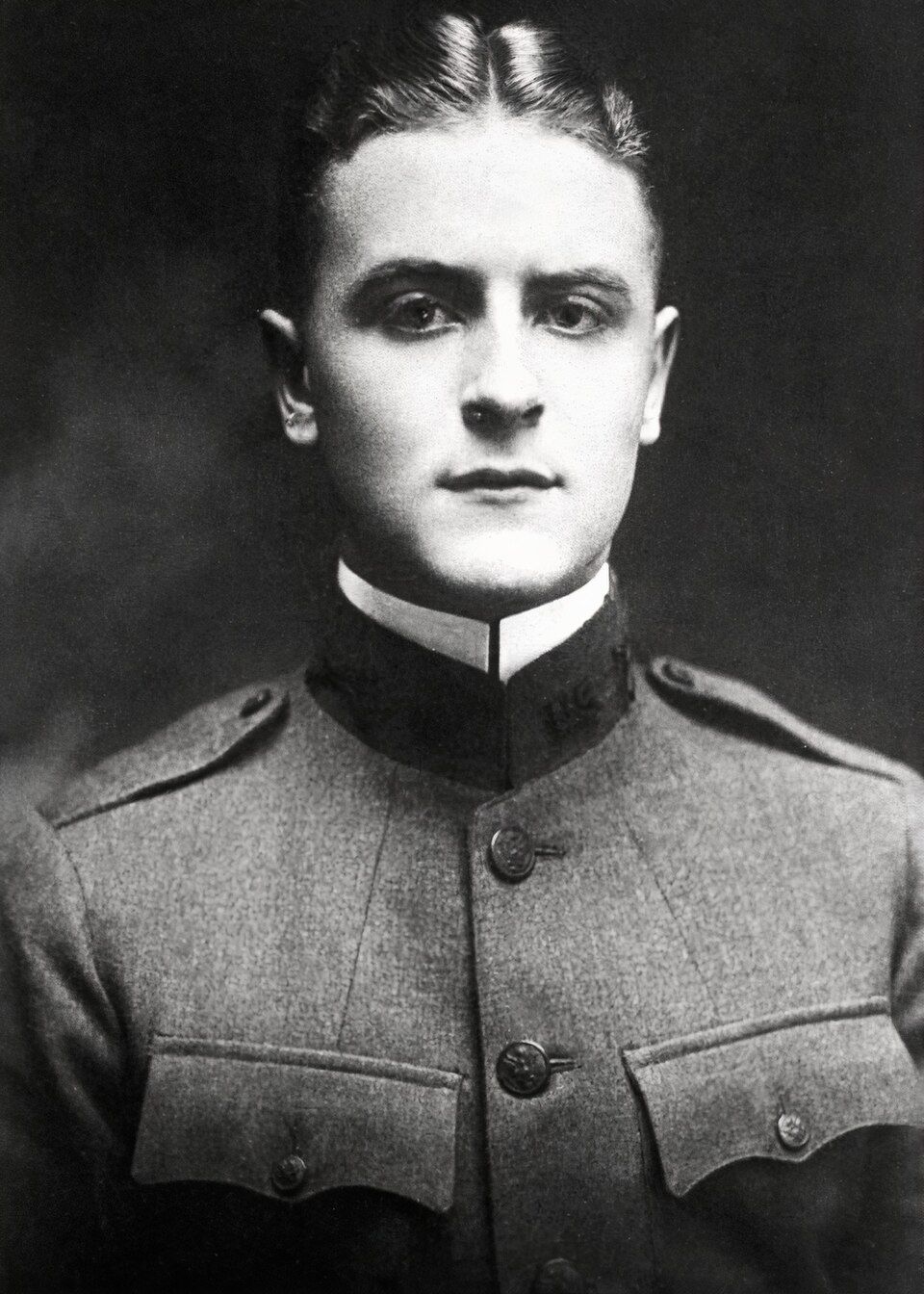
There are obvious autobiographical details in “The Great Gatsby” that are the novelist’s own — the Midwestern roots and his love affair with a southern beauty while serving as an army officer during World War I. And one might say Fitzgerald himself was self-made and reinvented having become a literary sensation in his mid-20s, with the publication of his earlier novels.
However, if the novelist is the “interior” Gatsby, the various theories about the “exterior” man don’t seem to me particularly compelling or satisfying.
Two pieces of information – one from a recent scholarly account and the other from my own casual research – have helped me consider a line of thought about who inspired Gatsby. Both facts, let’s call them, are intimately connected to the Long Island backdrop to “The Great Gatsby.”
The place-names of the 1925 novel are, it’s no secret, based on actual locations. The Gatsby estate can be found on “West Egg,” whereas that of his friends, Daisy and Tom Buchanan, is in “East Egg.” West Egg, we know, is Great Neck, Long Island, while nearby East Egg is Port Washington-Sands Point. Separating the two estates is a “courtesy bay,” the actual Manhasset Bay.

The first piece of information, referred to above, was that Fitzgerald had been introduced to the area as far back as 1917. The second centers on the connections he made there over the years and how he might be linked to a larger-than-life Manhattan-born businessman who had a summer home in Port Washington.
A key person in all of this is Shane Leslie, who was born to landed wealth in County Monaghan in 1885. He was a World War I member of the British Ambulance Corps, diplomat, author, journalist, Catholic convert and supporter of moderate Irish nationalism, who befriended the young Fitzgerald.
It was Leslie who introduced the aspiring novelist to Maxwell Perkins, his lifelong literary editor. But the Irishman was also the key facilitator in bringing Fitzgerald into contact with the world of the rich and famous on Long Island
Leslie was a first cousin to Winston Churchill, via their American-born mothers, who were sisters. Churchill is not part of our story, but his first political mentor is. The World War II leader often spoke of the influence of the County Sligo-born William Bourke Cockran – mentioning him, for instance, in his “Iron Curtain” speech in Missouri in 1946.
Bourke Cochran, who lived with his third wife at “The Cedars” in Port Washington, was a Tammany-connected politician and successful, high-powered New York lawyer. He was first elected to Congress in 1887 and his intermittent political career continued through his reelection in 1922, a few months before his death on March 1, 1923.
Leslie introduced his young protégé from Minnesota to this man who represented a Manhattan East Side district, and later Westchester, in Washington and was known for his extraordinary powers of oratory.
He was one of two prominent and wealthy Irish Americans who summered in Port Washington–Sands Point. The other was Peter C. Gallagher, who owned a summer estate on the bay just down the road from “The Cedars.” The wealthy Gallagher owned the Goodwin-Gallagher Sand & Gravel Company, which at the time was the largest sand-mining operation in the world.
I often wondered if Fitzgerald had come across Gallagher, who was my mother’s grandfather. And then recently I discovered that the devoutly Catholic Rep. Bourke Cockran and his neighbor Gallagher were the top two benefactors of the local church when the parish was founded in the first years of the 20th century. This is the second piece of information I referred to above.
It’s reasonable to assume that Bourke Cockran and my great-grandfather, who were ages 63 and 36 respectively (Shane Leslie was four years younger than Gallagher) when Fitzgerald first visited Long Island, knew each other and even to speculate that they mixed in the same circles.
There are some locals who make an interesting case for Westport, Connecticut, and not Long Island, as the real inspiration for the setting of the novel. They’ve thrown down a gauntlet on behalf of their hometown, putting it out there for the experts to contradict it, if they wish to; and in that spirit I’ve done the same with regard to the Gallagher clan, specifically sand-and-gravel heir Peter, and his being the “exterior” model for Jay Gatsby.
Gallagher nexus
I am a lawyer by profession, and lawyering trains one to identify the “nexus” implicating or exonerating a party to a lawsuit. Here, I will state the facts that form the nexus, or connection, between Fitzgerald, Peter C. Gallagher, and Gatsby.
It has generally been accepted that F. Scott Fitzgerald’s primary exposure to Port Washington-Sands Point was when he and Zelda lived across Manhasset Bay in Great Neck in the early 1920s. However, a recent study, Patrick O’Sullivan Greene’s Gatsby: Death of an Irishman, documents that in fact Fitzgerald visited Port Washington–Sands Point while still an undergraduate at Princeton. The aspiring, impressionable young writer, O’Sullivan Greene relates, at that time Fitzgerald still a identified himself as an Irish Catholic, which is reflected in his first novel, “This Side of Paradise.” He traveled with Shane Leslie, with whom his views and interests overlapped, to a world that had its obvious Irish-Catholic influences.
Fitzgerald was reportedly awestruck by the wealth he experienced at the Bourke Cockran estate, as well as the parties and lifestyles of society people in the surrounding area. The nexus between Bourke Cockran and Gallagher can be found potentially in their Irish-Catholic bond and, more specifically, in the formation of a parish in Port Washington–Sands Point. As described on the church’s website, the land for the church was donated by Bourke Cockran with one caveat—that the church be designed after a castle he could see from his childhood cottage in Ireland. It was, and still is, a church that looks like a castle.
The other benefactor was Gallagher, who donated money and the sand and gravel from his vast sand pits in the area. As the website further notes, St. Peter of Alcantara was named with a nod to Gallagher because that St. Peter had the closest feast day to Gallagher’s birthday. St Peter’s opened its doors for Mass in 1903, and to this day is still a thriving parish.
By 1917, Bourke Cockran was married to Anne Ide Cockran, 22 years his junior and the daughter of an American diplomat. The couple, while mixing in high society and hosting grand dinners at “The Cedars,” would not have exhibited the kind of colorful existence that Fitzgerald created in “The Great Gatsby.” That model would more likely have come from Bourke Cockran’s co-benefactor in the Catholic parish whose nearby estate was situated on the real “courtesy bay.”
Next, one can’t help but note that the ostentatious trappings of wealth seen in the novel were more obviously attached to the Gallaghers.
Take the hydroplane, which somehow found its way into “The Great Gatsby.” I was interested to read in the Brooklyn Daily Eagle edition of Aug. 4, 1913. “Peter C. Gallagher, a wealthy resident of Port Washington, went calling yesterday in a Curtis[sic] hydroplane.” Gallagher wanted to motor over to the New York Athletic Club’s Travers Island in Pelham, New York, as well as Huckleberry Island, where he was due to attend a field day for the NYPD Traffic Squad. Both venues were located across the Long Island Sound from Port Washington-Sands-Point. His problem was solved when a local friend and pioneering aviator, Captain J.B. McCurdy, offered the use of his Curtiss hydroplane and as a result, Gallagher made both engagements that day. Hundreds of spectators gathered at the water’s edge upon Gallagher’s arrival at Huckleberry Island. He was later quoted saying, “It is a wonderful machine…[i]t would have been a physical impossibility to have covered that area in an automobile, but in this machine we had no trouble at all.”
Early flights of the Curtiss hydroplane by a private citizen were rare, and Bourke Cockran’s neighbor Gallagher not only took to the air, but his trip made headline news in the Eagle the next day. Such a dashing millionaire would have fueled the young Fitzgerald’s imagination.
Like Gatsby, Gallagher owned a motor yacht, which was moored at his dock adjoining his estate on Manhasset Bay. Gallagher was the Commodore of the nearby Knickerbocker Yacht Club. The silver “loving cup” presented to him by the yacht club in 1920 is still held by my first cousin, Joseph P. Gallagher, son of Peter C. Gallagher, III, my mother’s brother.
Gallagher’s motor yacht was christened “AMURAY,” an acronym for two of his four children, Alice and John Murray. In the summer, an employee of the sand company captained the yacht, and in the autumn, he sailed the yacht south to Palm Beach for the winter season (as later relayed by the captain’s son, a former naval officer, in a memoir I’ll refer to again later), the motor yacht will play a dramatic role in the Gallagher story, one that has uncanny parallels to Gatsby’s.
Gatsby’s very existence, his success, sprung from crewing for yachtsman Dan Cody, a self-made millionaire who acquired his fortune in copper mining. Cody hired the young Gatsby, providing him with “…a blue coat, six pairs of white duck trousers, and a yachting cap.” (One might note here, too, in passing the Irish-sounding name of Gatsby’s yacht-owning boss and his becoming wealthy via a form of mining.) Cody became Gatsby’s mentor and when his yacht sailed to the West Indies and the Barbary Coast, Gatsby remained aboard. For five years Gatsby sailed with Cody, “…traveling three times around the Continent.”
Fitzgerald was no yachtsman—ever. Thus, the young writer needed to gain the concept and imagery from exterior characters and exposure to the yachting scene. The exterior character once again, it would seem, turns out to be Gallagher, whose prominence in this regard on Manhasset Bay was such that his election to Commodore of the Knickerbocker Yacht Club was reported in The New York Times on December 29, 1919. And when Gallagher sailed for Europe, the Times reported the departure of “Commodore Peter C. Gallagher” in its November 22, 1922 edition. Fitzgerald’s exposure to yachting originated at Manhasset Bay, whether he was in Port Washington-Sands Point or Great Neck, and the reigning king of the yachting scene during that period was Gallagher.
Sand monopoly
Then there is Gatsby’s connection to illegal activity. In the novel Gatsby gains his new-found wealth by cornering the market for illegal liquor that was marketed for “medicinal” purposes out of pharmacies. But what about Gallagher? What criminal activity could he be up to while maintaining his life as a sand merchant, a generous benefactor, a dashing Commodore navigating a fleet of racing yachts, and a passenger flying over “the great wet barnyard of Long Island Sound” in a hydroplane? For the answer we must return to 1866 when my great-great grandfather, Cornelius Gallagher, a famine immigrant, began mining sand from the sand banks of Port Washington, along with his brother and John Murray, his future in-law. In time, Gallagher, Murray & Gallagher split up, with Cornelius Gallagher forming Gallagher Bros. Sand & Gravel, acquiring most of the competition along the way. By the 1890s, Cornelius Gallagher was a very wealthy man, with an elegant and spacious apartment in Murray Hill, a summer estate in Port Washington-Sands Point, and a winter home in Palm Beach. It was into this world that his son Peter was born in 1881.
In 1914 Gallagher Bros. Sand & Gravel merged with Goodwin Sand Company forming Goodwin-Gallagher Sand & Gravel Company, which by 1920 ran a monopoly and controlled the sand trade in and around New York City. By then, though, the government had begun to enforce the Sherman Antitrust Act (1890), making it illegal to form combinations and mergers with the intent of killing competition. Goodwin-Gallagher, like DuPont and Standard Oil, was an early target and in 1920 Gallagher and his brothers were indicted by the U.S. Justice Department. In 1921 the eminent jurist, Judge Learned Hand, held that Gallagher and his brothers had conspired to monopolize the sand trade, had succeeded, and he enjoined the company from any further restraint of trade and commerce.
By 1923-1924, when Fitzgerald was living in Great Neck and writing “Gatsby,” and still friends with Shane Leslie, he would likely have been aware of Gallagher’s unlawful business dealings. Fitzgerald himself confirms his awareness of the law just a few months after Gatsby was published in a letter to T.R. Smith, editor-in-chief of publishing house Boni & Liveright, a competitor to Scribner’s, his own publisher. In May 1925, Fitzgerald, responding to Smith’s suggestion that he jump ship to Boni & Liveright, wrote “…[b]ut it would be a monopoly in restraint of trade. You already have the only other two Americans under thirty who promise a great deal—Hemingway + Cummings.” It is clear that Fitzgerald understood both the meaning and the legal jargon of monopoly at the time of Gatsby. And who was in the Leslie, Bourke Cockran, and Fitzgerald orbit who had been found guilty of restraint of trade—Gallagher, of course. Fitzgerald’s Gatsby would possess the same connection to illegality. Gallagher cornered the market in the sand industry; Gatsby cornered the market in the sale of liquor from pharmacies. Gallagher and Gatsby lived and made money within a fog of illegality.
Next the “death car.” Gallagher owned a Pierce Arrow and a Maxwell sport touring sedan, both regularly seen motoring about Port Washington-Sands Point in the summer, as described in the memoir by former naval officer I’ll refer to later.
Fitzgerald describes Gatsby’s car as a “gorgeous” Rolls Royce. A review of the Maxwell of that era shows an open-top sports car remarkably similar to Gatsby’s Rolls Royce. Gatsby’s gorgeous Rolls morphs into the death car when Daisy recklessly runs down her husband’s mistress while speeding through the “Valley of Ashes” in the dark of night. A hydroplane, a motor yacht, and fast cars—all elements of speed associated with Gallagher in an era when many New Yorkers were still getting around in horse and buggy. Thus, it is not just that Gatsby’s car reflects the model-type that Gallagher owned, it is that he travelled in them because he was a modern man.
When Fitzgerald moved to Great Neck with Zelda, if he did venture across the “courtesy bay” to Port Washington-Sands Point, it would have been to the homes and friends he first visited in 1917, such as “The Cedars,” even after Bourke Cockran’s death.
Fitzgerald would perhaps have headed as well as to the nearby Gallagher estate, now caught up in the full swing of the Roaring Twenties. The world documented by Fitzgerald in Gatsby was the Gallagher world, and a world Fitzgerald would have felt eminently comfortable in, with its Irish-Catholic wealth and panoply of fun.
‘Background is real’
Fitzgerald did not need to look far to find the Gatsby exterior model; he had existed in Port Washington-Sands Point from the beginning. An exchange between Fitzgerald and Shane Leslie after Leslie points to the possible origins of the title character. In July of 1925, Leslie issued a “statement” from Paris on reading Gatsby, “…Long Island cannot have an Epic because its inhabitants are not Sagalike or heroic—only locusts and fireflies that float in an ephemeral radiancy. But this is a wonderful idyll of Long Island—How well I remember the Ash Heap of Flushing. The writer has brought back dead months and dead people to me and nailed down sights and scents and days and atmospheres with nice brass tacks of phrases. Three or four dwell with me—perhaps I shall remember the book long after I have forgotten the background. Yet the background is real and the book is art—artificial art but really wonderful.” That same month Fitzgerald responded, “Thank you many times for what you wrote on the back of Gatsby. Needless to say I'm having it bound into the novel—its curious that my first sight of Long Island was when I went with you to Port Washington Great Neck, where we later lived [Scott and Zelda], is, you'll remember two stations on the New York Side.”
Two things jump out. First, that Leslie is perhaps referring to Bourke Cockran, who had died in 1923, and also Gallagher as the dead people who Fitzgerald had brought back in Gatsby and second, by invoking the memory of that visit to Bourke Cockran’s estate in Port Washington-Sands Point Leslie is naming the locale that he recognizes, and, most importantly, that “the background is real.” Fitzgerald’s response confirms that his first trip to Long Island with Shane Leslie was to Port Washington-Sands Point (and later, Great Neck). Fitzgerald appears to be waxing nostalgic about an earlier time spent in Port Washington-Sands Point, which only Leslie could remember and share with him.
A preliminary note, one which is perhaps superficial but instructive all the same, is that Gatsby as imagined by Fitzgerald had dark hair, like that of Gallagher, not blonde hair as portrayed by Alan Ladd, Robert Redford and Leonardo DiCaprio in later film versions. The original Gatsby of the 1926 silent film was portrayed by the dark-haired Warner Baxter.
Regarding the more substantive aspects of the exterior model, Fitzgerald would have been exposed to the Gatsby template, first in 1917 by the estates, parties and wealth of Port Washington-Sands Point, and later in 1923-1924, when he returned as a newly minted star of the literary world. He was now more likely to be invited to the biggest and wildest parties of Gallagher and others, not simply as Shane Leslie’s friend or as a guest of Bourke Cockran, but on his own merit. Bourke Cockran’s estate provided the splendor and sophistication of the Buchanan estate, but Fitzgerald and Leslie would more likely have discovered the excitement of yachts, hydroplanes, fast cars and alcohol-fueled parties on the Gallagher estate.
Although Gallagher was on the old money side of the courtesy bay his family had not been original settlers such as Bloodgood Cutter, a wealthy landowner who Mark Twain fictionalized in his bestseller, Innocents Abroad, and who sold vast amounts of his land to Cornelius Gallagher in the latter part of the nineteenth century. Cornelius Gallagher and his sons were new money in those years, having stripped the sand dunes to feed their fortune. His sons’ raucous behavior had resulted in banishment from the Manhasset Bay Yacht Club. As passed down to me by my late mother, Helen “Chickie” Gallagher, the brothers Gallagher then bought the adjoining land and moved the Knickerbocker Yacht Club from the Harlem River to Port Washington, where the new Irish millionaires could sail and entertain in a way more suitable to their Celtic energy and fine sense of humor. At the same time, the Gallagher women, very Catholic and very matriarchal, kept the men in line and in proper society. It was a potent formula ensuring that Gallagher remained at the top of the heap. And the top of the heap in Gatsby exists in Port Washington-Sands Point.
I’ve listed six nexus points. For the seventh, the final one, I’ll turn to family lore.
For Part 2, see here.