Derek Dempsey knew from an early age that “music would define my life.” When asked what he wanted to be, his answer was a simple one: a singer.
And the songwriter, musician, producer and entertainer from Crumlin, Dublin, has been precisely that this past 27 years in New York City.
During the first year of the pandemic, 2020, Dempsey added “talkshow host” to the list. His video podcast “What Is America to You?” featured interviews with artists such as Don McLean, Phil Coulter, Brian Downey, Ron Sexsmith and others.
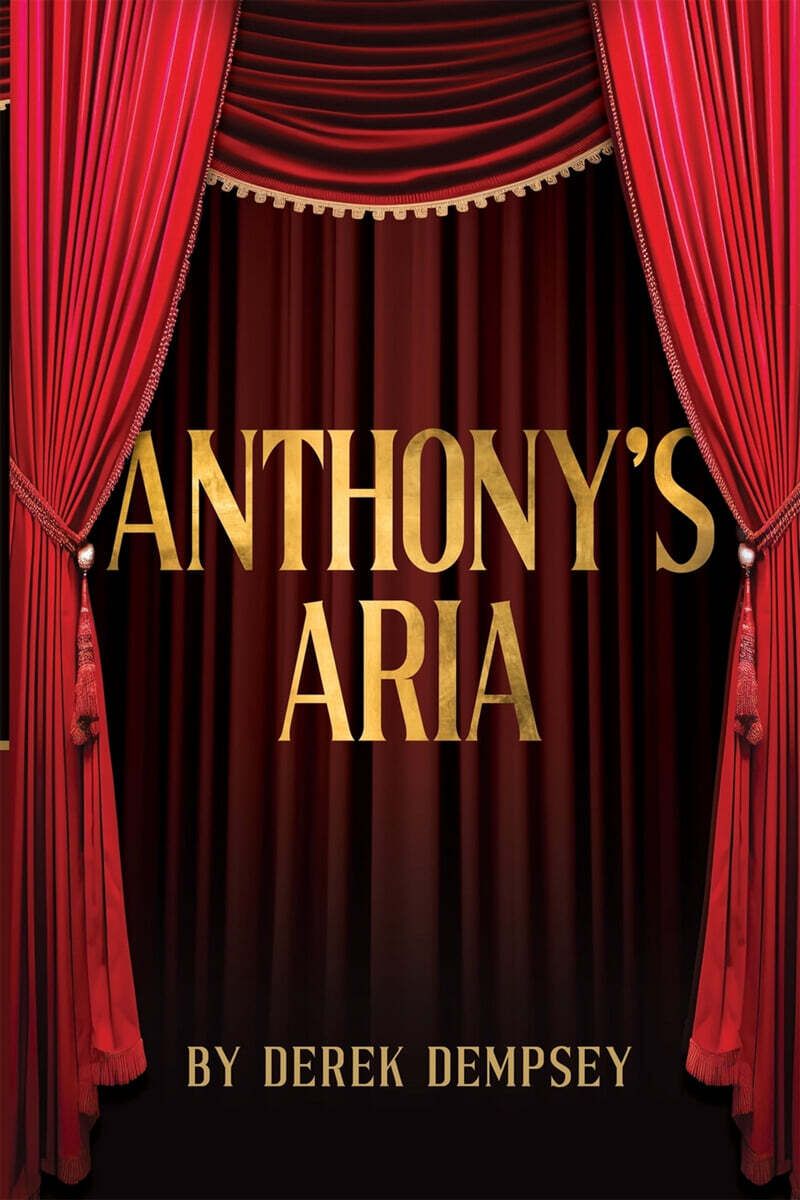
Now, with “Anthony’s Aria,” he’s added “novelist.” We asked him about that the week of its launch.
IE: You are known primarily as a singer-songwriter and a musician. What inspired you at this point in your career to write a novel? Is this something that you’ve wanted to do for a long time?
DD: I have always wanted to write a novel, possibly as young as 14 years of age. However, I didn’t have the skill or wherewithal, possibly for a couple of reasons. One being that I was just beginning my music career - learning to play guitar, sing and compose/write songs, and two being that I was thrown out of school for being on the hop, i.e. truancy, for the majority of the two years from 12 to 14 years old. They called me back to throw me out - you could philosophize on that for centuries and still not understand it.

I did start to take writing seriously in 2012 when I wrote a review of my friend Eric Starr’s album “Such Is Life.”
Then came short pieces, social commentary, political satire and commentary, etc, followed by short stories, micro fiction, and a travelogue novella.
So it was building up in me. I had the concept of “Anthony’s Aria” in its most basic form for years about an sub-everyman, Dublin character who possessed a hidden gift for singing Italian opera.
Tell us who the Anthony of the title is and perhaps give us the elevator pitch on what the novel is about.
Anthony is half Irish and half Italian - his grandfather was born in Italy. He’s a half orphan, with one sibling, and a grieving father. As I said above, he’s an everyman of sorts but with a rare gift that he guards shyly. He loves Johnny Logan, football, his father, his sister, and girlfriend Clio. One post heavy-drinking night, after Anthony had fallen off a table after a-world-cup-qualifying match-win inspired climb up on a table to sing “Nessun dorma", is convinced by his friend Maggot to enter a karaoke competition. He is discovered by an Irish-American employee of the Metropolitan Opera, New York City, on his yearly visit to see his Irish mother, who tapes Anthony as an intended joke to send to his boss at the Met. However, after witnessing Anthony’s rare gift, the director of the Met, Hilary Hadrian, proclaims him “the greatest tenor since Luciano.”
Soon he becomes the most famous opera singer in the world, though the clash between Anthony's simple innocence and naivety, and the sophisticated world of opera, is where the story begins.
We have to ask because it’s a first novel – is it autobiographical in any sense?
The character of Anthony, while a singer from Dublin, is not autobiographical. There are elements within his journey that I experienced personally, and that I believe imbue the novel with a sense of lived reality.
Say something about the novel’s other characters. Sometimes you hear writers say that a character took them in a particular direction. Did that happen in your case?
I am not sure if the characters took me in a particular direction consciously. However, the characters of Jackie, Hazel — Anthony’s sister who has Down's Syndrome — and Melvyn Douglas, the third, were, in some ways my favorite characters to write.
Melvyn is a personification of the time between the passing of the 13th Amendment and the Civil Rights Act, those 99 years were America, like other countries, had to learn to live with what it had done. But more so the continued struggle of the African Americans who were no longer “protected property” - a sort of no-man’s land position, if you will, where one could argue, and I do, that it was an even more dangerous time for them. So that character felt like a heavy responsibility in terms of respect as well as the precarious balance of the truth and the accepted truth, and of course, my limited view.
The character of Hazel goes without saying, I needed to be over-vigilant in how I portrayed her. She is named in honor of my cousin's daughter. Hazel has a divine-like purity which translates into a wisdom perhaps born of that extra chromosome — something I have seen in these beautiful humans, an unfettered innocence and joy.
Jackie is a complex young woman. She is an amalgamation of women I’ve known in my life, and in a way, all women.
Her astounding rare beauty and neurodivergent personality is the nonconformity which the “world whips her for with its displeasure.” She basically suffers through her happenstance beauty.
So, as a man, writing women, there are a billion ways I could go wrong, and no doubt I have.
Did the music that has had the greatest influences in your own life come into the story? Are there any particular literary influences at work?
Yes, absolutely. I have been a lover of opera since I was 18 years old. I’ve seen more operas, especially at the Met, than any type of rock concert. You could count the rock concerts I’ve been to on one hand, and still be able to play guitar like Django Reinhardt, after the caravan fire. So yes, the story is filled with opera references as well as other music that has influenced me.
As far as literary influences, “Pygmalion” was ever-present in the writing, as was Dickens, especially “Great Expectations” and “A Christmas Carol.” Also, Truman Capote, Mikhail Bulgakov, Oscar Wilde, Virginia Woolf, Woody Allen, Homer (“The Odyssey” in particular), Christopher Hitchens, Mary Shelly, Thom Sharp, Catherine Howard Ryan, Gabriel Garcia Marquez, Larry Kirwan, Jerzy Kazinsky, Mo Hader, Joseph Wambaugh, Michelle Paver, Peter Benchley, Harper Lee, Stephen King, Shirley Jackson, John Steinbeck, especially “Grapes of Wrath,” J. D. Salinger. I could go on, I need to. Also Charlie Chaplin, as I consider his films to be literature in celluloid form.
What was your writing process on the novel? Did you set aside a certain part of each day, for example?
I wrote the first draft over a three-month period in winter, mostly in the morning to early afternoon. Then I didn’t get back to it for six months. I spent another two months on a second draft, and then a third draft while traveling to a lot of locations, a year after the first draft.

Derek Dempsey.
It was difficult as I had a lot of holes in my formal education. Also, I am a poor typist. The writing of the book was not difficult in terms of creating the story and characters. I am lucky that songs and stories seem to come to me fully realized and in various stages of completion. I proceed with an end-in-mind method. I also write better in my head as I am walking, driving, running and showering. Flying speeds up my writing, and also as I teeter between wake and sleep. I used stream of consciousness during the hypnagogic state to write the epilogue. That way, I can blame Freud if it’s shite.
What effect, if any, did the writing of “Anthony’s Aria” have on you?
I am not too sure really, probably an effect that other people might notice, though I do feel that I have corrected my lack of formal education somewhat by writing “Anthony’s Aria.” I know that I wrote a lot of my philosophies and world views, such as about injustice and oppression, in the characters. For good or bad, that was important to me.
I am sure I did heal somewhat from the death of my father, and that I have come to a kind of half-terms with that typical dichotomous relationship all artists seem to have with their country of birth.
Someone once said that, "if there are no tears in the writer, then there will be no tears in the reader”.
Is there a follow-up planned or are you concentrating on other projects right now?
Yes, I am working on a second novel entitled, “Perfidious Albert - The Story of a Saxon Psychopath,” and a third, because my mind demands it — “My name is not Charlie - The Story of a Child Soldier,” which is not quite as developed as “Albert.”
As far as a follow up to “Anthony’s Aria”? Who knows. It depends on the reception it receives. I also have a novel in development with my nephew Cillian entitled “Quintus and The Dál nAraidi - The Story of 10,000 Years,” a magic realism novel based in Irish and Filipino mythology and history.
I thrive on having a cerebral airport with traffic incoming and outgoing all the time. It propels me, but drives my poor wife, and main muse Lisa, insane by times. Her opinions about the book over the years have no doubt shaped it.
One anecdote; while writing a chapter entitled “The Mind of Maggot,” I had a computer crash and lost 8.000 + words. I called my wife and vented my frustration-filled, desperation-fueled threats to throw the manuscript into the snow.
Lisa asked, “How many words was it, Derek?”, I replied “eight bleeden’ thousand, Lisa.” She replied, “Oh, that’s nothing for you. Sure you’ll talk that many words in less than 5 minutes.” I almost fell off the chair I wasn’t even sitting on.
That chapter was in fact rewritten from memory but left out of the final pressing of the book. It will be included in a companion giveaway for the best photograph of an “Anthonys’ Aria” book cover taken at landmarks across America and the World. There are already entries from landmarks such as Burj Khalifa in Dubai The Sydney Opera House, JFK, Dublin Airport, The Met, and loads more. Photo entries can be sent to derekadempsey@icloud.com.
“Anthony’s Aria” is published by Boann Books and Media in New York.