Everyone is entitled to their opinion. But whether they’re entitled to their own interpretation is, well, a matter of opinion.
Actress, filmmaker and writer Emerald Fennell has been given a pass by some for her version of Emily Brontë’s novel “Wuthering Heights,” which has a white Australian actor, Jacob Elordi, playing the leading male role of Heathcliff.
Susan Newby, learning officer at the Brontë Parsonage Museum in Haworth, England, told the New York Times in a Feb. 13 piece, “There is a sense that [Heathcliff] is not white Anglo-Saxon, he’s something else, but you don’t know what that is.”
The Times added, “At the same time, Newby isn’t bothered by Elordi’s casting, in part because Fennell has been so explicit about the film being from her own perspective.” And that meant, in Heathcliff’s case, someone who looked like the picture on the cover of the edition she read as a young person.
Newby said that Brontë “deliberately” kept Heathcliff’s origins ambiguous and she was more bothered by previous screen interpretations that unthinkingly made him white without ever reading what the novelist had written.
“Ever since Elordi was announced in the role, the choice has stirred up controversy online, where authenticity in casting is highly prized,” Times reporter Esther Zuckerman writes. “Some frustrated fans have argued that the casting whitewashes the role. But Brontë scholars say that much of what the author writes about the character’s race remains up for interpretation, even if the consensus is that he was probably not intended to be white.”The Times writers says, “As a boy, Heathcliff is brought into the home of Catherine Earnshaw (who becomes his romantic obsession) by her father, Mr. Earnshaw. Quite a few passages in the novel suggest that Brontë, who died a year after its publication, intended to write Heathcliff as a person of color. In addition to being called ‘dark’ and a ‘gipsy,’ he is also referred to as a ‘Lascar,’ a term for South Asian laborers on British ships.”

When they first meet, Heathcliff asks after his “owner.”
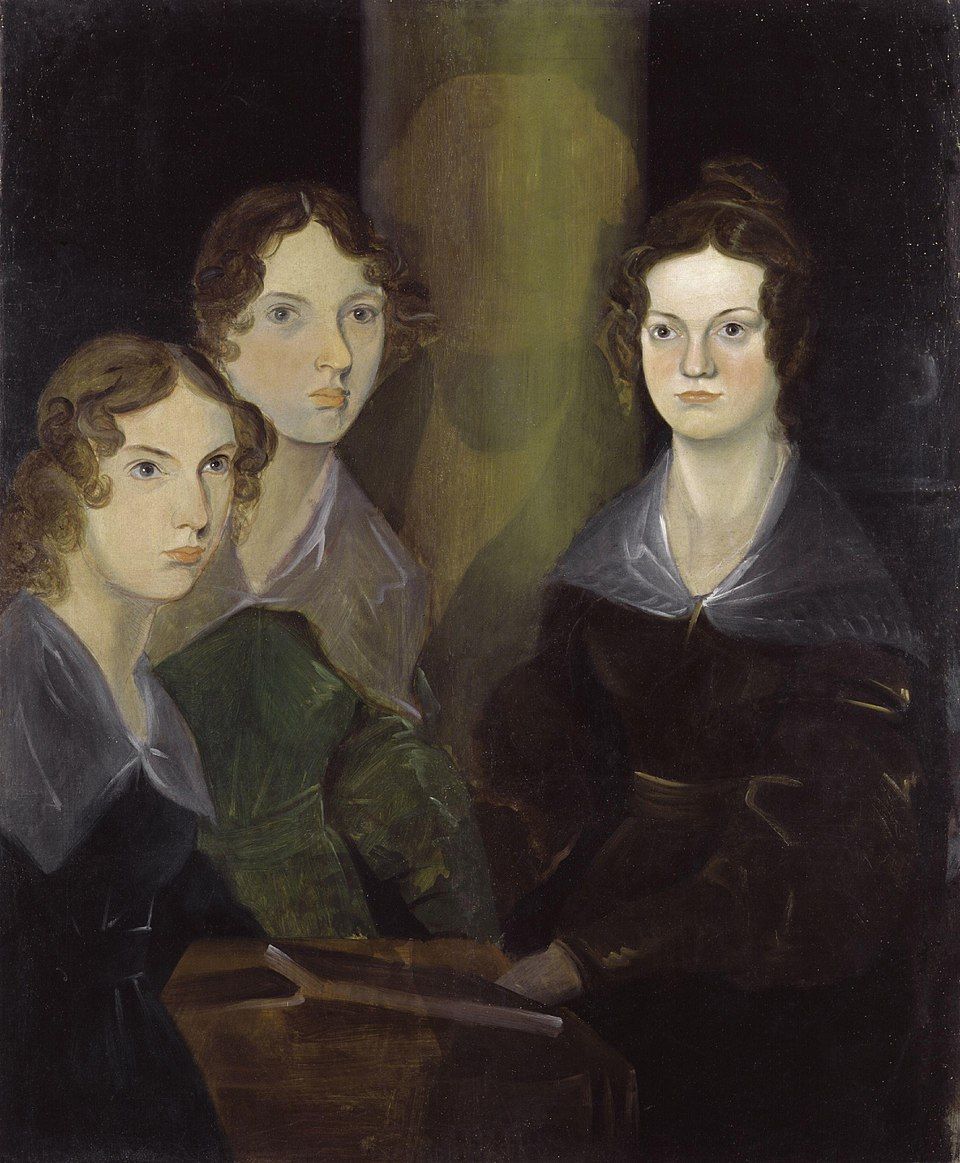
The New Yorker weighed in by republishing online a review essay from 30 years ago that looked at how the three famous Brontë sisters, their siblings, their parents and even Haworth were all from the beginning misinterpreted and misrepresented by biographers, with the novelist Elizabeth Gaskell setting the tone with “The Life of Charlotte Brontë” in 1857.
Their clergyman father, Patrick Brontë, is at the center of the discussions in the Times and the New Yorker, because he grew up in County Down and was from his young adult years associated with the abolitionist cause.
In the Times, Zuckerman says, “Reginald Watson, an associate professor of literature at East Carolina University, has studied questions of Blackness in the works of the Brontës, including Emily’s sister Charlotte, the ‘Jane Eyre’ author. ‘My belief is that because of the father’s involvement in abolitionism that both of the authors included connections to slavery in some form,’ Watson said. His position is that while Heathcliff ‘may not be totally Black,’ he is mixed.”
The Times report continues, “Another theory, however, is that Brontë was using Heathcliff to comment on prejudices against the Irish, since her father was from Ireland and she was writing at the start of the potato famine there. ‘Think about Heathcliff who was brought from Liverpool and speaks a sort of gibberish, said Elsie Michie, a professor of English at Louisiana State University. ‘The description of Heathcliff conforms almost exactly to the caricatures of the Irish.’”
An Irish Times article in 2019 described Patrick’s impoverished father, Hugh Brunty, as a "farmhand, fence-fixer and road-builder." Hugh was Anglican, while his wife, Elinor Alice (née McClory), was Catholic. Patrick, the eldest of their 10 children, got various apprenticeships as a young person, but it was a clergyman who saw his potential and provided for his education. Patrick became a teacher in 1798, at the age of 21. He moved to England in 1802 when he won a scholarship to study theology at St. John’s College, Cambridge. According to the Brontë Parsonage Museum, the leading abolitionist Member of Parliament William Wilberforce helped pay for his tuition.
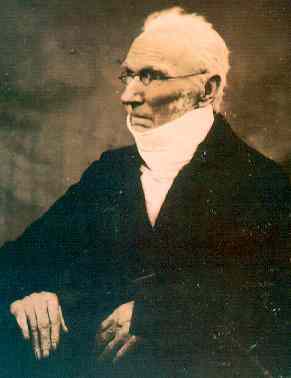
Patrick Brontë c. 1860.
In his review essay in the New Yorker from 1995, “The Irresistible, and False, Myth of the Brontë Sisters,” Dickens biographer Peter Ackroyd describes Brontë as a “devout Evangelical, then a minister who managed to give even ‘muscular Christianity’ a good name.” In 1812, he met and married the Cornwall-born Maria Branwell. “She was bright, alert, and energetic, with her own propensity for religious fervor.”
When Maria died in 1821, 18 months following the move to Haworth, she left behind six children. Four years later, the two eldest, Maria and Elizabeth, died of consumption, which they contracted apparently at their boarding school for the daughters of clergymen. Patrick would eventually outlive all of his children, dying in 1861, six years after Charlotte’s death. He was 84.
Ackroyd writes admiringly about Juliet Barker’s “The Brontës,” which he sees as a corrective to just about everything written about them previously.
It’s clear that once the world discovered that Currer, Ellis, and Acton Bell were in fact three women, Charlotte, Emily and Anne Brontë they had to be remade to fit a “morbid romanticism,” which was the product of an oppressive and deeply unhappy childhood in a parsonage on the Yorkshire moors.
Ackroyd writes that, “Haworth was described by a clergyman as almost a ‘heathen village,’ whose inhabitants treated people ‘like wild beasts,’ and this is the impression that Brontë biographers have tried to maintain.”
Much of this is the fault of Mrs. Gaskell, “possibly the most credulous and most sentimental biographer of the nineteenth century.”
Says Ackroyd, “She was already a famous novelist, but she reserved her finest fictional touches for her life of Charlotte Brontë. Her sublimely inaccurate portrait was followed by works of various other biographers, who managed to fill their books with material more extravagant than anything to be found in a Brontë novel. One of them had the sisters eating ‘gypsy fashion’ on the moors, while another tried to prove that all their writings were based upon Irish originals.”
He describes Barker’s “comprehensive and sensible new work” as “the first that wholly takes a stand against the legend. The girls were neither mad nor bad nor particularly dangerous to know. Their father, Patrick, was a kind and genial parent; their brother, Branwell, was a talented and resourceful writer; Aunt Elizabeth Branwell was not the ferocious and dogmatic Methodist of myth but a rather flighty old party of advanced views.”
He adds, “All this will come as a severe disappointment to the more excitable Brontë admirers, but, in exchange for their illusions, Juliet Barker offers them a beguiling and convincing account of the family upon the moors.”
Ackroyd says that Barker (a scholar at this point with a long association with the museum in Haworth) “shows that their childhood was essentially a happy one, and that the accounts of suffering were largely promulgated as a way of excusing those passionate elements of the Brontës’ fiction ‘which the Victorians found unacceptable.’”
The biographer has provided a “wonderful portrait of four highly intelligent people who preferred one another’s company to anyone else’s and, as a result, stimulated one another’s already overheated imaginations.”