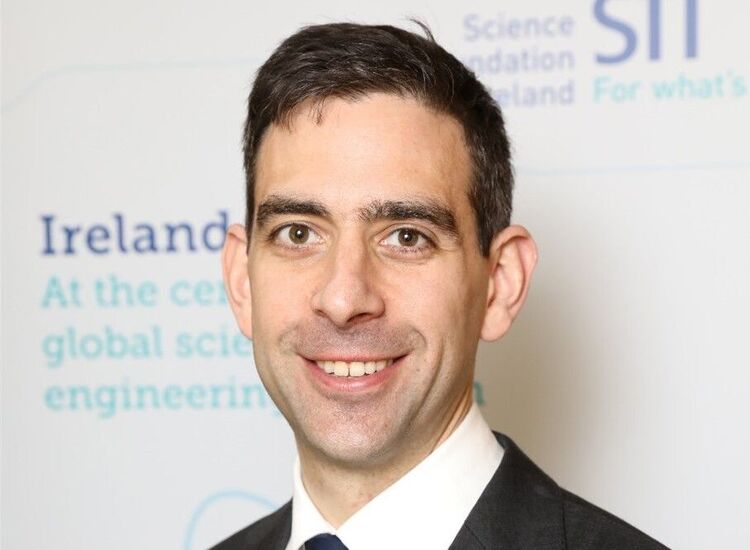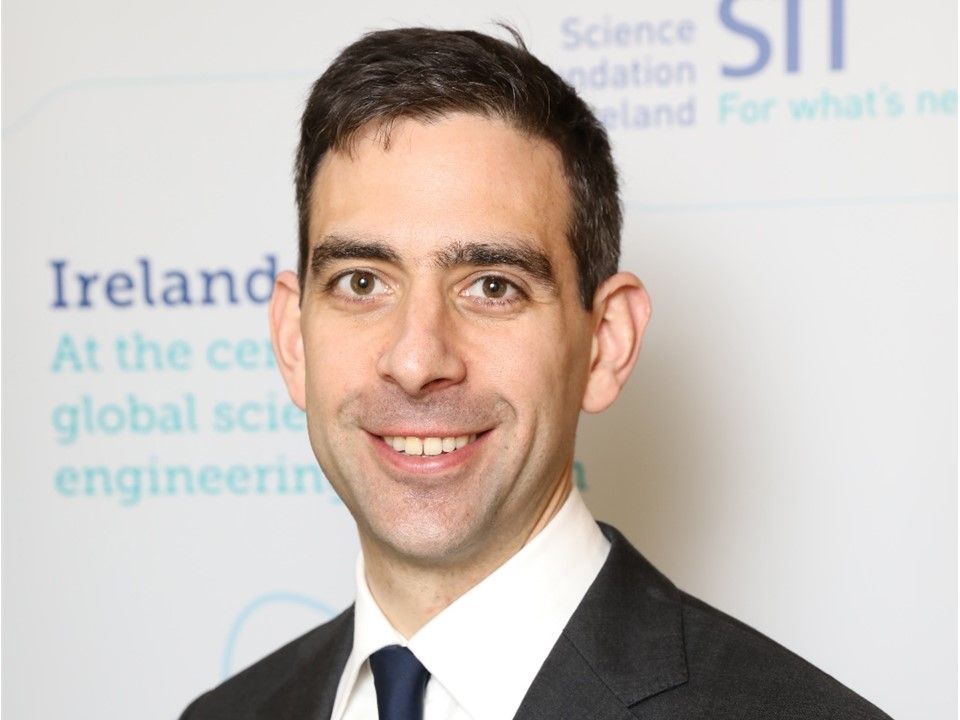
Below is an interview conducted by Séamus Ó Fianghusa (SÓF) with Pádraig Cantillon-Murphy (PCM), educational entrepreneur and founder of Mater Dei Academy Cork (materdeiacademy.ie).
SÓF: Pádraig, you’re a professor of engineering at UC Cork, you have nine children, and you started Ireland’s first independent classical secondary school. How do you do it all? And why? Tell me your story.
PCM: Well, my wife Grace and I met at MIT in 2006. She’s from Paris, and we were both studying engineering. We got married, had two kids in Boston, then moved home to Ireland. I was offered a faculty position at UCC, and our kids went into public schools.
We realized that the public schools were not what I had experienced in the early 1980’s growing up. Grace was quite appalled at the academic level in the schools. It had been Catholic excellence maybe a generation before, but it was certainly no longer excellent. And unfortunately, the various constitutional changes percolated through the Irish education system as well, with attitude changes and textbook and curriculum changes, which meant that it wasn’t really Catholic either.
So we began talking with other like-minded parents. This is 2015, 2016. We were encouraged by the Dominican community in Cork and received the blessing of our bishop, so we opened Mater Dei Academy in 2020 with 12 students. And that was the beginnings of what now is a school with 60 students, and a homeschool program whose enrollment is has skyrocketed this year.
SÓF: And this is the first ever school in Ireland of this type of education, right?
PCM: It's the first in this era. There is a history of independent Catholic schools in former times. In fact, there were a number set up in Cork. A famous one was founded by Terence McSwiney's sister. You remember, McSwiney was the Lord Mayor of Cork who was arrested for treason by the British during the War of Independence, and who went on hunger strike in protest. His sister subsequently set up a school very similar to this, in 1920. Interestingly, she refused to take any Irish government Free State money because she was of the mind that she wanted to be independent of the state.
So there's a history and culture of independent thinking in Cork, but unfortunately throughout the 1950s and ‘60’s that got swamped by the ideologies of people like John Dewey, that education should be of use to society rather than to teach people to think.
SÓF: So you're reviving an Irish tradition, a relatively recent Irish tradition too.
PCM: It’s also an ancient Irish tradition. I mean, going back to the monastic traditions of the value of art, of the values of liturgy as a part of the school life. All of these are part of what we're doing. We've not invented anything. It's all very much looking to our roots and trying to instill in these young people a sense of identity. This is really what many young people are searching for today, “Who am I?” The Irish language is a critical part of that. The faith formation is a critical part - probably the most critical part of that. The language, the history, the culture, music, the art, it's all interconnected.
We found that many of the modern textbooks tend to dilute Irish identity, almost creating a sense of pan-Europeanism, and in some cases actively undermining Irish identity. There were some very high-profile cases reported in the media of where that was happening in textbooks where, you know, people who learned traditional Irish music and dance, played Irish games, and went to Irish cultural events were portrayed as somehow being backwards.
So, we’re trying to address that in a positive way and give a positive sense of identity to Irish youth.
SÓF: That's beautiful. So tell us more about your school.
PCM: Mater Dei Academy is a secondary school in Cork City. We have no connection with or money from either church or state. We’re run by a board of parents and friends. We’re supported financially by parents, and friends in Ireland, and, to borrow a phrase, gallant allies in America.
We’re co-ed, what in America is grades seven-12. We have daily prayer in the chapel, and we have written some of our own textbooks. For the first four years follow a classical curriculum of English, history, math, Latin, science, Gaeilge, and French. In the last two years we follow the national curriculum so our students can sit the Leaving Cert exams. You can see our curriculum outlined at MaterDeiAcademy.ie. I should mention that we have a few foreign students for a semester or a year as well.
SÓF: There are two aspects of the American connection that I see. One is that classical education, and independent schools, are not uncommon in the United States; whereas in Ireland, independent classical education is just getting started, thought it really is a revival of something that hasn't been seen in a generation. And the other, of course, is the financial support from the Saints and Scholars Foundation. Can you speak to that?
PCM: One thing is the financial support for students, scholarship aid. The other thing that the Foundation has been providing is the opportunity for teachers to come from the U.S. to Ireland for a year, maybe two years, depending on the circumstances. And that's been a huge blessing because they have experience of independent classical schools in the US and have shared that with Ireland. They've come from some of the elite U.S. liberal arts colleges, like Christendom, Hillsdale, University of Mary, University of Dallas, and they've taught at Mater Dei Academy!
SÓF: That’s amazing.
PCM: We are able to attract teachers, because they’re drawn to us because to them we’re classical education mission territory. Financially, obviously, we want them to be able to live and to enjoy their time insofar as possible in a mission context, but it's also an opportunity for them to develop as teachers. The Saints and Scholars Foundation (SaintsAndScholars.us) has been providing yearlong Fellowships. Applications are competitively reviewed, and then the Saints and Scholars Foundation selects a Fellow. That costs the Foundation $50,000 a year. So if there’s somebody who wants to write a check for $50,000 a year and sponsor a Fellow to come from the U.S. to Ireland, that is a beautiful way to support our work!
SÓF: I hope somebody does!
PCM: When you think about it, Ireland is the reason that many Americans are Catholic to begin with! You go back to the seventh and eighth centuries and you have Irish monks who were largely responsible for evangelizing large parts of northern Europe, and of course northern England and Scotland. They had a transformative impact on art and culture at that time. Then, in the 19th century, it was Irish priests and nuns who built the American parish school system in many parts of the US.
Sadly, in the other direction, liberal Americans went to Ireland in the 20th century and spread the gospel of materialism and political correctness, and the transformations from that have been pretty negative. But on the other hand, independent, parent-run, classical education has been established for about forty years in America and is only now getting to Ireland—so that’s something good that’s coming across now!
SÓF: A Phádraig, go raibh mile maith agat.
Séamus Ó Fianghusa is a member of the Board of The Saints and Scholars Foundation (saintsandscholars.us). Pádraig is the founder of Mater Dei Academy (materdeiacademy.ie). Pádraig recently about Catholic education in Ireland at Ernie O’Malley’s in Manhattan.