At first glance, the Portadown District Orange Order's request to march down the Garvaghy Road from Drumcree Church seems innocuous enough: just 35 Orangemen, walking silently without bands or accompanying supporters, carrying only the Portadown District banner. The procession along the disputed section of road would last roughly 15 minutes.
Some might reasonably wonder: Why the outrage?
When I taught high school history, I constantly reminded my students that events cannot be understood without their historical context. The controversy over the Garvaghy Road is a perfect example. The dispute is not really about 35 men walking quietly down a road for 15 minutes. It is about what that road, that march and the Orange Order itself have represented over more than two centuries.
The Orange Order was born amid intense sectarian and agrarian conflict in late-18-century County Armagh. In September 1795, Protestant Peep o' Day Boys fought the largely Catholic Defenders at the Battle of the Diamond, near Loughgall. After the Protestant victory, the Orange Order was established. Its name honored William III, Prince of Orange, the Protestant king whose defeat of the Catholic James II at the Battle of the Boyne in 1690 became the central historical symbol of Orange culture.

The Order was organized into local lodges, with officers, rituals, degrees and regalia. Membership was restricted to Protestants and Orangeism combined Protestant religious identity with loyalty to the British Crown and the defense of Protestant political interests in Ireland.
Anti-Catholicism was embedded in the Order's traditional membership qualifications. Orangemen were instructed to "strenuously oppose the fatal errors and doctrines of the Church of Rome" and to resist the "ascendency" of Catholicism. Yet those same qualifications also instructed members to refrain from "uncharitable words, actions, or sentiments towards his Roman Catholic brethren." That contradiction—opposition to Catholicism coupled with a professed obligation to treat individual Catholics charitably—has remained one of the tensions within Orangeism.
The first Orange commemorations of the Battle of the Boyne took place in 1796, beginning the tradition that evolved into "the Twelfth." Over the succeeding two centuries, the Orange Order became many things at once: a Protestant religious fraternity, a social and charitable organization, a guardian of cultural traditions and a powerful expression of British and unionist identity. For generations of Protestants and unionists, Orangeism has represented religious faith, community solidarity, family tradition and loyalty to the Crown.
But Catholics experienced Orangeism very differently.
The Order's birth coincided with a period of severe anti-Catholic violence in County Armagh. Lord Gosford, governor of the county, described a "persecution" in which the victims' principal offense was their Catholic faith. Contemporary accounts estimated that thousands of Catholics were driven from County Armagh in the months following the Battle of the Diamond, while threatening notices warned Catholics to leave.
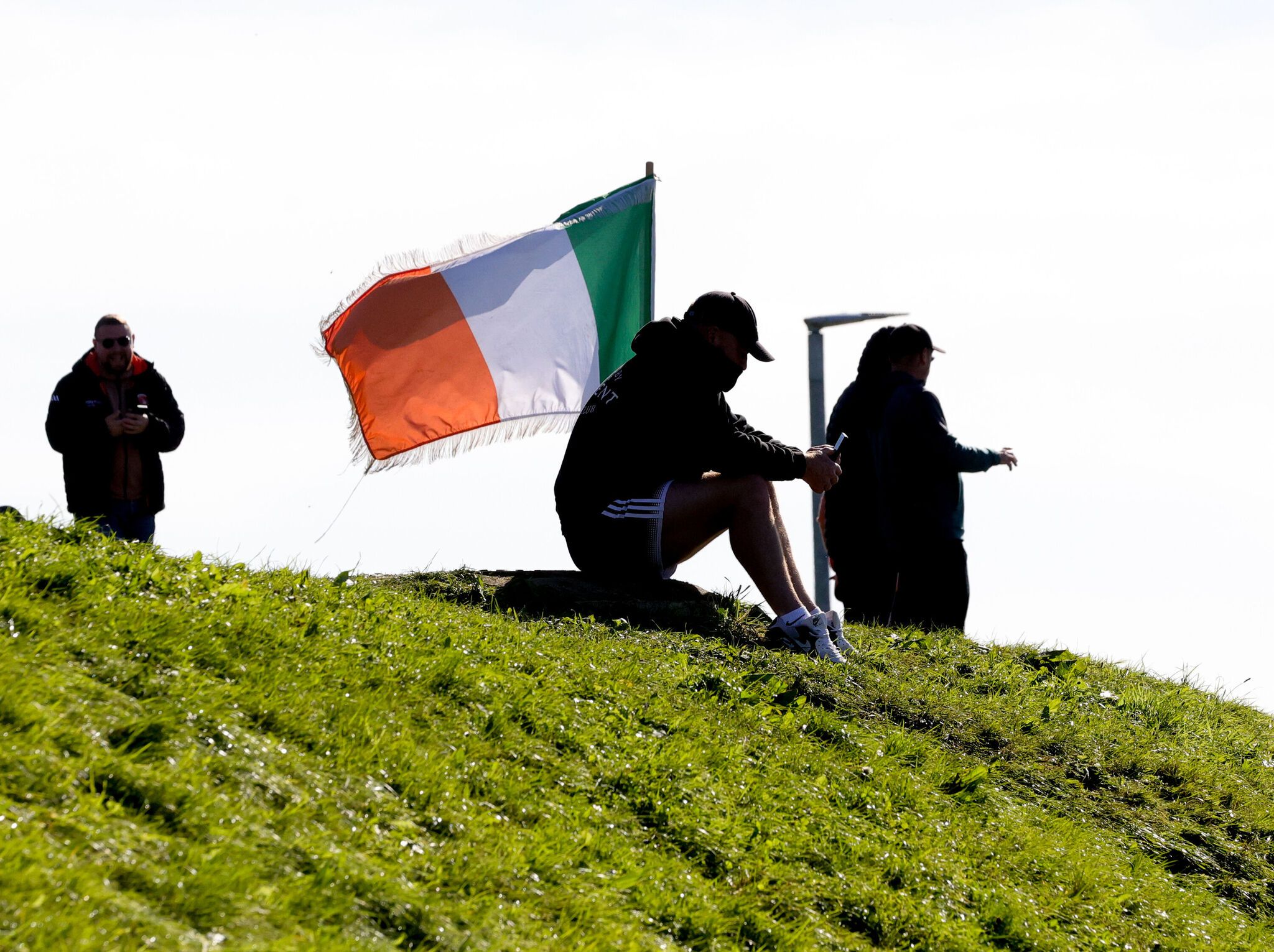
The scene on the Garvaghy Road on Sept. 29, 2026, as residents kept watch after a tense weekend, when members of the Orange Order were given permission for the first time in 28 years to march down the road from Drumcree Church. [Sasko Lazarov/Rolling News.ie]
That history matters because Portadown and Drumcree were themselves repeatedly scenes of sectarian confrontation.
The first Orange parade to Drumcree Church dates to 1807. The route eventually took marchers through or alongside Catholic districts, including Obins Street and the Garvaghy Road. Conflict over such processions is not a creation of the Troubles.
In 1835, Protestant Armagh magistrate William Hancock complained that peaceful residents of Drumcree had been "insulted and outraged" by Orangemen parading the highways, playing partisan tunes, firing shots and hurling insults. He noted that marchers had gone considerably out of their way to pass a Catholic chapel. Violence accompanied Drumcree processions repeatedly during the nineteenth and early twentieth centuries.
The British government itself periodically concluded that sectarian processions posed such a threat to public order that they had to be restricted. The Party Processions Acts prohibited or limited such demonstrations during portions of the nineteenth century. In 1867, Orangeman William Johnston deliberately defied the restrictions by leading a prohibited procession from Bangor to Newtownards. He was imprisoned, became a Protestant political hero and was subsequently elected to Parliament. The legislation was repealed in 1872.
The Orange Order became increasingly political during the Home Rule struggles beginning in the 1880s. Many Ulster Protestants feared that an autonomous Irish parliament would leave them politically and culturally vulnerable in a predominantly Catholic Ireland. Orangeism consequently became closely identified with unionism and opposition to Home Rule.
After the partition of Ireland and creation of Northern Ireland in 1921, that relationship became even closer. The new state's political leadership was overwhelmingly Protestant and unionist, and there was extensive overlap between the Orange Order and the governing Ulster Unionist Party. Prime ministers, cabinet ministers and other prominent politicians belonged to the Order, and Orangeism became deeply embedded in the ceremonial, political and social culture of the state.
Catholics consequently tended to view Orange marches very differently from Protestants. What one community celebrated as an expression of faith, tradition and British identity could appear to the other as a demonstration of political dominance—particularly against a background of discrimination against Catholics in housing, employment and local government that helped give rise to the Northern Ireland civil-rights movement in the 1960s.
Nowhere did those conflicting interpretations collide more dramatically than on the Garvaghy Road.
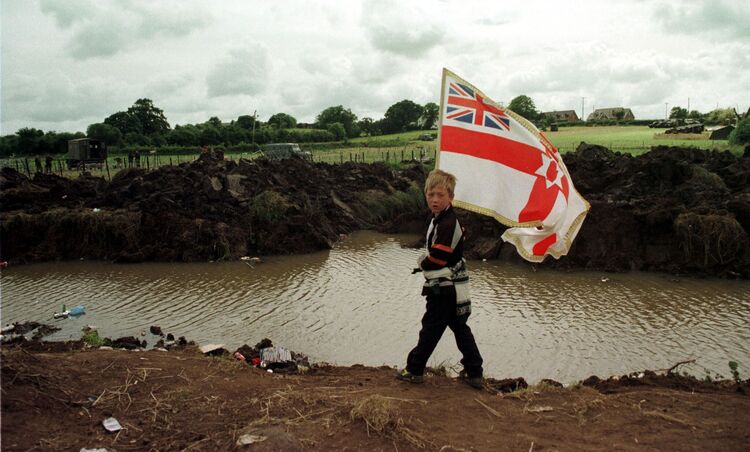
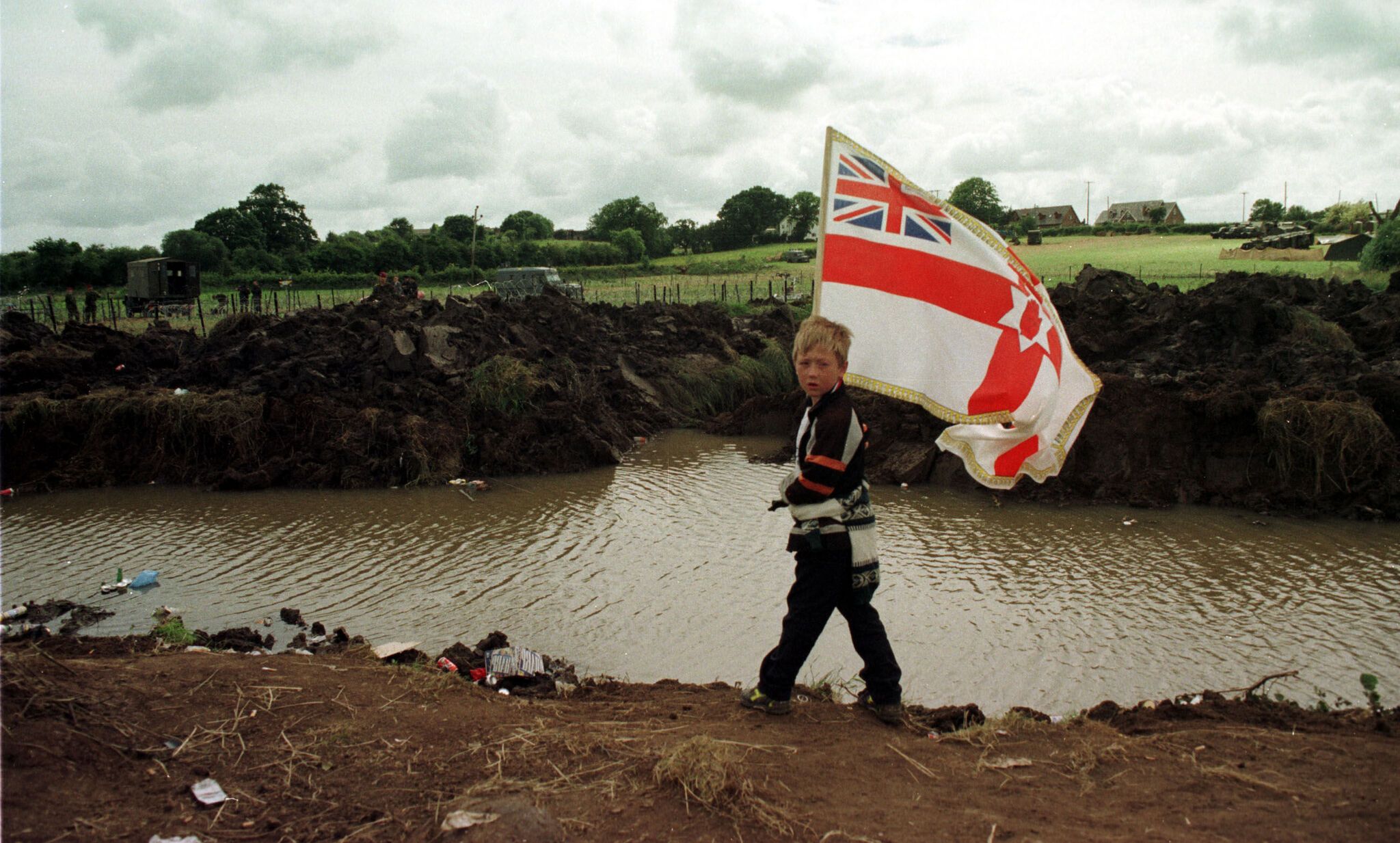
During the 1990s, the annual Drumcree parade became an international symbol of Northern Ireland's sectarian divisions. Residents of the predominantly Catholic and nationalist Garvaghy Road argued that they should not be forced to accept an Orange procession through their community. Orangemen insisted that they were entitled to complete a traditional route to and from Drumcree Church.
The resulting confrontation produced consequences far beyond Portadown. Loyalist protests and roadblocks spread across Northern Ireland. Property was attacked, police and their families were threatened, and security forces were stretched to the limit. Twenty-one deaths have subsequently been linked directly or indirectly to the Drumcree disputes between 1996 and 1999.
Nothing demonstrated the madness of the confrontation more powerfully than the deaths of Richard, Mark and Jason Quinn. The three young brothers died when loyalists petrol-bombed their Ballymoney home on July 12, 1998, at the height of the Drumcree crisis. Their murders horrified people on both sides of the sectarian divide. The Orange Order's own County Armagh chaplain, the Rev. William Bingham, responded with words that still resonate: "No road is worth a life, let alone the lives of three little boys."
After 1998, the Orange Order was no longer permitted to complete the Garvaghy Road section of the parade. And something remarkable happened.
For nearly three decades, Portadown largely moved on.
That is why the present controversy cannot be reduced to the question of whether 35 men can walk peacefully down a public road.
The Orangemen have a legitimate argument of their own. Today's marchers did not commit the outrages of 1795, participate in 19th sectarian riots or murder the Quinn children. The proposed procession is deliberately restrained: no bands, no supporters, no provocative music and only one banner. Unionists reasonably ask how Northern Ireland can call itself a shared society if a small group of Protestants cannot peacefully walk along a public road.
But there is another principle involved in a shared society: respect for the historical experience of the people who live along that road.
A parade is not simply the physical act of walking. Parades carry symbols, memories and messages. That is especially true in Northern Ireland, where for generations the ability to march through a particular neighborhood was intimately connected with questions of political power, territory and communal identity.
For residents of the Garvaghy Road, therefore, fifteen minutes cannot easily be separated from two centuries of history.
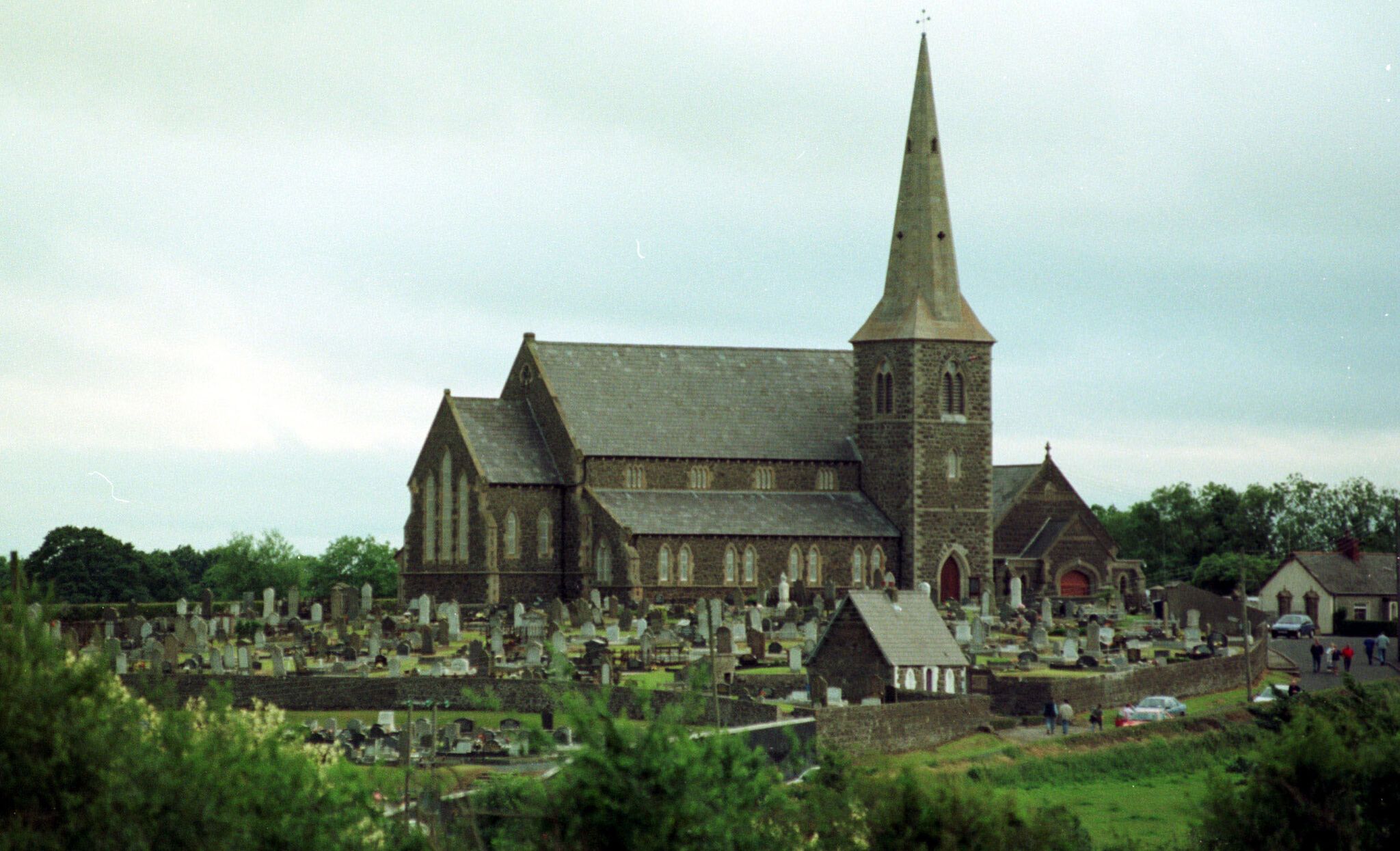
The church at Drumcree on July 5, 1998. [Rolling News.ie]
And perhaps that is the central lesson of Drumcree. Reconciliation does not require people to forget their traditions, nor should it require Protestants to abandon Orange culture. But neither does reconciliation mean pretending that history never happened.
The Orange Order has thousands of roads on which it can celebrate its traditions. The residents of the Garvaghy Road have only one place they call home.
After nearly three decades of relative peace, the question should not be who has finally won the right to march down that road. It should be why anyone would risk reopening one of Northern Ireland's deepest wounds merely to prove that they can.