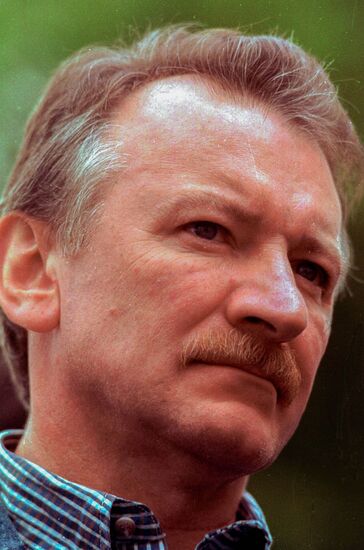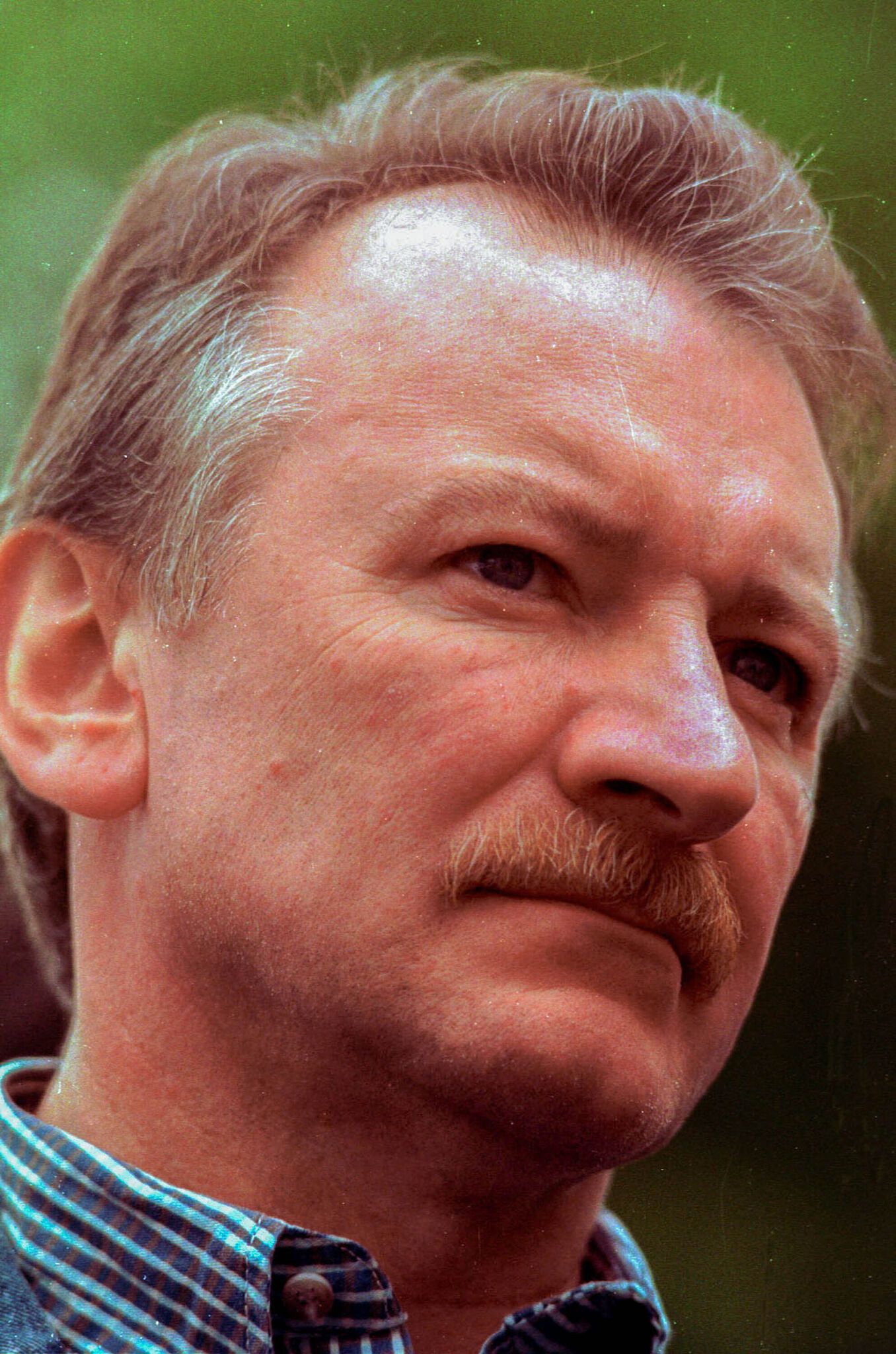
n Aug. 8, I was standing in a tent in Belfast watching TG4's coverage of the Fleadh Cheoil when I suddenly realized that one of the giants of Irish traditional music, Dónal Lunny, was standing beside me. I was thrilled to see the legendary musician, who went on to perform a stunning duet with fiddler Zoë Conway. Little did I realize that I was witnessing what would be one of his final public performances. Then came the heartbreaking news that Lunny had died of cancer after a long illness.
Few musicians have had a greater impact on Irish traditional music over the past six decades. Friends and fellow musicians hailed him as a "genius" and praised his "immense" contribution to Irish music. The Waterboys' Mike Scott called him "Ireland's greatest musician," while Taoiseach Micheál Martin described him as "a colossus" of Irish music. President Catherine Connolly offered her deepest condolences to his family, friends, and countless musical collaborators.
Such tributes were richly deserved. Lunny did more than preserve Ireland's musical heritage. He helped reinvent it, introducing new instruments, rhythms, and arrangements that transformed traditional Irish music and brought it to audiences around the world.

Born in Tullamore, Co. Offaly, and raised from the age of five in Newbridge, Co. Kildare, Lunny was the middle child of nine. A musical prodigy, he began playing the harmonica at six and eventually mastered an extraordinary range of instruments, including guitar, bass, mandolin, keyboards, drums, and bodhrán.
Yet he is best remembered for his mastery of the bouzouki, an instrument of Greek origin that he encountered through his lifelong friend and musical collaborator Andy Irvine. Lunny adapted the instrument to his own musical vision, even designing a version suited to his distinctive style.
He believed the bouzouki was better suited to accompanying Irish traditional music than the guitar. As he explained, "The chords were less dense. It was far easier to play chords. The bouzouki gave a much more open accompaniment to Irish music."
Lunny's innovative playing helped establish the bouzouki as one of the defining instruments of modern Irish traditional music.
While still a teenager, Lunny forged a close friendship with Christy Moore, a relationship that would shape both men's musical careers. Together with Dónal's older brother Frank, they formed an early group, the Rakes of Kildare. It was the beginning of a remarkable musical journey.
Planxty: A Revolution in Irish Music
By the early 1970s, many young Irish people regarded traditional music as something belonging to their parents' or grandparents' generation. Planxty shattered that perception.
The group's four original members—Christy Moore, Dónal Lunny, Andy Irvine, and Liam O'Flynn—created music that was simultaneously ancient and startlingly modern. Their performances possessed the energy, excitement, and spontaneity of rock concerts, yet remained deeply rooted in Ireland's musical traditions.
Planxty sounded like nothing that had come before. In 1981, the Washington Post compared the group's transformative impact on Irish traditional music to that of the Beatles on popular music.
Lunny was central to Planxty's revolutionary sound. His bouzouki playing, rhythmic imagination, and brilliant arrangements gave the group much of its distinctive character. Rather than simply accompanying melodies, he created intricate rhythmic patterns that propelled the music forward.
Planxty also possessed an extraordinary gift for rediscovering neglected songs and restoring their emotional and dramatic power. Lunny's arrangements helped breathe new life into centuries-old material, demonstrating that traditional music could be both faithful to its origins and thrillingly contemporary.
The Bothy Band: Taking Traditional Music to New Heights
Remarkably, Lunny followed Planxty with another groundbreaking ensemble, the Bothy Band, which many consider the most electrifying group in the history of Irish traditional music.
Although its original career lasted only from 1975 to 1979, the Bothy Band transformed the way traditional music was arranged and performed.
Featuring extraordinary musicians, including Matt Molloy, Paddy Keenan, Tommy Peoples, later replaced by Kevin Burke, and siblings Tríona and Mícheál Ó Domhnaill, the group combined breathtaking instrumental virtuosity with an unprecedented rhythmic intensity.
Once again, Lunny was at the heart of the musical revolution.
His bouzouki playing went far beyond conventional accompaniment. He developed powerful, syncopated rhythms that gave traditional jigs and reels a driving momentum reminiscent of rock music. Yet his playing never overwhelmed the melodies. Instead, it lifted them to new heights.
Lunny was also a master arranger. He understood instinctively how to build tension, shift musical textures, and create dramatic climaxes. His arrangements could transform a familiar traditional tune into an exhilarating musical experience.
The Bothy Band's innovations became a model for subsequent generations of traditional musicians. Groups such as Altan, Lúnasa, and Dervish followed paths opened by the band, proving that Irish traditional music could be adventurous, sophisticated, and innovative without sacrificing its roots.
Moving Hearts and a Lifetime of Innovation
Never content to rest on his achievements, Lunny helped launch yet another influential Irish supergroup, Moving Hearts, in the early 1980s.
Reuniting with Christy Moore and collaborating with musicians including uilleann piper Davy Spillane, Lunny helped create a daring fusion of traditional Irish music, rock, jazz, and politically charged songwriting.
Moving Hearts pushed musical boundaries even further, combining the emotional power of traditional melodies with electric instruments and contemporary rhythms. The group also demonstrated Lunny's restless creativity and refusal to be confined by musical categories.
His influence extended far beyond the concert stage.
Producer Philip King famously described Lunny as the "Quincy Jones of Irish producers," a tribute to his extraordinary musical judgment and ability to bring out the best in other performers.
Over the course of his career, Lunny worked with artists including Paul Brady, Elvis Costello, Sinéad O'Connor and the Indigo Girls. His talents as a producer and arranger helped shape recordings across a remarkable range of musical genres.
He was also producer and musical director of the acclaimed 1990 BBC documentary series “Bringing It All Back Home,” which traced the worldwide influence of Irish music and explored its enduring connections with American musical traditions.
The series was a fitting project for a musician who had spent his career demonstrating how traditional music could travel, evolve, and inspire new generations without losing its identity.
A Musical Giant Without an Ego
For all his achievements, Lunny was remembered by fellow musicians as a remarkably modest and generous man.
The late composer and pianist Mícheál Ó Súilleabháin described him as "a very gentlemanly, quiet person," while his Planxty colleague Liam O'Flynn admired how Lunny "never held a tune back."
Documentary filmmaker Nuala O'Connor likewise emphasized his lack of ego and lifelong devotion to music.
Perhaps the most revealing thing about Lunny was that, despite his extraordinary talent, he preferred supporting other musicians to occupying the spotlight.
"I preferred to be the accompanist," he once explained.
It was an astonishingly modest statement from a musician whose accompaniment had revolutionized an entire musical tradition.
Accepting a lifetime achievement award in 2025, Lunny offered another simple explanation of what drove him: "My whole sort of reason for living was playing music."
And what music he made.
Dónal Lunny leaves behind a legacy that few musicians could equal. Through Planxty, the Bothy Band, Moving Hearts, and countless collaborations, he transformed the sound of Irish traditional music, inspired generations of performers, and helped carry Ireland's musical heritage around the world.
He was both a guardian of tradition and a fearless innovator, a musician who understood that the best way to preserve a living tradition was to allow it to grow.
As I think back to that August evening in Belfast, I realize how fortunate I was to witness him making music one last time. Even after six decades of extraordinary achievement, he was still doing what he loved most: playing alongside another gifted musician, creating something beautiful, and allowing the music—not himself—to take center stage.
That, perhaps, is the finest tribute to Dónal Lunny. He changed Irish music forever, yet never stopped putting the music first.