On Sunday, September 27, Ireland played one of the most controversial international football matches ever. The Republic of Ireland faced Israel in the UEFA Nations League in Debrecen, Hungary, where Israel has staged a number of its UEFA home fixtures because of security concerns connected with the Israel–Gaza conflict. Ireland won the match 3–0, but much of the debate in Ireland had focused not on the result, but on whether the game should have been played at all.
Opposition to the fixture was substantial. A February 2026 survey by PFA Ireland found that 63 per cent of 214 League of Ireland players surveyed believed Ireland should not fulfil its fixtures against Israel. A separate public poll reported that 71 per cent would support the Football Association of Ireland, if it refused to play.
Those findings came against a wider background of strong Irish public sympathy for Palestinians. A 2024 Ireland Thinks poll found that 76 per cent of respondents supported EU economic or trade sanctions on Israel. In an Ireland Thinks poll conducted in November 2023, 71 per cent agreed that the situation facing Palestinians fitted the definition of apartheid presented to them in the survey.
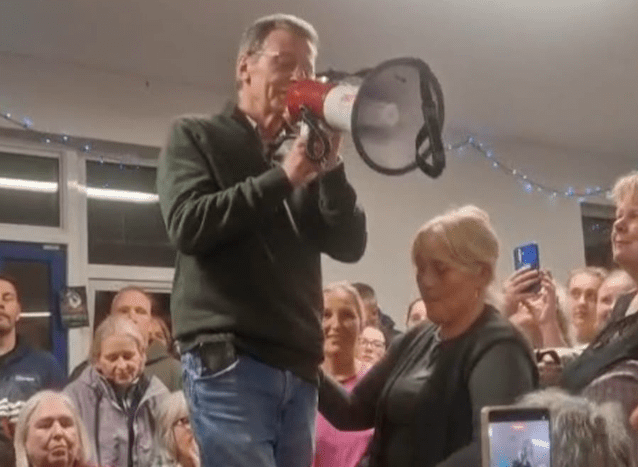
The pressure on the FAI intensified before the match – 163 Irish sportspeople signed an open letter urging Ireland not to play. The letter argued that the principles of equality and fairness associated with sport were incompatible with what its signatories described as the discrimination and oppression experienced by Palestinians.

Supporters of a boycott argued that playing Israel as normal while Palestinians were being killed and displaced would undermine Ireland's calls for accountability over Israeli actions in Gaza. Campaigners also drew comparisons with the sporting sanctions imposed on Russia following its invasion of Ukraine and argued that Israel should similarly be suspended from international competition.
The FAI itself had already called on UEFA to suspend the Israel Football Association. But UEFA did not do so, leaving the FAI to decide whether Ireland should unilaterally refuse to fulfil its fixtures.
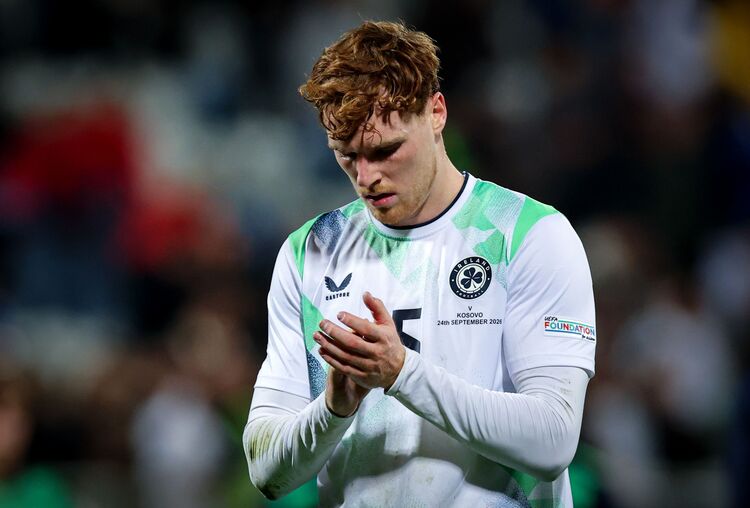
The controversy became even more intense on the eve of the first match when Ireland goalkeeper Gavin Bazunu withdrew from the squad. In a statement explaining his decision, Bazunu said that representing Ireland meant "everything" to him but that he believed it would be wrong to participate in the fixtures. "My decision is based purely upon my personal belief that the killing of innocent people is wrong," he said. He stressed that his position was not directed against Israeli or Jewish people, but against what he described as atrocities in the region.
Why has the issue resonated so strongly in Ireland?
Part of the answer lies in Ireland's own history. Ireland spent centuries under British rule, and memories of land confiscation, political subordination and attempts to suppress aspects of Irish culture remain important elements of Irish historical consciousness. For some Irish supporters of Palestine, Palestinian displacement, Israeli settlements in the occupied West Bank and military occupation are consequently understood through an anti-colonial framework.
Those connections are not new. They became particularly visible during the Troubles, when sections of the Irish republican movement and Palestinian national movements publicly expressed solidarity with one another.
Ireland's own experience of partition also provides another historical reference point. In 1921 the island was partitioned, with what became the Irish Free State separating from the United Kingdom while Northern Ireland remained within it. Although the histories and circumstances of Ireland and Israel-Palestine are very different, both conflicts have involved contested territory, borders, national identity and competing claims to self-determination.
That helps explain why Palestinian demands for national self-determination and statehood have found a particularly receptive audience in Ireland. When Ireland announced its recognition of the State of Palestine in May 2024, Taoiseach Simon Harris explicitly connected the decision with Irish history. He recalled that on January 21, 1919, Ireland had appealed to the world's nations to recognize its independence. "Today we use the same language to support the recognition of Palestine as a State," Harris said.
Memories of the Great Hunger have also featured in Irish responses to Gaza. Approximately one million people died during the Famine and roughly another million emigrated. For some Irish observers, images of hunger, food shortages and restrictions on humanitarian assistance in Gaza therefore carry an additional historical resonance. Scholars and commentators examining contemporary Irish-Palestinian solidarity have similarly explored the role that memories of famine and colonialism play in Irish interpretations of the conflict.
None of this meant that there was agreement in Ireland about boycotting the match.
The FAI argued that simply refusing to play could have serious sporting and financial consequences for Irish football. In July, delegates at an extraordinary general meeting endorsed the FAI board's decision to fulfil the two Nations League fixtures. FAI officials subsequently argued that UEFA's refusal to suspend Israel had left the association in an extremely difficult position.
There was also a broader argument that individual national associations and players should not be expected to decide which countries are permitted to participate in international football. From this perspective, if Israel was to be suspended, UEFA rather than the Irish team should make that decision.
Others argued more generally for separating sport from international politics. Taoiseach Micheál Martin, while strongly critical of Israeli policy in Gaza, expressed concern about the difficulties created when sporting competition becomes entangled with political disputes. The underlying argument was that Ireland could condemn actions of the Israeli government without refusing to compete against Israel's national football team.
The dispute ultimately reached the Irish dressing room. On September 26, following Bazunu's decision to withdraw, the squad held approximately four hours of discussions. According to FAI chief executive David Courell, a "significant majority" of the players eventually voted to fulfil the fixture.
Their decision to play did not mean proceeding as though the controversy did not exist. The Irish players wore black armbands in recognition of lives lost in the conflict and declined to participate in some of the usual pre-match ceremonies. The players and the association also committed to significant charitable donations.
The controversy is not over. Ireland is scheduled to face Israel again on October 4, this time in what is nominally an Irish home fixture. It will not, however, take place at Dublin's Aviva Stadium.
After consultations with stakeholders and An Garda Síochána, the FAI said that "operational challenges" could affect its ability to stage the game in Ireland. UEFA approved its request to relocate the fixture, which will instead be played behind closed doors at the TSC Arena in Bačka Topola, Serbia.
The two matches have therefore become about considerably more than football. They have brought together questions about the responsibilities of sporting organizations, the limits of sporting boycotts, the consistency of international sanctions and the extent to which athletes should be expected to respond to political conflicts.
In Ireland, those questions have acquired particular force because they reflect a long history of Irish support for Palestinian self-determination and with interpretations of Ireland's own experiences of colonialism, partition and famine. The debate over the Israel fixtures illustrates both the strength of that solidarity and the difficulty of deciding what role Ireland’s football team should play in expressing it.