Roseanne Mallon was a lovely person.
She was a retiree, unmarried, who lived with her sister-in-law Bridget Mallon. Brigid’s adult children, Paula, Alice, Ann, and Martin, all lived beside each other in Killmoyle, Dungannon, County Tyrone.
Christopher lived with his mother Brigid. Paula lived opposite her mom and her house overlooked her mom’s house. Roseanne was not a political person, nor was she involved in any paramilitary activity.
She was simply a 76-year-old woman who loved sharing time with her family. Her life came to an appalling end on the evening of Saturday, May 8, 1994 when their home was attacked.
On that evening, a volley of automatic gunfire was launched through the window of the home killing Roseanne as she was watching television. Thirty-two years on, no one has been charged, indicted, or convicted in her murder.
A PRELUDE TO MURDER
In 1993, Martin Mallon, Roseanne’s nephew, was released from Long Kesh after serving a seven-year sentence for possession of explosives. After his release he worked with others toward a political solution to the Troubles.
In 1994, he became chair of Sinn Féin in County Tyrone. This growing movement toward a political solution eventually helped bring about the Provisional IRA’s 1994 ceasefire.

Sometime in 1994, before Roseanne’s murder took place, Martin Mallon was arrested and taken to an RUC Barracks. He was likely targeted because of his involvement with the Provisional IRA.
During our interview, Mr. Mallon recounted that, “[he] was locked up overnight and interrogated the next morning. I didn’t have my solicitor. A well-dressed Englishmen entered the room. He said he was there to negotiate with me on behalf of MI5.
"He told me that I didn’t have to say anything, I could wink or nod to show if I agree [with an offer]. He went on to tell me that I would make a good candidate for [elected] office; and I would be protected and so would my family.
Roseanne Mallon.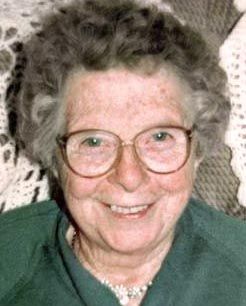
After he said that I didn’t blink or move. "When he saw that I didn’t agree to his offer, he said that 'at their time and convenience a member of your family will be executed. When he stood up to leave he made the offer again and I didn’t react. He then said a member of my family would be killed.” This would not be the final time Mr. Mallon and his family would be threatened.
Three weeks prior to Roseanne’s murder, Mr. Mallon was stopped on an isolated road by armed Special Branch officers and held there for almost one hour at the roadside. During the detention, Mr. Mallon recounted, “after I was stopped, I was asked where I was coming from. I said Dungannon. They got me out of the car and searched [the car].
After the search, I asked if I was under arrest. They said no, but I had to wait here for a while.
After some time Billy Wright and Tony McNeill pull up in a car and talked with the officers."
For context, Billy Wright was the founder and leader of the Loyalist Volunteer Force, the LVF and was a ruthless figure during the Troubles. He founded the LVF in 1996 following his expulsion from the Ulster Volunteer Force (the UVF).
Billy Wright was also an alleged agent for the Special Branch. He also carried the nickname “King Rat," which was given to him by the media because of his notorious murders. Tony McNeill was a close associate of Billy Wright and also carried out murders as a member of the UVF and later the LVF.
“When Billy and Tony got there, the police ID me to both of them saying, ‘that’s Martin Mallon sitting in the car.' They [Billy Wright and Tony McNeill] shouted insults and things I won’t repeat here. Wright and McNeill drove up next to my car and said they would kill me and my wife.
It was clear that the situation shifted from being about me to being about getting my family." It was reported that, as a lead up to Roseanne’s murder, RUC Special Branch members issued death threats three weeks before the murder threatening to kill Mr. Mallon’s wife.
Mr. Mallon and his brother Christy were regularly subjected to threats from the RUC. Like Martin, Christy was also a former IRA political prisoner having served time in Long Kesh.
MAY 8, 1994: THE MURDER
On Saturday night, May 8th, Roseanne and her sister-in-law, Brigid Mallon, had been out together and returned home by car around 10.30 p.m. Roseanne sat down on the couch (the “settee”) in the living room at the rear of the house with her back to the window.
The lights were on in the living room and the blinds were drawn partially. Brigid left the room to telephone her daughter, Paula, who lived with her husband and family on the other side of the road. Paula’s home had a view looking at her mom’s home.
As Brigid and her daughter Paula were talking on the telephone, Paula noticed a large passenger sedan (a “saloon car”), dark in color, stopping at the entrance to Brigid’s home and two men running up the driveway towards the house.
Paula told her mother to see what was happening and to get to a safe place. Brigid put the telephone down but left the line connected while she went into the living room.
Brigid in an audible whisper to Roseanne, and signaling with her hands, to get out of the room. Roseanne began to get up but her arthritic condition made it slow to get up. Brigid had by then gone back into the hall when she heard a volley of gunfire and the room filled with smoke. She heard Roseanne say “oh dear."
Brigid heard a car drive off with its wheels spinning. Despite her age of 60, being shot in the hand, and with shrapnel wounds to her leg, she went back to the living room and went over to where Roseanne was laying.
Roseanne gave a couple of sighs as Brigid watched the color drain from her face. Brigid called out to her daughter who was still on the telephone. Paula, who had heard the gunfire over the open telephone line, made two 999 calls to the police just before midnight.
An ambulance arrived at around 12.13 a.m. Upon arriving, the responders could find no signs of life. They remained with Roseanne’s body until her doctor arrived and pronounced death on May 8th, at 12.40 a.m. The pathology report determined that “Death was due to bullet wounds of the trunk.
Numerous bullet fragments, including the steel cores of bullets, had struck the back of the body and passed forwards. Some had made their exits on the front whilst others had lodged in the body.
They had fractured two right and two left ribs as well as severely lacerating the lower part of the right lung and lacerating the intestines and the aorta in the abdomen. The combined effect of these injuries would have caused her rapid death. Other fragments had also struck the head and limbs… The injuries were of a type caused by bullets of high velocity.”
The weapon used to kill Roseanne Mallon was a fully automatic VZ58 assault rifle, similar to an AK-47, located on May 14th, hidden under a piece of corrugated metal at a derelict house not far from the murder scene.
A report by the former Historical Enquiries Team alleges that British intelligence agents were involved in the plot or knew of the shipment that brought the VZ58 to Northern Ireland used to kill Roseanne Mallon, and that members of the military were believed to have been involved in several of the later killings in which the weapon was used.
COLLUSION AND COVER-UP
The subsequent investigation into the murder of Roseanne Mallon by British authorities, and the broad deference given to these authorities in the Coroner’s Court Verdict on Inquest is striking.
The multitude of evidence, of destroyed evidence, incompetent forensic analysis, and contradictory information lends itself to only one likely conclusion: that there was collusion between the RUC, Special Branch, and the UVF and that British authorities are covering up these acts of collusion.
It is difficult to illustrate all of the acts of collusion and cover-up perpetrated in Roseanne’s murder investigation. However, several key pieces of evidence are insightful.
First, the presence of the RUC Special Branch camera camouflaged on a hill 550 yards from Brigid Mallon’s home. The camera was specifically directed towards Brigid’s home as part of an operation conducted by the RUC and Special Branch codenamed “Paucity 2."
The camera was not discovered until two months after Roseanne’s murder. Aside from the concealment of the camera from the family and investigators following the murder, inherent contradictions arise in the RUC’s account of the camera.
Looking at the Verdict on Inquest decision, the Coroner Judge determined that the technical capability of the camera and equipment “… did not have the capacity to pick up or transmit images at night nor did it have the capacity to zoom in and out."
Issues of preserving battery capacity was accepted by the Coroner Judge as another reason the camera was not functioning that evening.
However, the Coroner Judge concluded previously that, “[o]n 9 July 1994, some two months after the death of the deceased, an elaborately-concealed surveillance camera was discovered in a field [overlooking Brigid Mallon’s home].
It is clear from the evidence that the camera was part of a surveillance operation that had been initiated by RUC Special Branch (“SB”).
The target of that camera was the engineering works at [Brigid’s home] operated by Christopher and Martin Mallon. Its purpose was to identify persons and vehicles at the engineering works.”
Thus, it is clear that the camera was capable of identifying people and vehicles from 550 yards away. Nonetheless, the assertion was made that the murder occurred at night. Even if the camera was on, it could not capture anything.
Two points of contradiction on this assertion.
Point one: the Coroner Judge was factually wrong. In Dungannon on May 8, 1994, evening nautical twilight—dim ambient light with the horizon still visible—began at 10.03 p.m. BST and ended at 10.43 p.m. BST, when astronomical twilight began.
Full darkness - the end of astronomical twilight - did not occur until 11.19 p.m. BST. The Coroner Judge found that, “[i]t was around [10:30 p.m.] when [Roseanne and Brigid arrived at Brigid’s home] and so it was by then dark [outside]…
[Rosanne] sat on a settee in the lighted living room at the rear of the house with her back to the window on which the blinds were drawn although perhaps not fully.
[Brigid] left the room to telephone [her] daughter, Paula… As the two ladies spoke the daughter noticed a large saloon car, dark in [color], stopping around the entrance [to her mother’s driveway] and two men running up its driveway towards the house.”
Clearly, Paula was able to see with the existing ambient light that a dark colored passenger sedan pulled up in front of the driveway and that two men ran up to the house.
All of this being seen from inside her home across the road. It was not dark. It was nautical twilight. The camera could have captured persons and vehicles at or around Brigid Mallon’s home.
Point two: the camera could capture images, not only at twilight but in darkness. As stated by the Coroner Judge, “[a]fter the equipment had been found on 9 July the Mallon family showed it to a man who had previously worked for BBC and UTV who told the family that the equipment had night sight and also the ability to zoom in and out.”
It was reported that the equipment being used to surveil the Mallon home consisted of one small camera with a wide angled lens and another camera with a powerful telephoto lens.
Despite UTV's indisputable expertise in camera and transmission equipment, the RUC and British Army vigorously denied that either camera had a zoom or night vision capability. A fact they asserted given that all tapes were wiped and records doctored or destroyed.
The Coroner Judge nonetheless found that the testimony of the soldier who set up the cameras, and a subsequent laboratory test, confirmed the camera did not have the capacity to capture night images.
Albeit the Coroner’s Court made its finding, it begs the question; if “[i]t is clear from the evidence that the camera was part of a surveillance operation that had been initiated by RUC Special Branch” - and codenamed “Paucity 2” - that the RUC and Special Branch would employ the most sophisticated camera equipment it could?
The UTV expert identified it as capable of capturing images at night. The circumstances of the surveillance operation evidence that the cameras deployed by the military were sophisticated pieces of equipment that could capture images at night.
This is further substantiated by the destruction and erasure of the records and tapes.
Additionally, lack of a camera facilitated the collusion between the UVF, RUC and Special Branch. On May 9, 1994, a telephone call was made to the UTV television newsroom. The caller said, “the Mid-Ulster Brigade of the UVF claims responsibility for the gun attack last night," then added, “Miss Mallon” before hanging up.
Following the claim made by the caller investigators received information that a “silver Peugeot 309" car had been sighted in the area by at least one and perhaps three people.
As a result, and as recorded in the inquest verdict, the investigators followed up all silver Peugeot 309 cars with the partial registration letters “IB." Only two of these cars could not be eliminated from the enquiry including one owned by a Billy Wright, a notorious sectarian terrorist whose vehicle had the registration “TIB 2365” and the second a car whose owner had moved from his registered address and could not be traced…
At [12:35a.m] on 9 May the Peugeot car TIB2365 belonging to Billy Wright was stopped by police at the junction at Sandymount Road and Armagh/Portadown Road.
Wright was a passenger in the car along with two others denominated S4 and S6. All three were arrested and taken to Gough Barracks, Armagh. They were forensically examined… and held until being released without charge on 13 May 1994.
Forensic tests of their clothing produced negative results and it must be presumed that their interviews also did so "but the court has been told that the notes of the interviews are no longer available having subsequently been destroyed.”
The Coroner Judge was told that the interview notes were thrown out by an asbestos removal crew when they were hauling out asbestos material from Gough Barracks.
The Peugeot observed in the area of the Mallon home at the time of the murder is a nationalist rural area of Tyrone. The junction of Sandymount Road and Armagh/ Portadown Road, where Billy Wright was pulled over and arrested, just outside of Dungannon, is also a strong nationalist area.
During our interview, Martin Mallon made the point that “Billy Wright would need to be guided through rural Tyrone. He would not have known the area because it was a nationalist area.”
Taken together, the chain of circumstantial evidence creates a clear case that the RUC, MI5, and Special Branch conspired in Roseanne Mallon’s murder. Martin Mallon was told by an MI5 agent that if he refused to cooperate, a member of his family would be killed.
Three weeks before his aunt’s murder, Special Branch officers stopped him and held him until Billy Wright and Tony McNeill arrived. The officers identified Mr. Mallon to them, and Wright then threatened to kill a member of his family.
BURIED BELOW THE SURFACE
The deliberate destruction of evidence, disregard of existing evidence, failure to establish key facts, forensic incompetence, destruction of video evidence, and the RUC, Special Branch, and British military’s rhetorical distortions - accepted as fact by the Coroner Judge - are an affront to the principles of justice.
There is far more evidence demonstrating the collusion and conspiracy by British authorities in this case than can be written about here.
To learn more on the murder of Rosanne Mallon please go to www.relativesforjustice.com and to review the entire Verdict on Inquest Judgment go to www.judiciaryni.uk Neutral Citation No. [2019] NICoroner 1.
Judge Michael C. Mentel is an appellate court judge on the Ohio Court of Appeals for the Tenth District. He has participated in round table discussions on the British Legacy Bill at the National Committee on American Foreign Policy and in panel discussions on Irish Unity. Judge Mentel is the author of “The 1981 Irish Hunger Strike: An Account From Declassified British Documents”. He is a columnist and contributor to other publications. He is a member of The Ancient Order of Hibernians, Patrick Pearse Division 1, Franklin County, Ohio, The Shamrock Club of Columbus, Ohio, The Irish American Club East Side, Euclid/Cleveland, Ohio, the Irish American Law Society, Cleveland, and The Brehon Law Society of New York.