The Village Pub was a temple of tolerance that perched precariously near the top of Bainbridge Avenue. It was owned by John Flynn, who welcomed everyone, especially errant musicians who might lash a bit of life into a weekend evening.
Tolerant it might have been, but it was still one of the great slagging houses in The Bronx. No one was immune.
And so it came to pass that, after delivering an improvised late night set of Rock ‘n’ Roll classics, I made my way into the closet-sized men’s room and took my place in line. I was sporting my best East Village haircut, black shirt, skinny red tie, tight jeans, and high-soled suede shoes.
The gentleman utilizing the urinal carefully zipped up, turned slowly and took in my appearance. Well known as a slag-master, in a lacerating North-side Dublin accent he declared, “When all is said and done, Kirwan, you’re nothin’ more than a trumped-up Wexford Teddy Boy.”
There was only one way to answer a slag of such proportions. I thanked him profusely and offered to shake his unwashed hand, which he declined, as he squeezed out the bathroom door and faded away into the evening’s inebriation.
John Flynn.
The Irish Americans present demanded to know what he meant. But to two East Coast 1980’s immigrants there was no need for explanation.

Teddy Boys were legendary in both Dublin and Wexford where the youth were exported by the boatload to build roads or cars in London, Liverpool, Dagenham or Birmingham. Jobs were few and far between in the land of de Valera.
The East Coast, however, had it easier than the West. Dubs and Yellowbellies could come home for Christmas and a languorous summer fortnight. Whereas a move from the West usually led to permanent exile in The Bronx, or any of the many South Sides of the Irish diaspora.
Besides, the UK grooved to hardcore Rockabilly, while The Bronx danced to alternate sets of quick-steps and old-time waltzes. It was still shuffling to those beats at The Archway on Jerome Avenue into the 90s.
John Flynn’s emporium would have likely followed suit, except there was no room to dance – hence, the occasional blast of Rockabilly or Reggae often surfaced in the final twilight set.
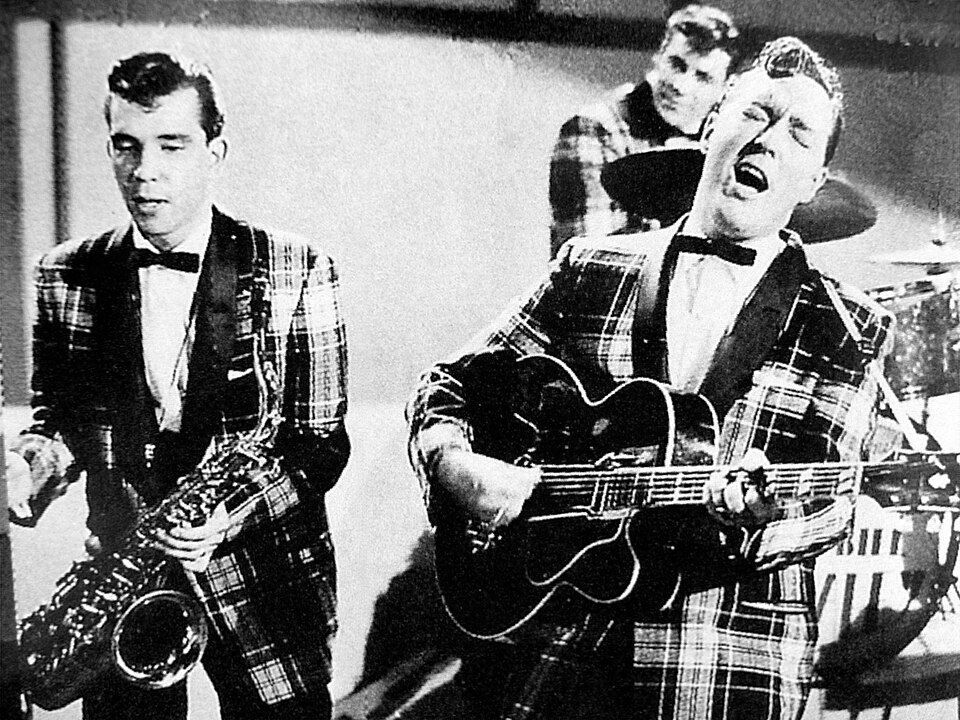
Teddy Boys were all about Rockabilly - the more raucous the better. Their heroes were Gene Vincent, Buddy Holly, and two Irish-Americans, Eddie Cochran, and Bill Haley.
Elvis was way too tame for them, as Cochran (who influenced Jimi Hendrix’s guitar style) joked: “Presley can’t even play his axe, where’s that at?”
The “genius” of the Teddy Boys is that they didn’t just stop at the music, they adopted and then modified the James Dean look of the 1950s. Thus, tight pants became drainpipe trousers, Elvis’s Blue Suede shoes morphed into big-soled brothel creepers, brightly colored shirts waxed to fluorescent blues and greens.
Then they really put the Teddy in the boy! Remember, back in 1954, food and clothes were still being rationed in post-War Britain. Round about then, some Saville Row geniuses came up with the idea that the young conservative upper-classes would love to adopt Edwardian style long suit-jackets.
Young toffs were aghast at such stylistic deviations, so Saville Row “dumped” this innovative style in working class shops. Young workers could finally afford Saville Row threads. Thus young toughs became teddy (Edwardian) boys and preened around town in their new drapes.
Were they aggressive and prone to rumble? Sure they were, as are many teenagers in conservative societies with little social mobility.
Meanwhile, up in Liverpool, Long John & The Silver Beatles wore Teddy Boy attire and played Rockabilly. When they took their act to Hamburg they caused a sensation and returned home as The Beatles.
What goes around, comes around, both in fashion and music. For many years with Black 47 I wore green suede shoes, pink socks and played a Buddy Holly sunburst Stratocaster.
It wouldn’t surprise me in the least if some enterprising New York bar owner opened a Rockabilly saloon and hired a band to play Eddie, Buddy and Gene Vincent songs all night long.
Maybe it’s time to dust off my green suedes, buy a jar of Brylcreem, and tune up my old Strat.
Hey, that preceding sentence could pass as the first verse of a decent Rockabilly song! Time to resurrect The Archway and Flynn’s Village Pub – they’ve been silent way too long!