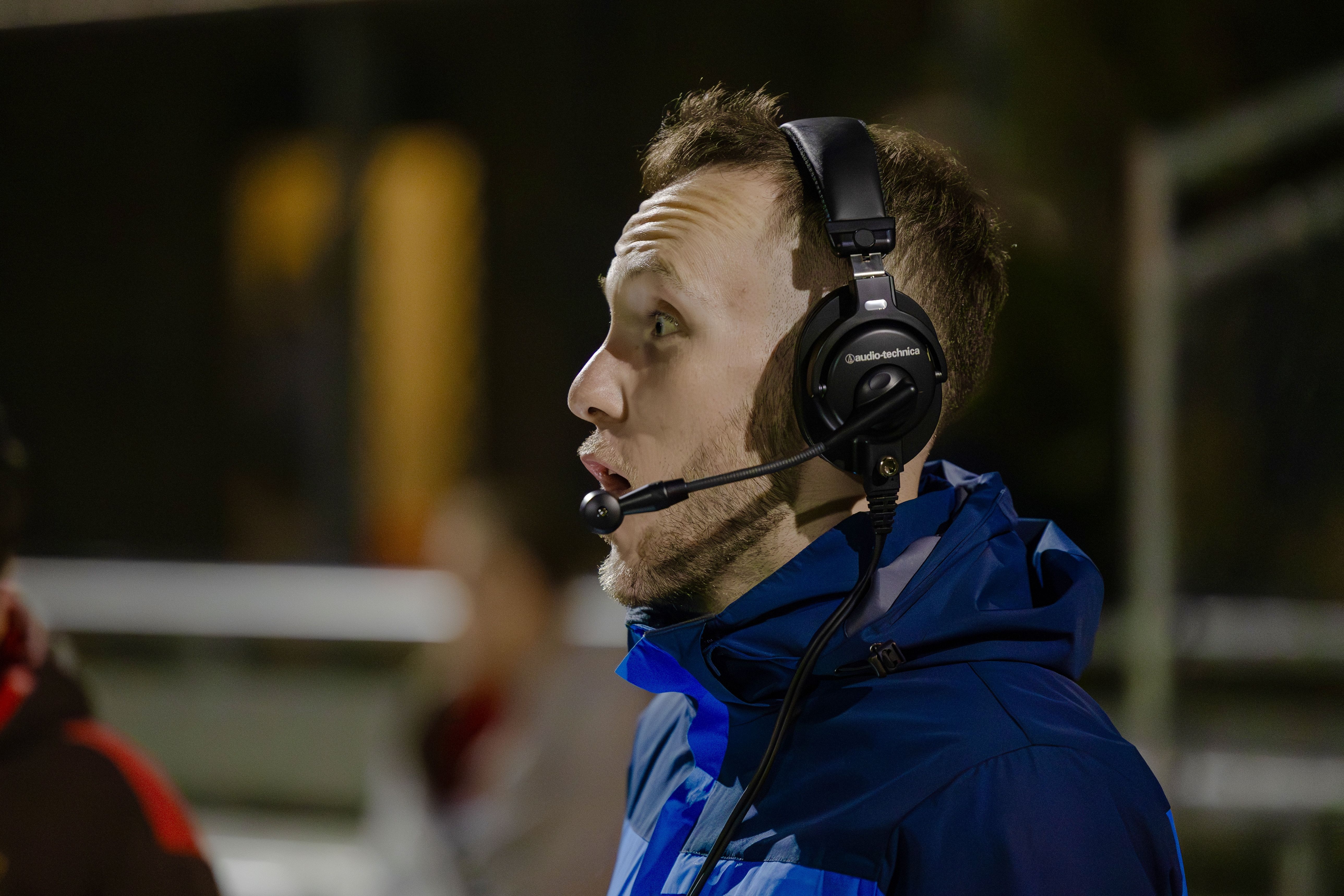
From reporting on “The Sunday Game” in Ireland to covering Gaelic Games across Europe and New York, Kildare sports journalist Oisín Coyne has seen first-hand how the GAA continues to grow far beyond home.
Since moving to New York, Coyne has focused much of his reporting on the city's thriving GAA community, documenting the players, clubs and characters who keep Gaelic Games at the heart of Irish life in the city.
His coverage has also found a growing digital audience. Since the end of May, New York GAA content published through his @oisincoynesport channels has generated more than 833,000 views on Instagram and 130,000 on TikTok.
For Coyne, the numbers reflect an appetite for stories that can sometimes disappear from view once players leave Ireland.
"There are so many GAA stories happening outside Ireland every week that people at home might never hear about," he said.
"You have players coming to New York who have played at county level, people who have been involved with their home clubs all their lives, and then suddenly they're part of a completely different GAA community over here.
"Their story doesn't end when they leave Ireland. That's often where another part of it begins."
Coyne knows the inter-county scene well from his time with RTÉ Sport, where he worked as a reporter on “The Sunday Game.”

The role gave him the opportunity to report on Gaelic Games for one of the most established sports programs in Irish broadcasting.
His career in sports media began at local level before progressing to national broadcasting, but working abroad has given him a different perspective on the games he grew up around.
In New York, the scale of the GAA community quickly became apparent.
There are 46 clubs affiliated with the New York County Board, making it one of the largest GAA communities outside Ireland.
Every season brings another group of players across the Atlantic, including footballers and hurlers who previously competed at county level.
Coyne's reporting has included former Kildare hurler Muiris Curtin, now playing with reigning New York Senior Hurling champions Westmeath New York, and Galway footballer Tomo Culhane with Sligo New York.
For those players, emigration has meant changing clubs and championships rather than leaving Gaelic Games behind.
"That's one of the things that really interested me when I started covering New York GAA," Coyne said.
"We're very familiar with these players when they're involved with their counties or clubs at home. Then somebody moves abroad and naturally you don't hear as much about them.
"But you come to Gaelic Park and they're still playing, still competing and still part of a very serious GAA environment."
The importance of the GAA in New York extends well beyond players who arrive with inter-county experience.
For generations of Irish immigrants, joining a club has provided an immediate connection to home and a ready-made community in a new city.
Having made the move himself, Coyne has gained a greater appreciation for that role.
"You understand it differently when you've emigrated yourself," he said.
"New York can be an overwhelming place when you first arrive. With the GAA, someone can come over and almost immediately have training during the week, a match at the weekend and a group of people around them.
"It's sport, but it's also a community and a connection to Ireland."
New York, however, is only one part of the international GAA story Coyne has encountered.
Before moving to the United States, he covered Gaelic Games across Europe, where the association has undergone considerable growth.
Gaelic Games Europe was established in 1999 with just four clubs.
It has since expanded to 112 clubs with more than 3,000 members across 15 countries.
Competitions stretch from Finland to Gibraltar and Spain, with Gaelic football, hurling, camogie and handball all represented.
What caught Coyne's attention was not simply the number of clubs, but who was playing for them.
"What surprised me most in Europe was how international some of these clubs had become," he said.
"You naturally expect a GAA club abroad to be built around Irish emigrants. In plenty of places it is, but then you find clubs where Irish people are actually a minority.
"People are discovering Gaelic Games without necessarily having any Irish connection."
Germany is one of the clearest examples.
There are now more than 600 active GAA members in the country. Irish players make up an average of approximately 45 per cent of membership, while some clubs have as little as five per cent Irish membership.
The growth has extended beyond traditional GAA clubs.
In Galicia in Spain and Brittany in France, Gaelic Games have been introduced in schools as part of physical education.
Europe has even staged an official international Gaelic football match between France and Italy with every player native to the country they represented.
For Coyne, it represents a different chapter in the history of Gaelic Games abroad.
"The traditional GAA story overseas is about Irish people taking the games with them, and New York is one of the great examples of that," he said.
"What you're seeing in parts of Europe is slightly different. The Irish established many of these clubs, but increasingly local people are taking ownership of them too.
"When you have people in Germany, France, Spain or Italy playing Gaelic Games because they've simply discovered and fallen in love with the sport, that's significant."
Coyne believes the contrast between New York and continental Europe demonstrates two different strengths of the GAA abroad.
In New York, the games remain closely connected to Irish immigration, with clubs providing a sporting and social home for successive generations.
Across parts of Europe, Gaelic Games are increasingly finding an audience outside the Irish community altogether.
His experience covering both has influenced the stories he now wants to tell.
"Reporting on ‘
The Sunday Game,’ you're seeing Gaelic Games at their highest-profile level in Ireland," he said.
"Then you go abroad and see what the same games mean in completely different circumstances.
"In New York, you see someone who has left their family and their club at home finding another community through the GAA. In Europe, you might meet someone with no Irish background who has become completely invested in Gaelic football or hurling.
"They're very different experiences, but they show the reach the games can have."
Digital media has given Coyne another way of bringing those stories to audiences on both sides of the Atlantic.
His New York coverage combines interviews, reporting and short-form video, with more than 963,000 combined views across Instagram and TikTok since the end of May.
The response has convinced him that overseas GAA can attract an audience far beyond those attending matches each weekend.
"There are people at home who want to know what former teammates or players they remember are doing in New York," Coyne said.
"There are families following from Ireland, people who previously played here and the wider Irish community in America.
"Social media gives you the chance to bring them closer to what's happening."
For Coyne, it is an extension of the same approach to journalism he developed while reporting in Ireland.
The setting may have changed from the inter-county championship to Gaelic Park and GAA grounds across Europe, but the interest remains in the people behind the games.
"I've always wanted to tell sporting stories," he said.
"The more I've covered the GAA abroad, the more I've realized just how many of those stories exist outside Ireland.
"The GAA has followed Irish people around the world for generations. What's particularly interesting now is that the games aren't only following the Irish anymore.
"Other communities are embracing them too, and I think that's an incredible story for the GAA."