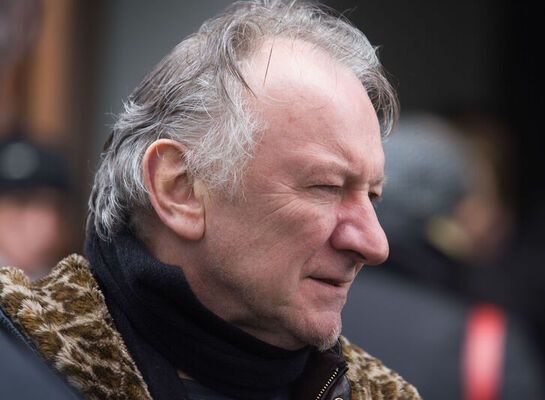
Dan Wilson is so good, they pardoned him twice.
He’s one of a cohort who’ve been looked upon with considerable favor by the Trump Administration, from the legal standpoint.
Actually there are two important sub-categories here, and you won’t likely see the members of one at the same dinner parties as members of the other.
The $1.8 billion, or if you prefer the $1,776 million, slush fund linked more closely in an interesting way the issue of pardons for “white-collar” crimes — by scam-artists, fraudsters and such like — and those for the Jan. 6 felons. The former in many cases were not required to compensate their victims while the latter might have been compensated for their troubles, something they’d been campaigning for, under the proposed fund.
A president can pardon, but elected officials from districts and states would have to have approved the slush fund; and while the MAGA base seems perfectly fine with violent right-wing insurrection, there are still GOP politicians who don’t want to face the electorate having backed cash for people who attacked police officers.
An article in Politico reported last November, “Wilson, who has identified himself as a member of the Oath Keepers and Gray Ghost Partisan Rangers militia, had also pleaded guilty for his conduct on Jan. 6, which included a charge of conspiring to impede or injure a federal officer.”

Wilson got a “full and unconditional” pardon, dated Nov. 14, for his illegal possession of firearms in his Kentucky home.
He was due to be released from prison in 2028, prior to being let out by the second pardon, 10 months after the first.
Like Wilson, Andrew Wiederhorn has been in trouble with the law twice in his career. “He spent over a year in prison two decades ago for his role in a plan to steal from a union pension fund,” said Brendan Ballou in a New York Times opinion piece on Feb. 18.
But Wiederhorn didn’t get a pardon during the second episode, because he didn’t need one. His case never went to trial.
He was the “chief executive of the fast-food company that owns Johnny Rockets and Fatburger, and according to prosecutors, he stole some $47 million from the business in secret payments disguised as loans. (Mr. Wiederhorn and his legal team denied any wrongdoing.)”
The writer added, “In late 2024, his company donated $100,000 to President Trump’s second inaugural committee. A few months later, the prosecutor on his case was fired by a White House official, and a few months after that, the government dropped the criminal case entirely. Mr. Wiederhorn, who had left his job after being indicted, returned to running the business he allegedly stole from. Shortly after, the company went bankrupt.”
Ballou, a former Special Counsel at the U.S. Department of Justice, Antitrust Division, and founder of the Public Integrity Project, said, “Mr. Wiederhorn is one of many defendants helping to forge a new path in American justice, one that takes the rich quite literally beyond the reach of the law.”
The author’s intention was in part to show that there are legal tools that citizens “can use to stop this corruption” without waiting for the Justice Department, or anyone else, to act.
“But first, we need to understand who we’re fighting,” said Ballou, author of “Plunder: Private Equity's Plan to Pillage America.”
He continued, “Consider, for instance, Trevor Milton, who was convicted of defrauding investors in his electric vehicle company. (Among other tricks: A video of his electric semi truck was allegedly forged by simply dragging the inoperable vehicle to the top of a hill and then letting it roll down.) Mr. Milton was sentenced to four years in prison. After he gave nearly $2 million to Trump-allied political committees, the president pardoned him. This meant that, among other things, Mr. Milton would not have to pay the $660 million that prosecutors demanded be returned to his defrauded investors.
“Or consider Changpeng Zhao, the cryptocurrency executive whose company, Binance, served as a conduit for terrorists and child pornographers to transfer money. After Mr. Zhao, who pleaded guilty in 2023 to money-laundering violations, helped the United Arab Emirates buy $2 billion of the Trump family’s cryptocurrency, Mr. Trump pardoned Mr. Zhao, and the government’s lawsuit against Binance was dropped.”
Although there’s now what the Times called a “seamy cottage industry” (when reporting this past Sunday on another troubling case) of lawyers and lobbyists involved here, the double pardon, à la Dan Wilson, is a hard trick to pull off.
A White House official said, “Because the search of Mr. Wilson’s home was due to the events of January 6, and they should have never been there in the first place, President Trump is pardoning Mr. Wilson for the firearm issues.”
But Politico reported, “The Justice Department has opposed efforts by another Jan. 6 defendant, David Daniel, to make an identical argument after the FBI discovered child pornography on his computer during a Jan. 6-related search.”
Citizens for Responsibility and Ethics in Washington report, “At least 40 January 6th insurrectionists pardoned by President Trump have been rearrested, charged or sentenced for other crimes since January 6, 2021, according to new analysis by CREW.
“Twelve have re-offended since their pardons of Jan. 20, including Christopher Moynihan, who was charged with a felony for threatening to murder House Minority Leader Hakeem Jeffries in October. Seven of the pardoned January 6th insurrectionists are charged with committing child sex crimes, ranging from sexual assault to possession of child pornography. At least five were charged with illegal possession of weapons, including at least two who had a previous domestic violence conviction. Five were arrested or charged with driving while impaired or under the influence. In two of these cases, the defendant’s reckless driving resulted in a fatality. Two were charged with rape.”
So, I raised the issue last time of what right-wing media would do if they could tie any of these characters to, let’s say, Gavin Newsom or Kamala Harris or Bernie Sanders. Who would their preferred bad guy be? Zhao, Moynihan, Milton, Wiederhorn or Wilson? That’s just five but there are scores more where they came from.
I’d say they’d like the militia member Wilson, who might be the easiest to pardon and made a victim on the right, but his equivalent on the left side of the aisle, a person tied to some half-imagined group like Antifa or the New Black Panthers, would be a godsend to conservative media. I doubt a fraudster or a scam artist would have the same appeal. Does a white-collar crime even shock any more?
Last time, too, I cited playwright Arthur Miller’s memory from his childhood about how New Yorkers were amused by the corruption associated with the charismatic Mayor James J. Walker, but national politicians, like the bishops and like the pope, were presumed and expected to be “above the mire.”
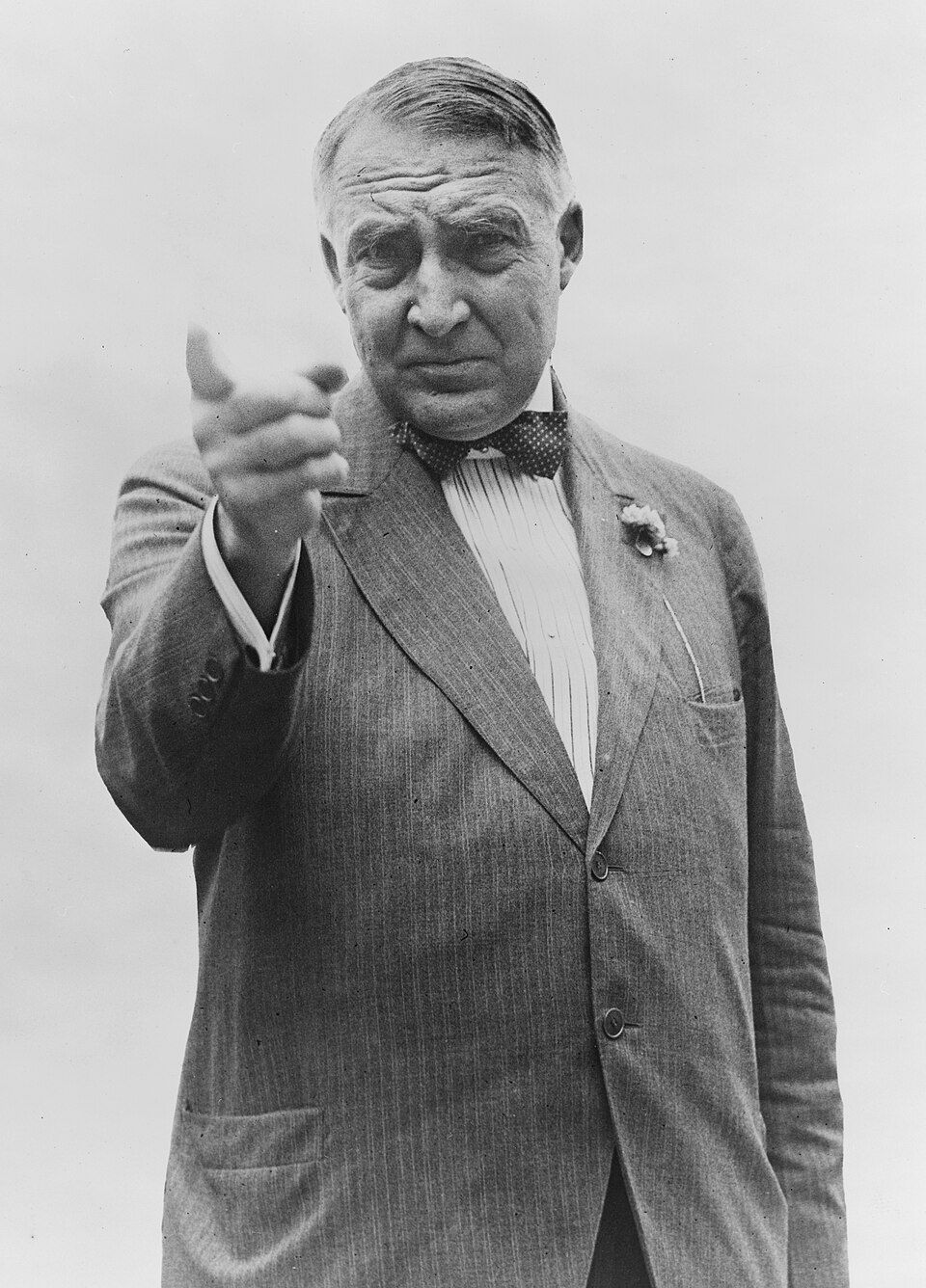
Miller, Daniel Day-Lewis’s late father-in-law, was a not yet 8 when President Warren G. Harding died, and he didn’t understand the posthumous scandals that were attached to him personally, an extra-marital affair, and to his administration, the Teapot Dome scandal, which led to his Secretary of the Interior getting a 1-year prison term. You can be sure that the public thought a lot less highly of old Warren after he was dead than when he was alive.
Times have changed.
David French, the conservative Christian author and former Republican (he declared himself an Independent in 2018), has focused on the “transactional” nature of the Trump presidency in his New York Times pieces, and shown how that has worked for him at home and been a disaster abroad.
In March, French wrote, “Joining with Trump gave Republican elites access to wealth and power more reminiscent of a banana republic than a constitutional democracy.”
We should be trying to figure out how that has happened. It’s certainly something to reflect upon, soberly, as we mark 250 years.