Fifty-four years.
That is how long the families of the Springhill victims waited for justice. Fifty-four years before a British Prime Minister finally stood in Parliament and apologized for the unlawful killing of innocent civilians, including 13-year-old Margaret Gargan and Father Noel Fitzpatrick.
Fifty-four years of struggle before an inquest finally concluded that five innocent people were killed by British soldiers who, in the words of the coroner, had "lost control."
British Prime Minister Keir Starmer.
Yet, just as the Springhill families finally achieved this breakthrough, in Washington Congress is considering a bicameral resolution that would endorse those seeking to deny other families the same opportunity for truth, justice, and closure.
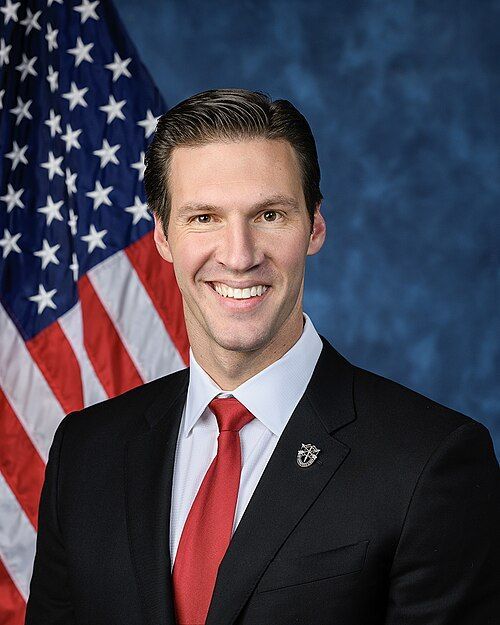
H. Res. 1230 and S. Res. 722, sponsored by Congressman Pat Harrigan and Senator Joni Ernst, are presented as measures to protect Australian and British special forces from politically motivated prosecutions.
Congressman Harrigan has made clear that Northern Ireland is also within the scope of these resolutions. The Springhill families obtained justice only because their case entered the system just under the wire before Britain's Legacy Act slammed the courthouse door on victims seeking answers.

Hundreds of other families were not so fortunate.
The Legacy Act effectively terminated legacy inquests, civil actions, and other legal avenues through which families sought to establish the truth about unresolved killings during the Troubles. Now Congressman Harrigan and Senator Ernst are seeking to provide U.S.-made nails to fasten that door shut permanently.
Congressman Harrigan has repeated the language of those seeking immunity from prosecution for veterans of the Northern Ireland conflict, describing legacy cases as "lawfare," "witch hunts," "vexatious lawsuits," and the "persecution of aging veterans."
The Springhill findings expose how hollow those claims are. The court did not judge British soldiers under retrospective standards. It judged them under the British Army's own Yellow Card rules of engagement that were in force in 1972.
The British Government spent decades insisting Northern Ireland was not a war. British soldiers were operating under ordinary law and specific rules governing the use of lethal force.
Now, when courts finally determine that unlawful killings occurred, we are told to accept arguments about the fog of war. Britain cannot spend years insisting that the conflict in Northern Ireland was not a war to avoid international scrutiny and then suddenly invoke the fog of war as a smoke screen to hide the truth.
Senator Joni Ernst. 
The United States Congress should not be a co-author in this rewrite of history.
Supporters of these resolutions ask us to sympathize with aging veterans, ignoring the fact that they are only facing justice in their senior years because of a systemic campaign by their government to delay and deny justice.
They were allowed to grow old. Springhill victim 13-year-old Margaret Gargan was denied the opportunity to become a mother and grandmother.
The issue is not respect for veterans. The issue is whether governments can obstruct justice for decades and then portray accountability as persecution when the excuses and deflections run out. In issuing his apology, Prime Minister Starmer confirmed that the Springhill families' pursuit of the truth was justified.
Other families deserve the same access to justice and truth.
The fact that Springhill produced findings after fifty-four years is an argument for these investigations, not against them. In a civilized society, justice has no expiration date; nor do we deny it because it may be politically embarrassing.
Closing the book on Northern Ireland before the history has been written does not advance peace; it merely protects uncomfortable truths from being examined and allows false narratives to go unchallenged.
The Good Friday Agreement recognized that a peaceful future required addressing the legacy of the past.
America should not support Britain escaping that commitment. H. Res. 1230 and S. Res. 722 must be rejected. Neil Cosgrove is Political Education Chair Ancient Order of Hibernians