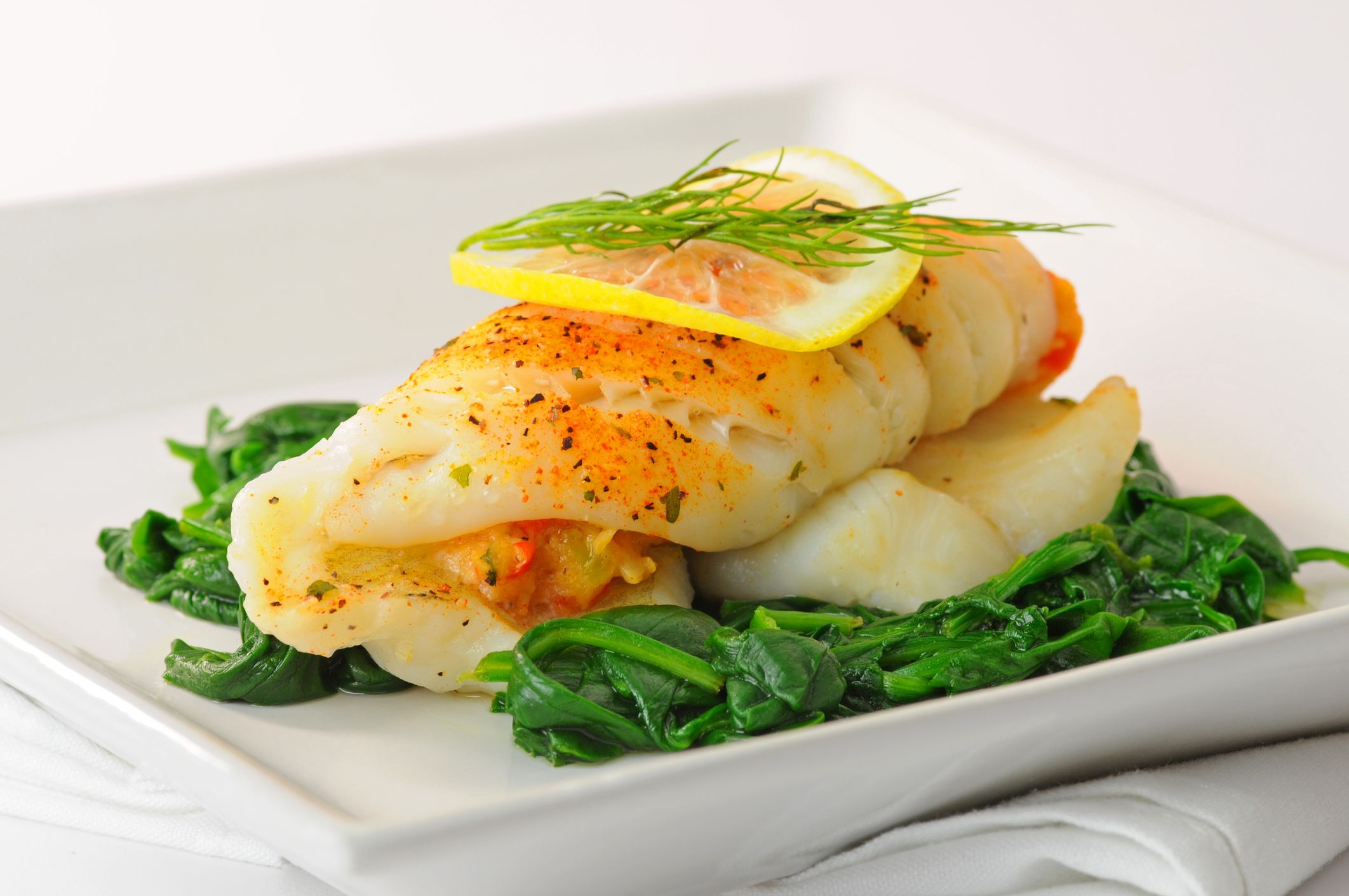
Memorial Day marked the unofficial start of summer, but, in my opinion, it’s also the official start of cooking easy meals with seasonal ingredients and fresh fish. A technique I love for cooking fish is poaching, a method that submerges the food in a liquid, such as stock or wine. This "moist heat" style of cooking uses a relatively lower temperature (about 158 – 176°F) that makes it ideal for delicate foods like fish, which might easily fall apart or dry out using other cooking methods. Poaching is considered a healthy cooking method, too, because it doesn’t use fat and welcomes fresh herbs and seasonings for flavor. Stuff filets of white fish with an elegant mix of crabmeat and salmon; roll filets and serve them with oven-roasted potatoes; or shallow poach with tomatoes and herbs for an easy summer meal.
CRAB-STUFFED FISH
Serves 4
Use sole or another mild white fish in this recipe. Serve with steamed spinach.
1 ounce butter
2 ounces crabmeat
1/2 teaspoon grated ginger
1 1/2 tablespoon fresh lemon juice
4 ounces smoked salmon
4 tablespoons heavy (whipping) cream
Pinch cayenne pepper
Salt
Ground pepper
12 (4 to 6 ounces) sole fillets, rinsed and patted dry
1/2 cup water
1/2 cup dry white wine

Steamed spinach, for serving
Lemon slices, for garnish
1. Preheat the oven to 350°F. In a small skillet over medium heat, melt the butter. Stir in the crabmeat and ginger; cook for about 3 minutes, or until heated through. Stir in 1 tablespoon of the lemon juice; set aside.
2. In a food processor, combine the smoked salmon, remaining lemon juice, cayenne pepper, and cream. Pulse 5 to 6 times to combine. Stir into the crab mixture.
3. Season each fillet with salt and pepper. Divide the salmon-crab mixture onto each piece, roll-up; brush with some lemon juice. Place the fish, seam side-down, in a shallow, ovenproof dish large enough to hold the fish in one layer. Pour over the water and wine. Cover with foil; poach for about 10 minutes, until the fish is translucent (internal temperature should be 125°F to 140°F).
4. To serve, divide the steamed spinach onto serving plates. and arrange stuffed fillets on each. Garnish with sliced lemon.
POACHED SOLE WITH CHIVE BUTTER SAUCE
Serves 4
Serve this poached fish with chive butter sauce, crunchy oven-roasted potatoes, and steamed vegetables. Prepare the potatoes and sauce first and keep warm while poaching the fish.
For the potatoes
4 large potatoes, cubed
1/4 cup olive oil
1/2 teaspoon dried parsley
1/2 teaspoon dried dill
1/2 teaspoon sea salt
1. Preheat the oven to 450°F. In medium bowl, toss the potatoes with oil, parsley, dill, and salt. Spread out in single layer in an ovenproof baking dish. Roast, turning once or twice, for 25 to 30 minutes, or until browned and crisp. Keep warm.
For the chive sauce
1/4 cup white wine
1 teaspoon white wine vinegar
1/4 cup fish stock
2 ounces unsalted butter, diced
4 tablespoon chopped fresh chives
1. In small saucepan over medium-high heat, combine the wine, vinegar, and fish stock. Cook for about 5 minutes, or until reduced by half. Add the cream. Continue to cook for 3 to 5 minutes, or until further reduced. Whisk in the butter until it melts completely. Stir in the chives. Keep warm over low heat.
For the fish
4 (4 to 6 ounce) sole fillets, rinsed and patted dry
1/2 cup water
1/2 cup dry white wine
Fresh parsley sprigs for garnish
Steamed carrots, turnips, and green beans for serving
1. Reduce the oven temperature to 350°F. Roll up the fish and place seam side-down in a shallow ovenproof dish large enough to hold the fish in one layer. Pour over the water and wine. Cover with foil; poach for about 10 minutes, or until the fish is translucent (internal temperature should be 125°F to 140°F).
2. To serve, arrange fish on serving plates. Top with chive butter sauce. Serve with vegetables and roasted potatoes.
SHALLOW POACHED FISH PROVENÇAL
Serves 2
Shallow poaching is method that uses a cartouche, a parchment paper cover that allows the fish to cook gently with moist heat while allowing some of the steam to escape. The recipe comes from renown Chef Jacques Pépin, whom I was fortunate to interview several years ago onboard an Oceania cruise where Pépin was serving as Executive Culinary Director for the line. “If you use a lid,” Pepin told me, “you run the risk of overcooking the fish because it becomes too hot inside the pan. With the shallow poach method, you also create a fish broth, called cuisson, which can be used as the base for a sauce.”
1 ounce unsalted butter
1 tablespoon olive oil
1 shallot, thinly sliced
2 (6-ounce) fish fillets, such as halibut, cod or snapper, rinsed and patted dry
1 cup white wine
1 lemon, thinly sliced
1 tablespoon herbes de Provence
1 sprig fresh thyme
2 bay leaves
10 cherry tomatoes, halved
10 Niçoise olives, pitted
2 sprigs fresh parsley
1. Melt the butter and oil in the bottom of a small, straight-sided sauté pan; line the pan with shallot slices. Place the fish fillets on top of the shallots, leaving space between them. Add wine to a depth of one-quarter the thickness of the fish. Place lemon slices (reserve 2 slices for garnish), tomatoes, and olives on top of the fish. Place the herbs around the sides.
2. Make a cartouche by cutting a parchment paper circle 1 to 2 inches larger than the sauté pan; butter one side of the paper. Cover the fish, buttered side-down, with the cartouche. Tuck it around the fish. Bring the liquid to a simmer over medium heat, checking occasionally to be sure the fish is not boiling (adjust the heat to maintain a gentle simmer). When the fish reaches an internal temperature of 125°F to 140°F, transfer it to a plate. Cover it with the cartouche to keep it warm.
3. Discard the thyme and bay leaf. Increase the heat to medium-high. Cook the liquid for 3 to 4 minutes, or until the sauce is slightly reduced.
4. To serve, spoon the sauce, olives, and tomatoes over the fish. Garnish with parsley and reserved lemon slices.
Margaret Johnson’s “Recipes” page now includes “Ireland Hopping: Adventures in Food, Drink, and Travel.” For further details on her work, including how to order her cookbooks, visit irishcook.com