Overperformance is a good thing.
It’s something that political scientists and commentators mention and maybe more will do so over the next couple of years.
Overperformers are candidates who have, typically, a track record in garnering a share of votes in a district or state that’s significantly above the party’s usual baseline support.
It’s another prism through which the many candidates who allow themselves to be considered a candidate in a presidential election might be assessed.
Back in February, a New York Times feature used the term in a look ahead to the 2028 presidential election.
“Who’s in the mix for Democrats?” it began. “Nate Silver, the author of the newsletter Silver Bulletin, recently participated in a fantasy-style draft of potential 2028 Democratic contenders (with two of his former colleagues at [the election website] FiveThirtyEight, Galen Druke and Clare Malone).”
Silver discussed the trio’s 18 picks — which were based on who they think Democratic primary voters might choose — in a written exchange with the Times’ John Guida.
They were: (1) Gavin Newsom, (2) Alexandria Ocasio-Cortez, (3) Pete Buttigieg, (4) Gretchen Whitmer, (5) Ruben Gallego, (6) Josh Shapiro, (7) Wes Moore, (8) Kamela Harris, (9) Cory Booker, (10) Raphael Warnock, (11) Jon Ossoff, (12) Mark Kelly, (13) Jon Stewart, (14) JB Pritzker, (15) Andy Beshear, (16) Ro Khanna, (17) Amy Klobuchar, (18) Chris Murphy.

So, according to this, we have the potential of a President Kelly or a President Murphy being sworn in on Jan. 20, 2029.
Anyway, eight of the 18 draft picks were cited as overperformers electorally speaking. More on that later.
The first three in the draft are leaders of identifiable trends of opinion within the Democratic Party; none, as it happens, are on the overperformers list, but they’re high-profile personalities who don’t have much problem attracting publicity.
Former Transportation Secretary Buttigieg represents the “abundance libs,” who think the Democratic Party, Silver wrote, “ought to move to the center, with smart economic policies and perhaps following public opinion more on culture war issues.”
Rep. Ocasio-Cortez of New York is the flag-bearer for the “left-populists” — who argue the party “needs to be more populist, especially on economic issues and affordability.”
Their first draft pick, former Californian Gov. Newsom, belongs to what Silver believes is the biggest faction, the “resistance libs,” which “usually attribute Democrats’ problems in 2024 to poor messaging or the failure to take on President Trump aggressively enough. They want a fighter.”
The eight with a track record of electoral overperformance, Silver said, are: “Whitmer, Gallego, Shapiro, Warnock, Ossoff, Kelly, Beshear, Klobuchar. If you want to limit it to five, I’d take the first five. Kelly has less charisma than the others (subjective, I know).”
Whoa! Steady on there, Nate, with the excluding the Irish guy!
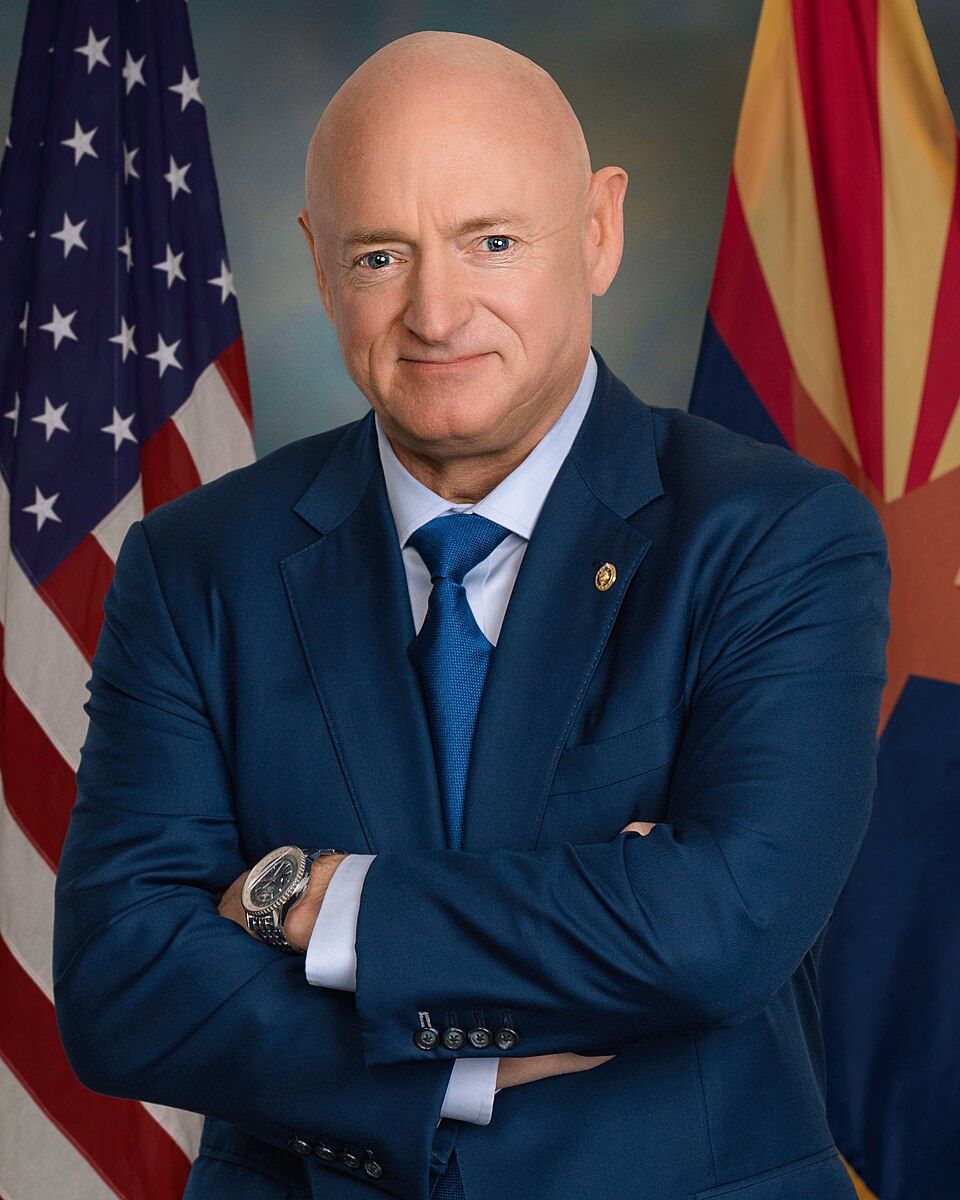
Kelly is the most easily identifiable on the eight-person list along with Pennsylvania Gov. Shapiro, in part because they were on Vice-President Harris’s running mate short-list in 2024; and Arizona’s senior U.S. senator, a retired 25-year veteran, has been accused by Trump of “seditious behavior,” which he added in all caps was “punishable by death.”
“[Kentucky Gov.] Beshear will probably read as too much of an outright Joe Manchin-y centrist,” Silver added, when paring down the list, “and [Minnesota Senator] Klobuchar seems unlikely to run in 2028 as she’d be just two years into her first gubernatorial term (should she win this November).”
Earlier in the exchange, it was said that it isn’t clear that Michigan Gov. Whitmer wants to run (and she excluded herself as a possible vice-presidential candidate in 2024). Meanwhile, Silver and his colleagues seem very impressed with the viability of Georgia’s Senator Ossoff, saying his star had risen since January, when the picks were made, and he was mentioned, too, as a rare candidate who might appeal to all three trends of opinion in the party. However, late last month, the 39-year-old Ossoff, who is defending his seat in 2026, said he has “zero interest” in the 2028 presidential election. (Interestingly, he warned in his statement against the party playing “fantasy football” with the nomination.)
Kelly is possibly, then, No. 4 of the overperformers (and remember this is in the context of his ranking in the draft picks). And short of a declaration of clearer intentions from Senator Gallego, also of Arizona, and Senator Warnock, also of Georgia, that might make Kelly second to Shapiro as the top viable overperformer in the frame.
Of course, all politics is local, and one needs to study the context of strong electoral performances. A political science student in a 2023 essay at the website for Power in Place Project (which, among other things, tells the stories of women in political office at all levels of American society) examined the case of Michigan’s Whitmer, “who won by a margin of 9.6% in 2018 and 10.5% in 2022, which greatly exceeded the Democratic margins in the preceding presidential elections, when Hillary Clinton lost [the state] by 0.2% in 2016, and Joe Biden won by 2.8% in 2020.”
The essayist, Sean Skoog, concluded that “it is possible for female candidates to significantly overperform how their party typically does in a state or district, as long as they strike the right message with their constituents.”
For Nate Silver, winning by comfortable margins in purple states should be the “best demonstration of electability,” but voters don’t seem to be particularly impressed by that. Bill Clinton’s nomination in 1992 was the last time the Democratic Party chose an overperformer from the pack, although Barack Obama won his only Senate campaign by an impressive margin. The latter doesn’t fit the “track record” part of the equation, but it’s worth noting that both men were reelected and the previous member of the party to win two contests at the top of the ticket was Franklin Roosevelt, or four in his case.
Many Democrats, if they were aware of the concept, would agree with Silver that the overperformance attribute is important, and they’ll take someone who can win regardless of what faction or trend of opinion they’re closest to.
Arizona was once a red state, and it became increasingly purplish over time. Kelly, an aeronautical engineer and a navy pilot who flew 39 missions during Operation Desert Storm, was first elected to the U.S. Senate in the 2020 special election to fill the seat of the late John McCain and he won reelection in 2022. He was born in 1964 in Orange, N.J., and raised in West Orange by Irish-American parents who were both police officers. His mother, Bronx-born Patricia McAvoy Kelly was West Orange’s first female cop. His father was Richard Kelly, a Navy paratrooper at the time of his marriage to Patricia.
Mark Kelly’s brother, Scott Kelly, is his identical twin. They were both selected by NASA in 1996 to be Space Shuttle pilots. They are the only siblings who’ve both been in orbit. (Scott Kelly was honored during Elizabeth Stack’s recent tenure as executive director of the American Irish Historical Society in New York for his contributions to aerospace and his public service).
Mark Kelly’s best-known relative, of course, is his wife, the former Congresswoman Gabrielle Giffords, who was critically wounded in an assassination attempt on Jan. 8, 2011. She was reported killed in an early news report, which Kelly heard, as did his mother, and his children. Six people did die in that attack at that early Saturday afternoon political event in a suburb northwest of Tucson and 12 others were wounded. Giffords spent half a year in the hospital.
The senator said of Patricia Kelly, who died in 2012, "She was the person behind me who would always say, ‘‘Gabby’s going to get better.’”
Following the Sandy Hook Elementary School shooting, Kelly and Giffords founded Americans for Responsible Solutions, which was eventually renamed Giffords. Kelly said in 2013, "any bill that does not include a universal background check is a mistake. It's the most common-sense thing we can do to prevent criminals and the mentally ill from having access to weapons."
Kelly’s activism would eventually lead to his being the fifth retired astronaut being elected to Congress.