Part 2
In my first article about New Orleans (see here), I traced the city’s long Irish history until the start of the Civil War. New Orleans fell to Union forces in 1862, a blow to the city’s slave dependent economy and its aristocratic pretensions. The proud citizens of New Orleans bristled at the Union occupation led by General Benjamin “Butcher” Butler, a figure especially hated by the women of New Orleans for the brutality of his rule.
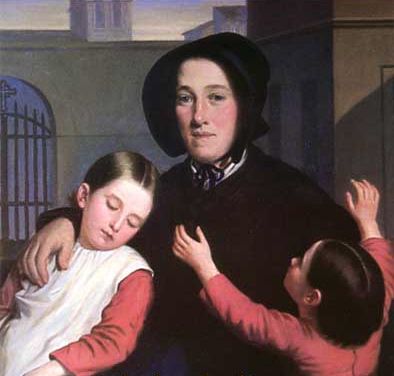
Butler, however, met his match in the person of Leitrim-born Margaret Haughery, who is still warmly remembered today as “The Angel of The Delta.” Haughery, who was orphaned early and suffered through brutal poverty for much of her life, became by the eve of the conflict a successful businesswoman, but more importantly a generous philanthropist, who donated much of her profits to orphan asylums.
Devoting her life to caring for the city’s poor and hungry, Haughery found that during the city’s Union occupation, her deliveries of free bread and milk were now unable to reach the destitute caught behind enemy lines. Determined not to let the war block her charity work, she demanded a meeting with the infamous General Butler, who threatened her with execution if she were caught crossing the strictly enforced lines of occupation. She argued that it was not the policy of President Lincoln to allow the poor of New Orleans starve to death, to which Butler replied, "You are not to go through the picket lines without my permission, is that clear?" "Quite clear," Margaret responded dejectedly. Then, to her astonishment, Butler added, "You have my permission."

When she died in 1882, Haughery was such a beloved figure in New Orleans that its citizens collected funds to build a statue in her memory, This statue of her comforting an orphan is said to be the first American statue honoring a woman.
By 1870, the Irish were now so well established that they opened many of their own institutions, including their own bank, the Hibernia Bank, which until it was bought by Capital One in 2005, was the largest local bank in Louisiana. In 1874, the first local chapter of the Ancient Order of Hibernians was formed and quickly three other chapters opened. The AOH collected funds to support Ireland’s struggle for freedom and Irish Americans also formed militia groups affiliated with the AOH: the Irish Rifles and the Mitchell Rifles. Some AOH members also joined the Fenian Brotherhood and nationalist groups that aimed to free Ireland from British rule.
In the late 1870s, Lafcadio Hearn, a Dublin-born writer, arrived in New Orleans. Hearn, who later settled in Japan, would largely create the exotic literary image of the city that still fascinates Americans. Working for local papers, Hearn wrote thousands of articles introducing readers to the city's "seamier side," including superstitions, voodoo and exotic local cuisine. Hearn singlehandedly forged the romantic, exotic, and often morbid image of the city, documenting Marie Laveaux, the city’s legendary “voodoo queen,” Creole culture, and the secrets of the French Quarter. His descriptive, atmospheric writing style helped shape how later writers, such as William Faulkner and Tennessee Williams, portrayed the city.
An Irish American living in New Orleans made a massive contribution to the American victory in World War II. Andrew Jackson Higgins founded the New Orleans-based company Higgins industries, which manufactured the revolutionary WWII landing craft that enabled Allied forces to land on occupied beaches. These vessels, crucial for D-Day, allowed troops to land in shallow water and exit via a front ramp, earning Higgins praise from Supreme Commander Dwight Eisenhower as "the man who won the war.” Visitors to the city, can see a restored Higgins landing craft at the city’s World War II Museum.
New Orleans is one of the greatest American cities for drinkers and one of its most famous bars is Pat O’Brien’s, one of the most profitable bars in the country. On December 3, 1933, two days after the repeal of Prohibition, Pat O’Brien converted his speakeasy, Mr. O’Brien’s Club Tipperary, into a legal drinking establishment and quickly his business began to grow. O’Brien invented one of the city’s signature drinks, the Hurricane, during World War II when war production closed distilleries, making whiskey scarce. Imported rum, however, was abundant and O’Brien used it to create his wildly popular Hurricane cocktail, still a staple of his bar today.
No trip to New Orleans is complete without eating its delicious local cuisine and for decades an Irish American family has dominated the city’s fine dining scene, the Brennans. Today, Brennan family members own more than a dozen of the city’s top restaurants. Born in the hard scrabble Irish channel section, Owen Brennan founded the original Brennan's restaurant in 1946. From the start, Brennan’s captured the city’s culinary imagination, and it quickly attracted a devoted clientele. Though it served traditional New Orleans dishes, the kitchen at Brennan’s was also innovative and first served many dishes that are today regarded as New Orleans classics, most notably bananas Foster. When Owen passed away in 1955, his widow Ella Brennan took over the establishment and ran it until her death in 2018.
By the 1970s, other members of the Brennan family had taken over Commander’s Palace, which had been serving gourmet dishes in the upscale Garden District neighborhood since 1880. In the 1980s the careers of world-famous chefs Emeril Lagasse and Paul Prudhomme each started in the kitchen of Commander’s Palace. Today it remains one of the nation’s premier restaurants.
New Orleans is one of the great American tourist attractions. Visit it but also explore the city’s rich Irish-American history.