Researching the Irish in the New Orleans, I discovered their huge role in the city’s history and culture, a role too large for one article — and that an article in two parts was required on the Crescent City Irish.
Like many American cities, the Big Easy has a massive St. Patrick’s Day, but its celebration incorporates many of the elements of Mardi Gras. The parade moves through the Irish Channel area and the Garden District, featuring marching bands, green clad participants and floats. Just like Mardi Gras, celebrants throw good luck souvenirs to the boisterous crowds lining the parade route including green beads, cabbages, carrots, and chocolate moon pies. The first St. Patrick’s Day parade in New Orleans dates way back to 1809, but the Irish presence there was even earlier.
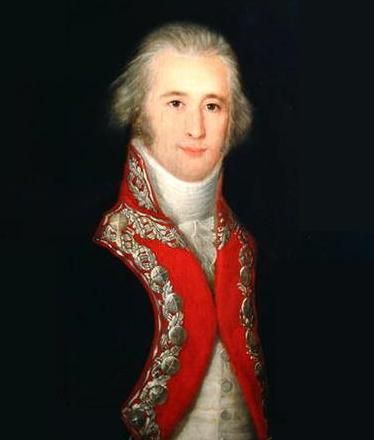
The French, of course, settled New Orleans, but few people know that the city was once Spanish and governed by Irishman Alejandro O’Reilly, who served as the second Spanish governor of Louisiana from 1769 to 1770. One of the many Wild Geese who left Ireland to serve Catholics Monarchs on the continent, O’Reilly was born in 1722 in Baltrasna, Co. Meath. Known as “Bloody O’Reilly” for his violent punishment of rebels against the Spanish crown, he also reformed land ownership laws, built roads and levees and instituted a number of reforms. O’Reilly soon befriended one of the town’s richest merchants, another Irishman, Oliver Pollock, a native of Derry, whose warehouses supplied the Spanish garrison. Pollock profited from his friendship when O’Reilly named him as purchasing agent in New Orleans for the American rebels during the revolutionary war, a lucrative post that made Pollock even richer.

Under Napoleon, the city would revert back to French control, but in 1803, New Orleans became part of the United States when the Emperor sold it to the United States in the Louisiana Purchase. In 1813, the city’s Irish residents formed their own militia, the Republican Greens, who fought during the War of 1812 in one of their few victories when General Andrew Jackson, whose parents arrived in the U.S. from Carrickfergus, Co. Antrim, defeated the British army in the battle of New Orleans in 1815, making Jackson a hero and helping him get elected as America’s seventh president.
In the years before the Civil War, New Orleans grew wealthy as a transshipment point for the immensely profitable cotton crop, harvested by enslaved African Americans. Irishmen Daniel Clark, James Workman, and Kenneth Laverty became rich plantation owners and cotton traders. Tipperary man, Maunsell White, a veteran of the Battle of New Orleans, arrived in New Orleans as penniless teenager, but became a millionaire commodity trader and real estate investor who built himself a stately mansion on Julia Street and married into an elite French family, the Larondes.
The newly wealthy Irish did not forget their homeland. The Hibernian Society, the first Irish charitable and social club, was established four years later. In 1828, locals formed the Friends of Ireland and raised $1,500 to send to Daniel O’Connell, founder of the Catholic Association in Ireland, in support of his campaign for Catholic emancipation. By 1833, the Irish were wealthy and powerful enough to establish their own church, the beautiful St. Patrick’s, which still stands and is a national landmark.
Irish Americans from New York City, aware of the city’s wealthy port, arrived and quickly monopolized the waterfront as longshoremen and began the city’s first unions. In the 1850s, Irish steamboat workers staged a strike and shut down the port of New Orleans on several occasions, refusing to work or allow anyone else to cross the picket lines. Captains and cotton dealers were forced to negotiate with the strikers, and the strikers saw their higher wage demands met. The transplanted waterfront Irish Americans also left a fascinating linguistic legacy. The speech of New Orleans natives is much closer to Brooklynese speech than to the southern drawl thanks to these Yankee transplants. Natives still say “New Awlins,” work as “woik” and boil as “berl.”
Irish famine refugees, who began to arrive in the Crescent City in the late 1840s, found cheap passage to New Orleans on cotton ships returning from Liverpool. The Irish, though settled in a city, where housing was scarce and enslaved people did most skilled labor, making Irish labor unnecessary in a number of areas.
For many poor Irish immigrants, the only work open to them was dangerous work slave owners considered too risky for their valuable enslaved property. The Irish dug the city's many canals, which went through dangerous, mosquito-infested malarial swamps. These poor Irish laborers settled in an area still called the Irish Channel, centered around Adele Street and stretching only two blocks from St. Thomas Street to Tchoupitoulas Street. The Irish poor lived in slums and were particularly susceptible to the epidemics that periodically swept the city. Many Irish labored on the New Basin Canal, a dangerous project that claimed thousands of lives. The first labor strike occurred in the 1830s, during the building of the New Basin Canal, when the Irish demanded and won better wages.
New Orleans was booming, though and many Irish workers pulled themselves and their families out of poverty. By 1850, the New Orleans census showed Irish males were represented in nearly every field—from medicine to education, to engineering. Increasingly becoming integrated into the city, New Orleans’s Irish community provided the largest number of recruits to the Confederate army when the Civil War erupted. The 6th Louisiana Infantry, "The Emeralds,” was Composed almost entirely of the city’s Irish dockworkers and fought heroically in major engagements including the First Battle of Manassas, Antietam, and Gettysburg. The famed Confederate “Louisiana Tigers” featured two Irish companies, “The Sarsfield Guards,” under Captain John O’Hara, and “The Southern Celts,” under chief of police, Stephen O’Leary.
By the start of the Civil War, the Irish had played a huge role in the development of New Orleans, but they would write more glorious chapters in the city’s later history.