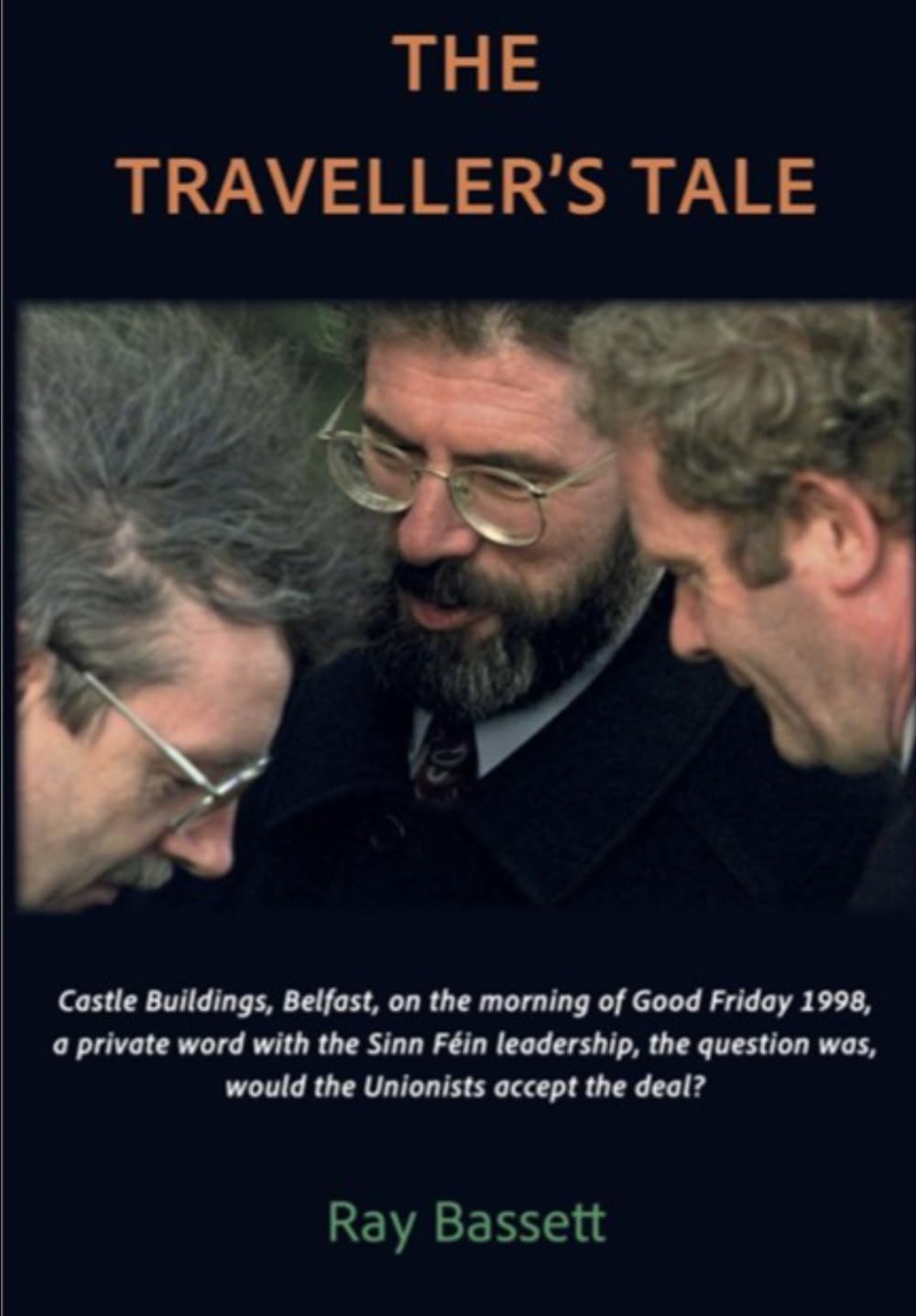
The Peace Process in Northern Ireland has now saved thousands of people from being killed or injured. Before the 1998 Good Friday Agreement (GFA) which did so much to end The Troubles, many thought such a deal to be impossible.
After peace was achieved, too many people have seen that process as something that was inevitable. In reality, however, peace in the North was very far from inevitable. It emerged for complex reasons and through the contributions of many people.
Former Irish diplomat Ray Bassett was one of them. "The Traveller's Tale" is Bassett's personal account, partly based on the diaries that he wrote while working for the Irish Department of Foreign Affairs (DFA).
It is a very readable, informative and valuable addition to the shelves of books and articles now published on the Peace Process. Originating in Dublin's Northside, Ray Bassett studied biochemistry at Trinity College Dublin and then initially worked as a clinical biochemist.
Shifting to the civil service, he worked in the Anglo-Irish Division of the DFA, spent four years at the Irish Embassy in Canberra, and then, in 1993, returned to Ireland to work in the Anglo-Irish Secretariat at Maryfield just outside Belfast.

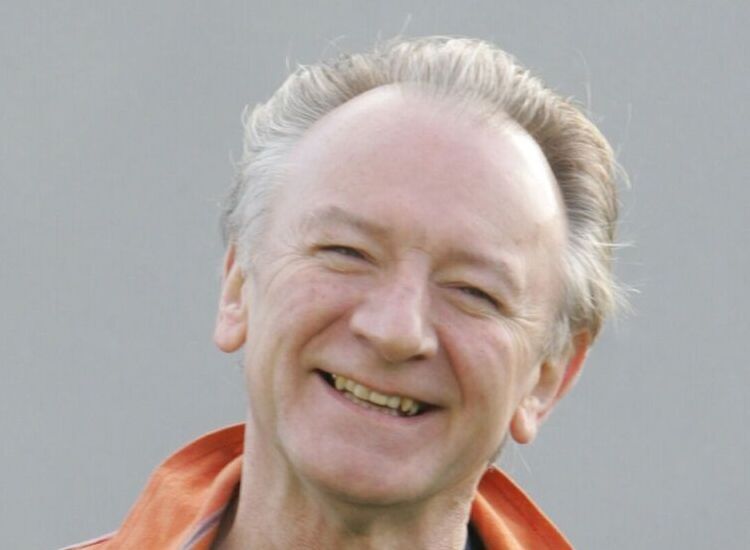
Ray Bassett.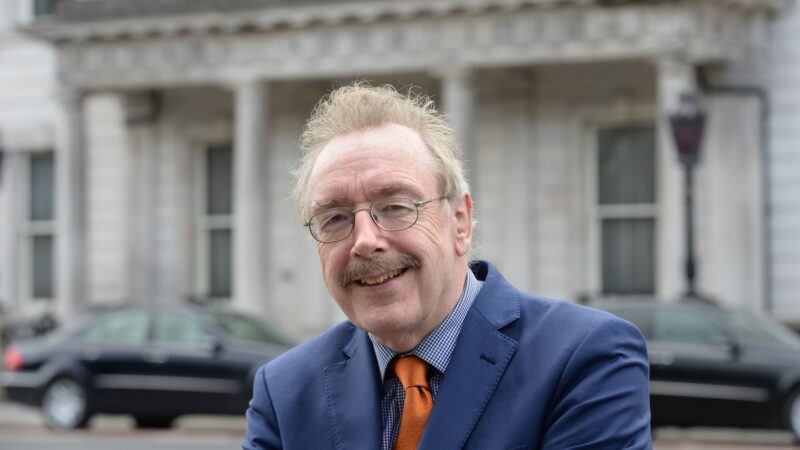
Generated by the 1985 Anglo-Irish Agreement, the Maryfield Bunker, as it was known, was still at that time controversial.
Many Ulster unionists were hostile to Irish governmental input into the running of Northern Ireland. When Bassett moved to the North in 1993 it was still in pre-ceasefire days, and security for Irish government officials was a major issue.
Interestingly, Bassett notes that, whatever their personal political views, the Northern Irish police who guarded Maryfield did an admirably professional job. His Maryfield experience gave Bassett a deeper understanding of official British attitudes, and also of communal perspectives from various sides in the North.
He comments candidly that "many of the preconceived notions I had about loyalists were simply wrong and reflected my own prejudices." Eventually, the relationships Bassett was to develop with loyalists such as David Ervine helped greatly in the process of GFA negotiation.
After Maryfield, Bassett returned to Dublin and his DFA role there involved him being one of those known as the "Travellers." These were members of the DFA who were tasked with meeting people from many different backgrounds in the North in order to build relationships and gather information crucial to making peace.
The Traveller system was an essential building block in developing the necessary trust in the Irish government among large sections of the community in the North. It is probably true that the role of the Irish government and civil service in generating peace in Northern Ireland has not been fully appreciated. "The Traveller's Tale" offers a corrective here.
Bassett was part of the Irish talks team for the GFA. His book details the Irish contribution and contains portraits and vignettes focusing on people from all sides who helped to secure and maintain peace. Indeed, Bassett recognizes the crucial role played by figures from rival sides.
For example, there was an '"immense contribution" from British officials under Prime Minister Tony Blair's administration, including "the very able assistance of his advisor Jonathan Powell."
Former Taoiseach Bertie Ahern, and his successor Brian Cowen, showed "extraordinary leadership." Irish Ministers Liz O'Donnell and David Andrews are among those praised here, as is Bassett's former boss, the head of the Irish talks team for the GFA negotiations, Dermot Gallagher.
Seamus Mallon of the Social Democratic and Labour Party (SDLP) "in many ways was the most impressive member of all the party delegations." Ulster Unionist Party (UUP) leader David Trimble was "courageous'"and was "a vital component in securing the GFA." Reaching the 1998 GFA deal was one thing. Implementing it in practice was another.
During 2001-5 Bassett led the Irish secretariat set up in Belfast after the agreement; so he was then involved in the implementation period as challenges emerged over issues such as paramilitary decommissioning and police reform. What does the book suggest about the central dynamics behind peace? Personal relationships again and again emerge as having been crucial.
Taoiseach Albert Reynolds and UK Prime Minister John Major developed a healthily positive working relationship, and the same was true of Bertie Ahern and Tony Blair, and indeed of Ahern and UUP leader David Trimble. Former U.S. President Bill Clinton's role is well known, and his good relationship with Blair and Ahern is rightly noted here.
But Bassett also stresses the less well known role played by George W. Bush. He further suggests: "I do not think that anybody could argue with the view that the United States was the most important country in the peace process outside Ireland and Britain.
Indeed, Bassett emphasizes the importance of the nationalist coalition which emerged in the 1990s comprising the Irish state, the SDLP, Sinn Féin and Irish America. The book makes clear that John Hume, though not decisive in the GFA talks themselves, had laid foundations for the deal, both in terms of setting out what a framework for peace might look like, and also through his engagement with the then Sinn Féin leader Gerry Adams.
For their part, Adams and Martin McGuinness were able not only to shift republican politics towards peace, but also to bring most of their constituency with them as they did so. Amid relationships, trust was again and again important: "showing respect and building trust" were vital parts of the peace process, as was its inclusivity. And it is important to remember that there were lasting obstacles.
Much politics in the North is about competition within rather than between the main political communities. Bassett's book is clear about the divisions within Irish nationalism (between the SDLP and Sinn Féin, for example) and also between different wings of unionism (the UUP and the Democratic Unionist Party (DUP), for instance).
Bassett is right to stress the differences between the 1970s Sunningdale deal and the far more extensive GFA of 1998. But it is interesting to reflect on what might have been. If in the early or mid-1970s loyalist paramilitaries had accepted that some role for Dublin would be appropriate, then benign compromise could perhaps have been reached much earlier.
If in 1973-74 the IRA had been prepared to end its armed struggle while accepting the consent principle for the North (something they rightly did in the 1990s) then it is possible that the Sunningdale deal might indeed have emerged in a form more closely resembling what was achieved in 1998.
We will never know. What we do know is that leadership played a great part in seizing the 1990s chance of peace.
The Northern Ireland story is one which demonstrates the harm that is done on all sides when there is a failure to make appropriate political compromises. It is a story well told in this fascinating book.
Richard English is Professor of Politics at Queen's University Belfast. His books include "Armed Struggle: The History of the IRA" (2003) and "Irish Freedom: The History of Nationalism in Ireland" (2006).
Ray Bassett’s "The Traveller's Tale" is a Grangeland Ventures, Dublin publication and is available on Amazon.