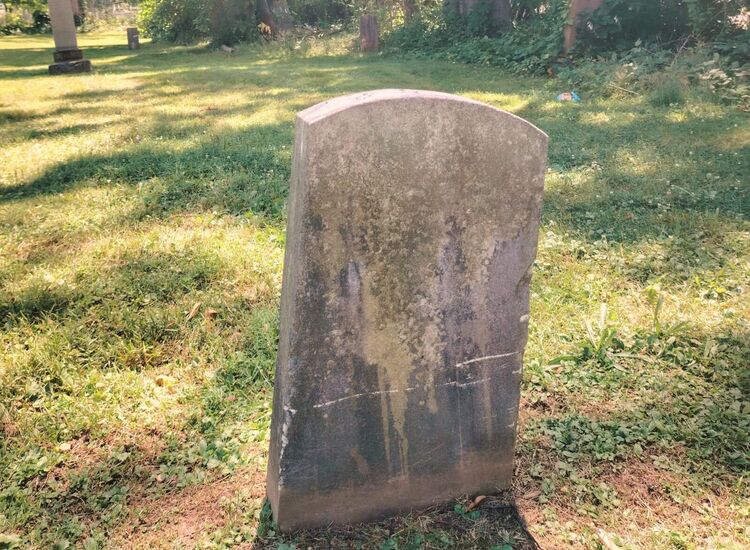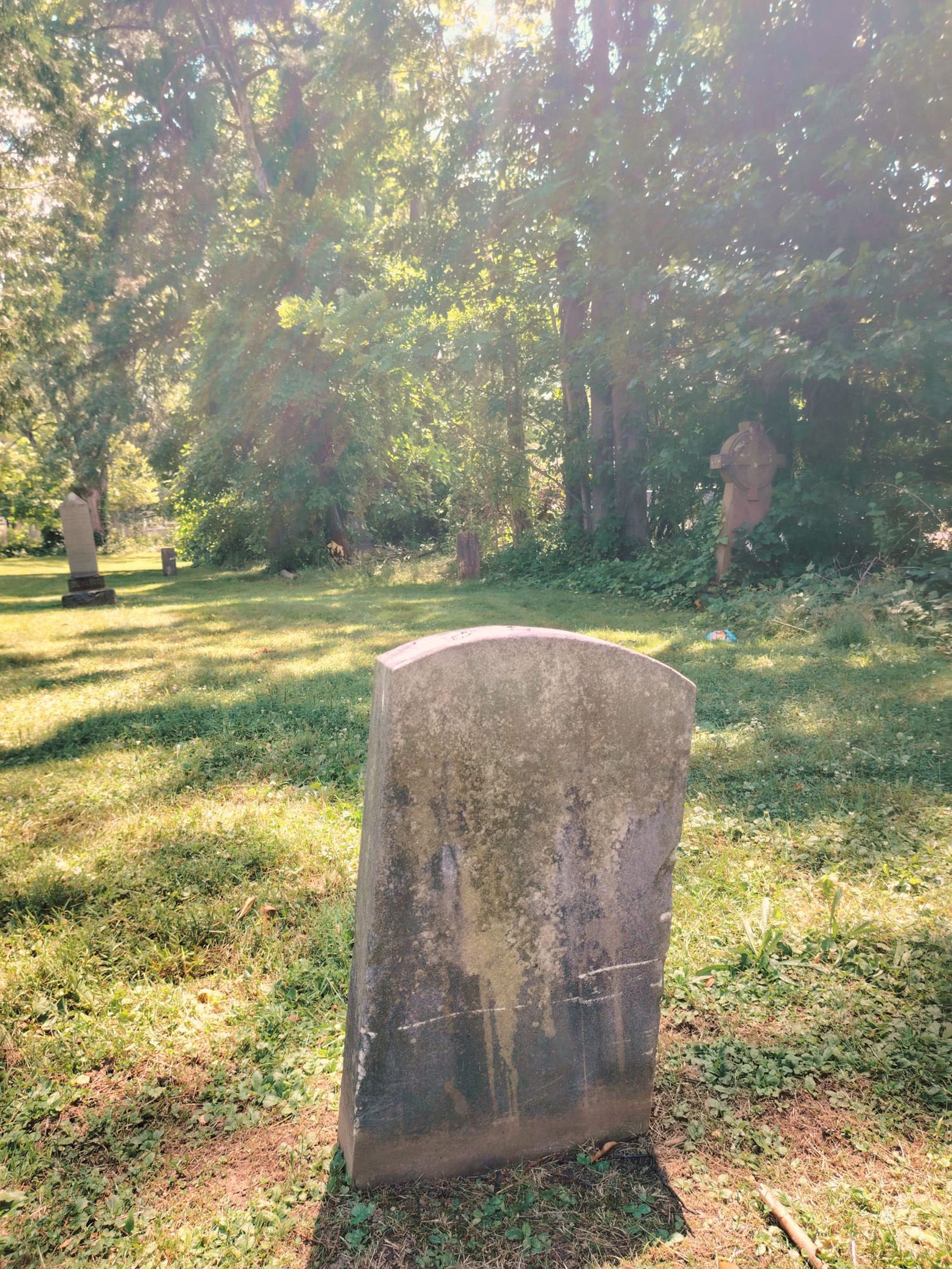
On a recent summer afternoon, as congregants filed out of morning service at Mount Calvary Baptist Church across the street, I climbed the wooden fence into the neglected grounds of St. Patrick’s Cemetery in the north end of Hartford, Connecticut.
Almost by instinct, I made my way to a military veteran’s grave in an overgrown back corner. Buried there, beneath a standard slab of white marble – four inches thick, twelve inches wide, and thirty-nine inches tall – is William Murphy, once celebrated as the last surviving member of the Hartford Fenians who invaded Canada in 1866.
The contrast with another Irish memorial in Hartford could not be starker. Across town on Maple Avenue’s aptly named “Bobby Sands Circle” stands a monument to the ten Irish Republican Hunger Strikers who died in the H-Blocks of Long Kesh in 1981. This well-manicured site draws members of the local Irish-American community for an annual commemoration. Driving past later that day, I noticed several recently erected lawn signs calling for Irish reunification.
But while modern Irish republicanism maintains a visible footprint in local memory and political discourse, the memory of Hartford’s revolutionary Fenians – many of whom fought in the American Civil War before reshouldering their rifles for Irish independence – has quietly faded away.

My discovery of William Murphy’s grave wasn’t totally by chance. His was a story I first encountered in the archives and one that remained with me long afterward. Indeed, Murphy’s life reads like an epic of transatlantic rebellion. Born in County Cork in 1841, he left post-Famine Ireland as a teenager and arrived in Hartford in August 1856.
When the Civil War erupted, Murphy answered his adopted country’s call. On August 23, 1861, months after Confederate batteries opened fire on Fort Sumter, he enlisted in Company B of the 6th Connecticut Volunteers. Transferred to Company D of the 1st U.S. Cavalry in November 1862, he served out his term, re-enlisted in Company L of the 1st Connecticut Cavalry in April 1865, and was mustered out that August. His fight for the Union brought him through some of the war’s bloodiest battles, from Fredericksburg and Gettysburg to Cold Harbor.
Returning to Hartford, Murphy became an active member of the city’s veteran’s organizations and, never forgetting his Irish roots, joined the local circle of the Fenian Brotherhood – a revolutionary movement founded in the late 1850s to bring about Irish independence. During and immediately after the war, the organization’s ranks swelled with Irish-American veterans like Murphy, as branches, called “circles,” sprang up across the country. Despite its success, however, the organization suffered a bitter split between members who remained dedicated to the original aim of a transatlantic invasion of Ireland, and a breakaway faction who viewed an invasion of Canada as a more feasible way to strike a blow against Britain.
In spring 1866, these “men of action,” or followers of the Fenian “Senate” launched an ambitious campaign to seize Canadian territory, whereupon they might establish an Irish government-in-exile capable of securing U.S. belligerent rights.
On the night of June 1, 1866, excitement reached a fever pitch in Hartford as local Fenians prepared to depart for the invasion’s eastern front along the Vermont border. A carnival-like atmosphere settled over downtown, as supporters thronged the streets outside the local Fenian headquarters on the corner of Main and Elm, with speeches echoing and fiddle tunes filling the night air.
As 1:00 a.m. approached, 40 local men, including Murphy, departed on the overnight train from the Asylum Street depot. The Hartford group was one of several companies from Connecticut that rose to the Fenian call. A predominantly working-class movement, contingents left from other towns and cities where large populations of Irish workers manned the mills and factories, including Waterbury, Norwich, Bridgeport, and New Haven.
There, reports noted that “75 of the workmen of Sargent & Co.’s manufactory threw down their tools to go and join” the invasion. Sargent & Co., located along the New Haven waterfront, was one of the nation’s largest hardware manufacturers at the time.
The grave of William Murphy in St. Patrick’s Cemetery, Hartford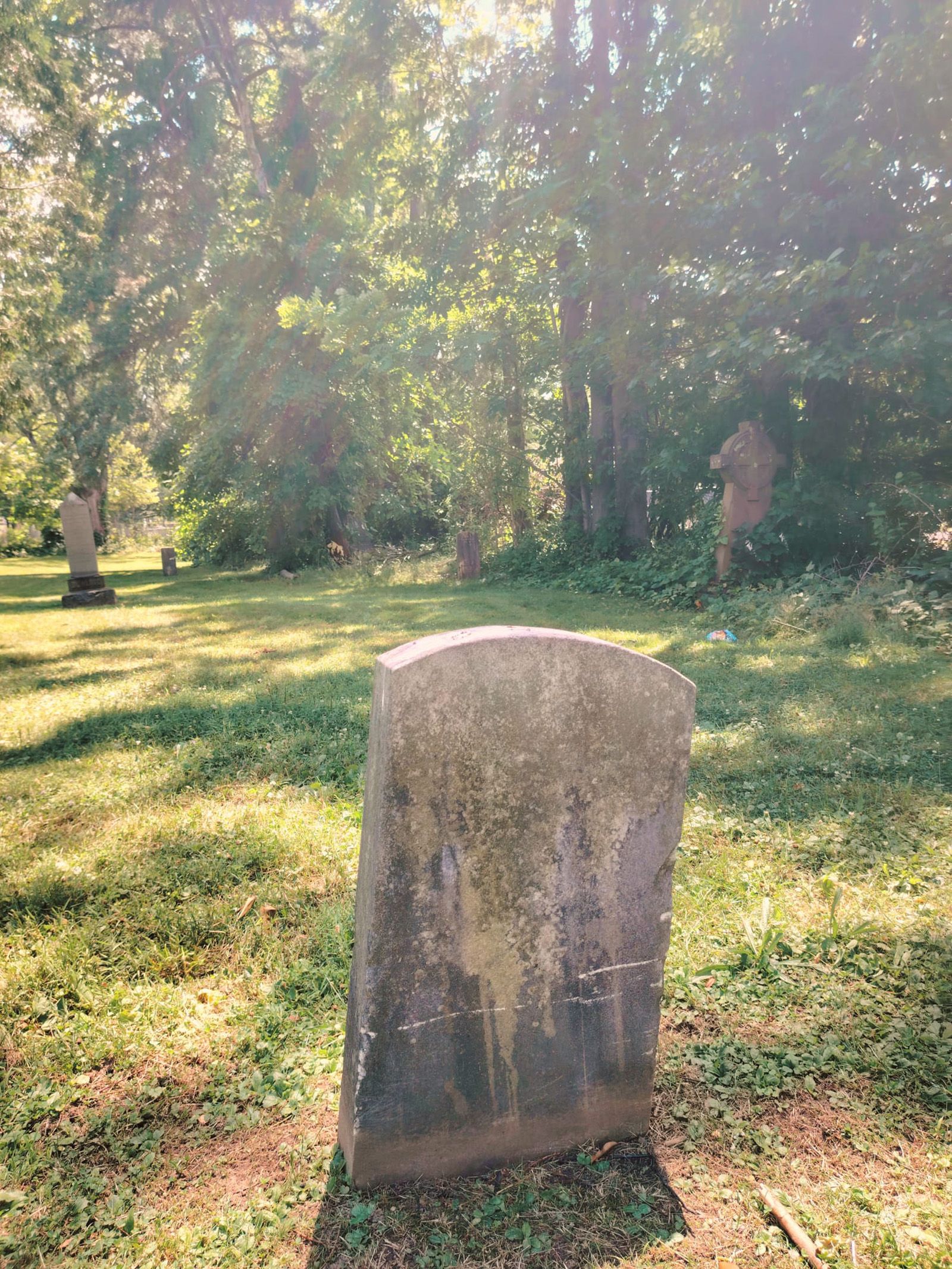
After reaching St. Albans, Vermont, the Connecticut Fenians set about their task. Initial reports were optimistic, detailing how they had joined their IRA comrades in crossing the border and raising the green flag over British soil. This promising start quickly fizzled, however, when President Andrew Johnson issued a proclamation forbidding American citizens from further raids on Canada.
Their problems compounded as US authorities confiscated their arms and ammunition supplies, while preventing any Fenian reinforcements from reaching the front. Within days, the Connecticut Fenians made the long journey home.
Murphy’s revolutionary activities did not end at the northern border. Nearly two decades later, groups of hardline Fenians continued the fight, instituting a bombing campaign in the heart of Britain. Amongst their targets were the House of Commons, the Tower of London, and London Bridge.
Murphy was reportedly sent on a covert dynamite mission targeting The Times building. When the operation broke down, Murphy discreetly returned to Hartford and resumed his work as a machinist at Pratt & Whitney, where he was employed for twenty-four years. A co-conspirator was not as lucky, caught by English authorities and sentenced to over twenty years in a British jail. Amongst the others arrested during the campaign was future 1916 martyr Tom Clarke, who went on to endure a grueling 15-year sentence.
The monument at Bobby Sands Circle, Hartford, Connecticut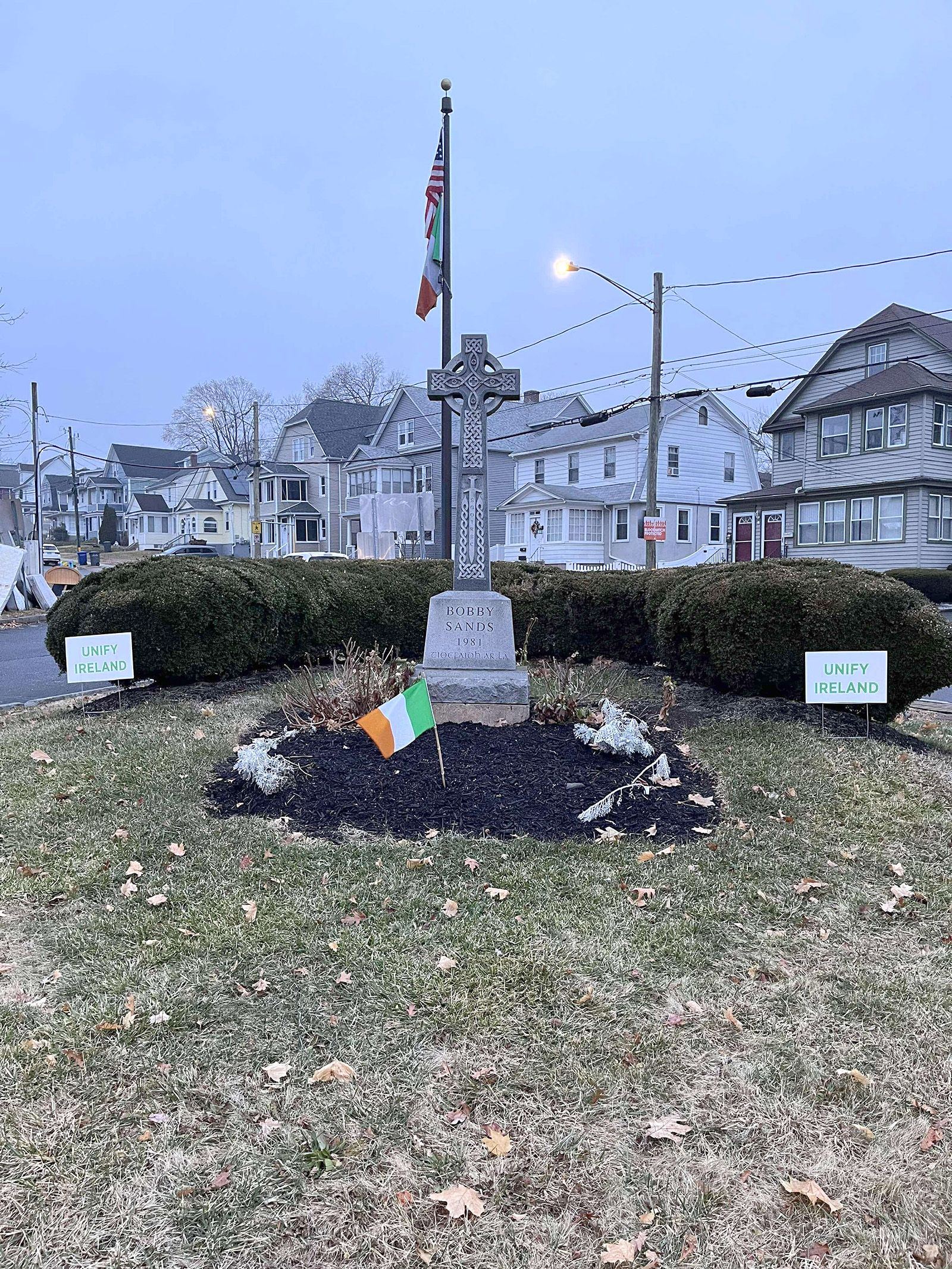
Decades after Murphy’s final Fenian mission, local journalists still marveled at his defiant spirit of resistance. In July 1915, the 74-year-old veteran – described as a wiry five-and-a-half-foot machinist standing “straight as a slab of Connemara marble” with sharp blue eyes and a reddish fringe beard – solemnly boarded a steamer from New Haven to New York to attend the funeral of renowned Fenian leader Jeremiah O’Donovan Rossa, the chief architect of the dynamite campaign. On that occasion, contemporaries hailed Murphy as “the greatest Irishman in Hartford, bar none, and the last of the Hartford Fenians.”
Murphy passed away seven years later at St. Francis Hospital on June 4, 1922, only weeks before Dáil Éireann’s acceptance of the Anglo-Irish Treaty plunged Ireland into bitter civil war. Reports across Connecticut and further afield again recalled Murphy’s exploits as “the last of the Fenians who invaded Canada.”
As I stood before Murphy’s forgotten grave on that summer afternoon, I unfurled a Fenian flag and raised it over his headstone – a small, symbolic act of recovery. It was a gesture that echoed across one hundred and sixty years, mirroring the moment when Murphy and his comrades had carried the movement’s flag over the Canadian border. The country’s cemeteries are filled with William Murphys; once celebrated figures whose headstones often don’t reflect the colorful lives they led or the standing they once held in their communities. Their stories are just waiting to be retold.
Dr. Patrick J. Mahoney, or Pádraig Fhia Ó Mathúna, is the author of The Fenian Empire: A Hemispheric History of Irish Republican Nationalism (NYU Press, 2026).