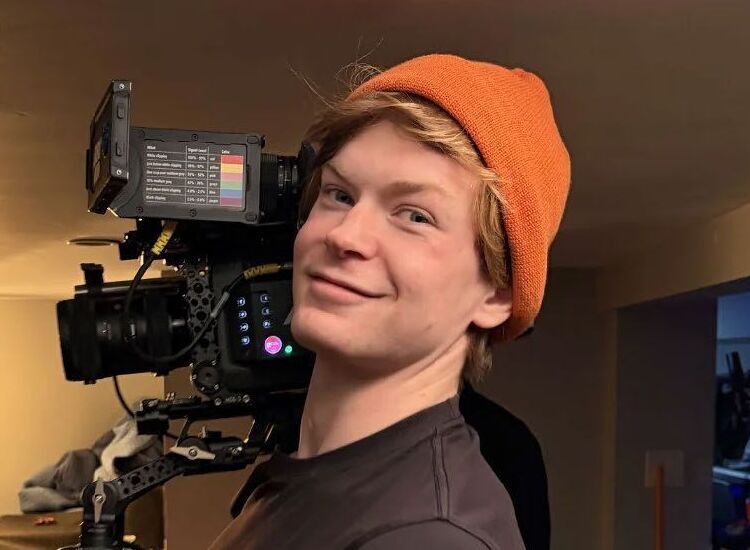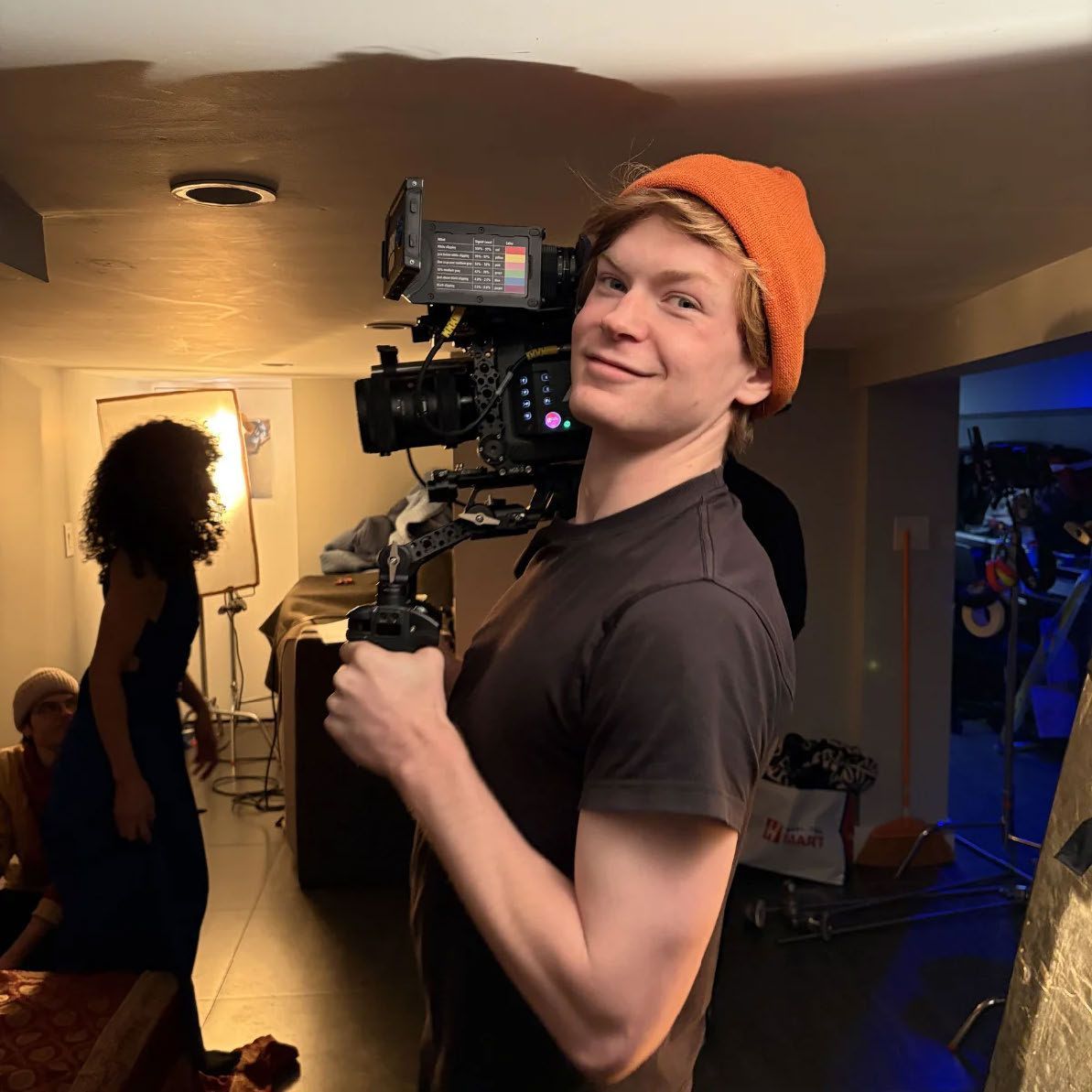
I grew up in Dublin and I’ve always been drawn to making things. Film was probably the first medium where I realized I could combine everything I was interested in — photography, music, performance, design and storytelling — into one thing.
I was particularly fascinated by old Hollywood. I remember watching films with my mum when I was younger and becoming obsessed with the way a film could make you feel something without necessarily telling you what to feel. My mum is a painter, so I think I was always looking at light and composition without really knowing that was what I was doing.
Eventually I realized that cinematography was probably the closest thing to being a painter with a camera.
I studied cinematography at the National Film School at IADT in Dublin, and that was where filmmaking became much more serious for me. I was learning the technical side of cameras and lighting, but I was also beginning to understand that being a director of photography is not simply about making something look nice. You are helping establish the emotional language of a story.
At the same time, I was doing acting training at Bow Street. That ended up influencing the way I approach cinematography more than I expected. Understanding what an actor is trying to do within a scene makes you think differently about where the camera should be and, more importantly, why it should be there.

A lot of my early work was quite varied. I worked across short films, documentaries, music videos, fashion and commercial projects. I was happy to do almost anything involving a camera. I was shooting, editing, researching, assisting, working with equipment — whatever gave me another opportunity to learn.
That willingness to do different things ended up being important because filmmaking is such a strange industry. You can spend months trying to get one opportunity and then suddenly have three arrive at once.
One of the projects that really stayed with me was “Father Brennan Is Having a Breakdown!” directed by Luke Faulkner. I worked on the film as director of photography, and seeing it go on to be nominated at prestigious festivals including the Iris Prize and GAZE was incredibly rewarding. Other major productions I have had roles in include The Dry, The Shona Project, Starfish Magazine, FilmEU and RTÉ commercials.
It was also a reminder of why I wanted to work in film in the first place. You can spend hours worrying about cameras, lenses and lighting, but ultimately you are trying to help tell a story that means something to somebody.
My work has taken me in very different directions since then. I have worked on documentaries, narrative films, theatre projects and commercial productions, as well as fashion work. “The Slightest Touch,” directed by Rachel Fleit, went on to win Best Documentary at the Dublin International Film Festival in 2026. I worked on the film in the camera department alongside Shane Sigler, which was a completely different experience from the fashion and commercial work I had been doing.
Fashion has gradually become a particularly important part of my work. I like the fact that there is often a very short amount of time to create a very specific visual world. You have to understand lighting, movement, styling and composition almost simultaneously. Dublin Independent Fashion Week was an incredible event to be brought on as a Director of Photography.
New York had always seemed like one of those places that existed in films rather than somewhere you could actually build a career. Then I started getting opportunities to work with people there and realized that there was a huge filmmaking community operating across fashion, advertising, music and film.
Some of my work has been with creative director Nian Fish and N + N Films, including films connected to the CFDA Awards and work involving figures such as A$AP Rocky, Donatella Versace and Michael Kors. I have also worked on productions connected to fashion and beauty brands, and more recently with Vela Rentals + Studio in Brooklyn. Clients of these have included Calvin Klein, Dior, GAP, and more, including major fashion magazine Cosmopolitan, which I was Director of Photography for the September cover 2026.
There is something very exciting about working in a city where you can be shooting a fashion campaign one day and working on a completely different type of production the next.
One of the more surreal parts of working internationally is how quickly your career can start connecting back to Ireland. A project you worked on in Dublin can lead to somebody in London knowing your name, which can lead to someone in New York getting in touch, and suddenly you are standing on a set wondering how you got there.
I still think of myself very much as a Dublin filmmaker. Even though my work is becoming increasingly international, Ireland is where I came from.
The biggest lesson I have learned so far is that there is no single route into filmmaking. I don't think I would be where I am now if I had decided at 18 exactly what I was going to do and refused to deviate from it.
Most of my career has happened because I said yes to something slightly outside my comfort zone.
I still don't know exactly where it will lead. I know I want to continue working as a director of photography, particularly across fashion, commercial and narrative work, but I also want to direct more of my own projects.
For now, I am interested in continuing to build a career that moves between those worlds — Ireland, New York, film, fashion and everything in between.
The camera has taken me much further than I ever expected it would. I suppose the next part is finding out where I point it.