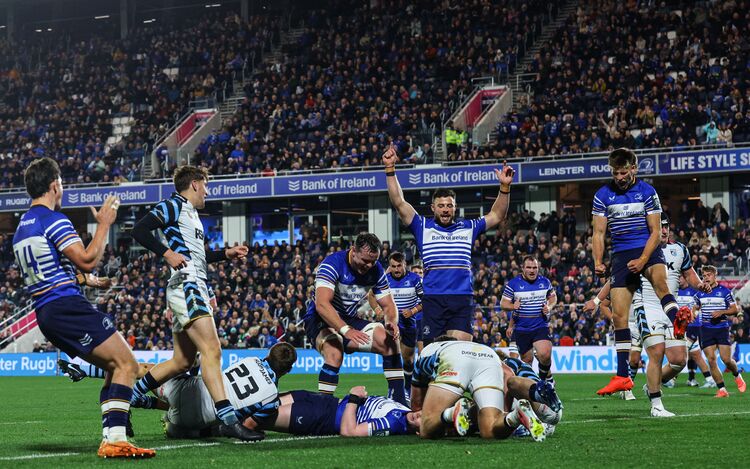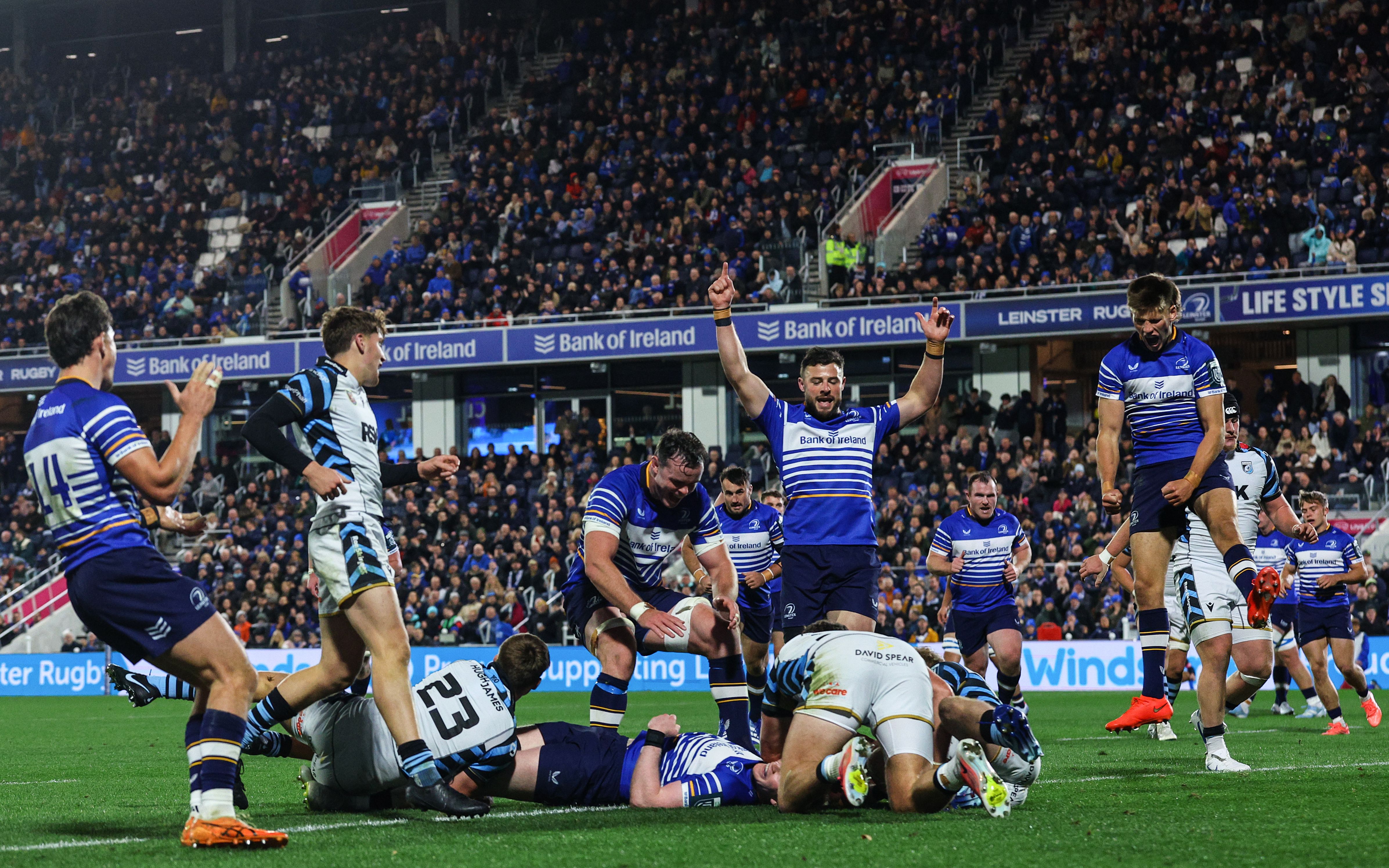
The European Rugby Cup competition gets under way next weekend and Ireland will once again have three provinces playing in the top tier of European club rugby. Leinster and Munster have been regulars since the competition was launched in 1995, but this year the third Irish club taking part will be Connacht, while Ulster drop down to the second tier which is called the Challenge Cup.
Tom Kiernan, the late Cork-born former Irish international and rugby administrator, was the man who pushed the idea of the four provinces representing Ireland in the new competition as he felt none of our clubs would be strong enough to compete in the top tier of European Rugby.
Ulster was the first province to win what was then known as the Heineken Cup back in 1999, Munster won it twice, in 2006 and 2008, and Leinster won it four times after that. But it’s now eight years since the team in blue have taken the title and no doubt Leo Cullen would love to end that barren spell in what will be his last season as head coach. Cullen has plenty of European experience, having, first of all, captained Leinster to three of their final wins — 2009, 2011 and 2012 — and coached them to their win in 2018 when they beat Racing 92 in the final in Bilbao.

Leinster attract the best young players from the private secondary schools in the Dublin area and they also bring in world-class players from abroad. When everybody is fully fit, Leinster can field a team of internationals and currently dominate the United Rugby Championship ,which is comprised of teams from Ireland, Italy, Scotland, South Africa and Wales. But when the French and to a lesser degree the English clubs enter the European Cup, that’s where Leinster problems begin.
Leinster and Ireland will both be without captain Caelan Doris for the early part of the season. The powerful forward suffered a foot injury in the URC final against the Bulla in June and now it looks like he will not be fit to return until January. On Saturday, Leinster start their campaign away to French club Clermont Auvergne, Munster play Racing 92 at Thomond Park in Limerick and the Dexom Stadium in Galway will be the venue for Connacht’s opening pool game against Saracens. The final is fixed for the Groupama Stadium in Lyon on May 23 next year.
HEIMIR HOPES
TO AVOID ISRAEL
While the Republic of Ireland are third in Group 3 of the Nations League, Northern Ireland are top of their group, one point ahead of Hungary. The North missed out on the opportunity of stretching that lead at the top of the table when they were held to a 0-0 draw by Georgia in Belfast last week. The North did have a good opportunity to take all three points but Isaac Price missed a late penalty as Georgia’s Liverpool goalkeeper Giorgi Mamardashvili guessed correctly to keep out Price’s 84th-minute spot-kick. Michael O’Neill’s team are the only one of the 54 teams competing in the Nations League yet to concede a goal.
Meanwhile, it looks like Heimir Hallgrímsson’s plea to keep the Republic of Ireland and Israel apart from each other in future draws is likely to go unheeded by Uefa. The Icelander admitted he was glad to be over the couple of contentious games against Israel. As it stands, with Ireland sitting third and Israel fourth in their Nations League group, that scenario will be avoided as they will both be among the third pot of seeds. Yet, a couple of good results in the Republic’s two final games next month, away to Austria on Nov. 14 followed by Kosovo at home three days later, will elevate them to second place and a second seeding. In that case, Ireland will have a one in 12 chance of being grouped with Israel again.
Heimir said: ‘‘Obviously, there is big support for Palestine in Ireland but there are not many countries that support Palestine as much as Ireland does. I would not wish any national team to go through what we went through in these two weeks, so maybe Uefa just needs to step in and do something. Given that now we have the possibility reviewing all the things that happened, I think Uefa must take that into consideration that they cannot have this happening again, just for players’ welfare. Our psychologist said that now the process starts, when you go out of your bubble and your feelings come out.’’
The draw for Euro 2028 will be made in the International Convention Centre in Belfast on Dec. 6 with qualifying games starting in March next year.
U-16 ACADEMY
FOR WOMEN
The League of Ireland will introduce a new Women’s Under-16 League of Ireland Academy programme from 2027, creating an important additional step within the female player development pathway. The new program forms part of the wider restructuring of the League of Ireland Girls Academy Programme and will see more than 400 additional girls gain access to the League of Ireland Academy system. As part of the new announcement, the League of Ireland Girls Academy pathway will be restructured from 2027 to include WU16 and WU18 Academy Leagues, alongside the Women’s Development League, which was launched in 2026.The expansion will significantly increase the number of talented young female players benefiting from a structured Academy development environment, providing more opportunities for players to develop within the League of Ireland pathway.
KIELY’S STAFF
STAYS IN PLACELimerick hurling coach Paul Kinnerk is set to stay put with the defending All-Ireland champions in 2027, with manager John Kiely confirming that his backroom staff are set to remain in place. Kinnerk and performance psychologist Caroline Currid are both staying on, as are John Flavin, Alan Cunningham, Liam Cronin and Donal O’Grady who were selectors and coaches last season. Kiely said the decision comes after a period of reflection following their All-Ireland final win in July.
Kiely said: ‘‘We had to have a bit of reflection to see what was the best thing to do going forward. We have obviously committed to going forward again for 2027 and we are very much looking forward to that. Since that decision was made then, it was a case of let’s start getting to work with the backroom team. I have had meeting with several members of the backroom team for conversations just to get a bit of feedback from them, just to pick up on things that we can maybe do a little better, areas of improvement. It’s just a case of getting to meet everybody and learn as much as we possibly can from this year and put it to effective action.’’ Kiely added that no retirements are expected in the off-season, as he prepares to whittle down a panel for 2027.
ARMAGH STARS
EXIT COUNTY
Four Armagh All-Ireland winners Rory Grugan, James Morgan, Ethan Rafferty and Aidan Forker have all announced their retirement from inter-county football. In 2024 Forker became the second Armagh man to lift the Sam Maguire Cup after his manager Kieran McGeeney had done so 22 years earlier. The 34-year old Maghery defender made his Armagh debut in 2012, soldiering for several years as the county struggled to make an impression in the latter stages of the championship. Elevated to the captaincy in 2024, it would become one of the most unforgettable years in Armagh's history, as they made a bolt from the pack in the knockout stages, reaching the All-Ireland final where they beat Galway.
Rafferty was one of a handful of players that helped to reinvent the role of the goalkeeper in recent seasons having originally played for the Orchard County as a forward.
BUDGET AID
FOR GAA, FAI
In last week’s Budget Finance Minister Simon Harris allocated League of Ireland Academies an extra €1m in funding, while another €1m has been allocated to the Gaelic Players Association. It will mean that every inter-county footballer male and female, hurler and camogie player will receive an extra €250 on average in grant support. The GAA will also get an extra €1m to spend on hurling and camogie projects, The increase in funding to LOI academies in this next year’s budget brings their total allocation to €4m per year, which is close to the original €4.45m sought by the FAI in advance of last year’s Budget. The GPA were seeking an extra €700 per player. GPA chief executive Tom Parsons said the increase would help players deal with rising costs.
Parsons added: “Government funding is an important recognition of the extraordinary commitment made by inter-county players to our national games At a time when the cost of living pressures are bearing down on players, Government has an opportunity to deliver something immediate and tangible for the current generation.”
A recent GPA player survey found that 49 per cent of players have two weeks or less between their club season ending and inter-county action beginning.
2ND NAAS GAA
CLUB PROPOSED
Naas, Co. Kildare, is a commuter town for Dublin and has a rapidly growing population. Now Dublin native Cathal Kelly, a former Naas GAA underage mentor, believes a second club is needed to cater for the town's rapidly growing population. The businessman said: ‘‘A few lads, along with myself, began to look into it. We have done a feasibility study, looking at the stats, 30,000 in town at the moment, by 2030 it will be up to nearly 40,000 and with new development plans the population of the town won’t be far off 70,000 by 2040, so there is a need for a second club and that will grow and grow.
“Initially, we would hope to start at minor level down to the juvenile section, that would be the start and we would take it from there,” Kelly said. “But there are a lot of hurdles to cross. There is a lot of kick-back from the club, but there has to be somewhere for kids to go. I have a good core of seven or eight lads, all members of the Naas club. This is not an anti-Naas GAA thing, it is a pro-GAA thing.’’
This situation arises all over the country. In my own parish of Rathmore in East Kerry, the nearby village of Gneeveguilla wanted to form their own club and at first Rathmore objected, but the Gneeveguilla GAA club was formed in 1960. A few years back St Brigid’s of Blanchardstown tried to prevent a new club being formed in the Castleknock area. Castleknock GAA club was formed in 1998 and is now a thriving club, so the Naas situation is a familiar story.
CUMMINS IS
KERRY-BOUND
Former Tipperary goalkeeper Brendan Cummins is going back to Kerry. Cummins finished his five-year term as Tipperary under 20 manager in July and at first he said he was talking a break from hurling. But now he is going back to the Kingdom as coach where he will work alongside manager John Griffin and selectors Aidan Healy and Sean Maunsell in 2027. Cummins replaces Kerry-born Shane Brick, who stepped down after this summer’s Christy Ring Cup final loss to Derry. The two-time All-Ireland senior winner previously served as Kerry goalkeeping coach following his inter-county retirement in 2013.