On account of a death in my family, I recently had occasion to make two trips to Ireland in consecutive months, something I hadn’t done in a long time.
On most visits I’m accompanied by a couple of busloads of lively North Americans discovering their roots, so it’s like diving off the deep end into a crash course on the history, politics, music and literature of a country I no longer live in.
On my recent visits, because I was sharing one of life’s rituals with family and friends, I became very aware that the country of my birth had changed in ways I had barely noticed before.
Ireland is now very much a European state; it even looks the part, with broad highways that can shave hours off once formidable journeys. And, oh my, Irish people are in as much of a hurry as the harried citizens of New York, Boston or Chicago.
Most have cars and drive like Nascar contestants, with the result that country roads I used to amble along are now very much off-limits. Drivers speed around narrow bucolic bends, while animatedly speaking into their cells.
You can be reasonably sure, however, that given the penalties few are under the influence of alcohol. Although justified, this has led to the loss of a great social institution – the country pub.

Each village used to have one or two. They served as town square, reading room of the daily newspaper, forum for wry characters, and as a museum of songs.
As a boy I remember hearing an old man with few teeth, but much passion, mournfully enunciating The "Rocks of Bawn" through many verses that I’ve never heard since. His performance led me to realize that there was more to songs than mere melody and lyrics.
But then, pubs in general are disappearing. Wexford town, which boasted close to 100 in the early 1960s, is now down to around 25, and some of these don’t even open on Mondays and Tuesdays.
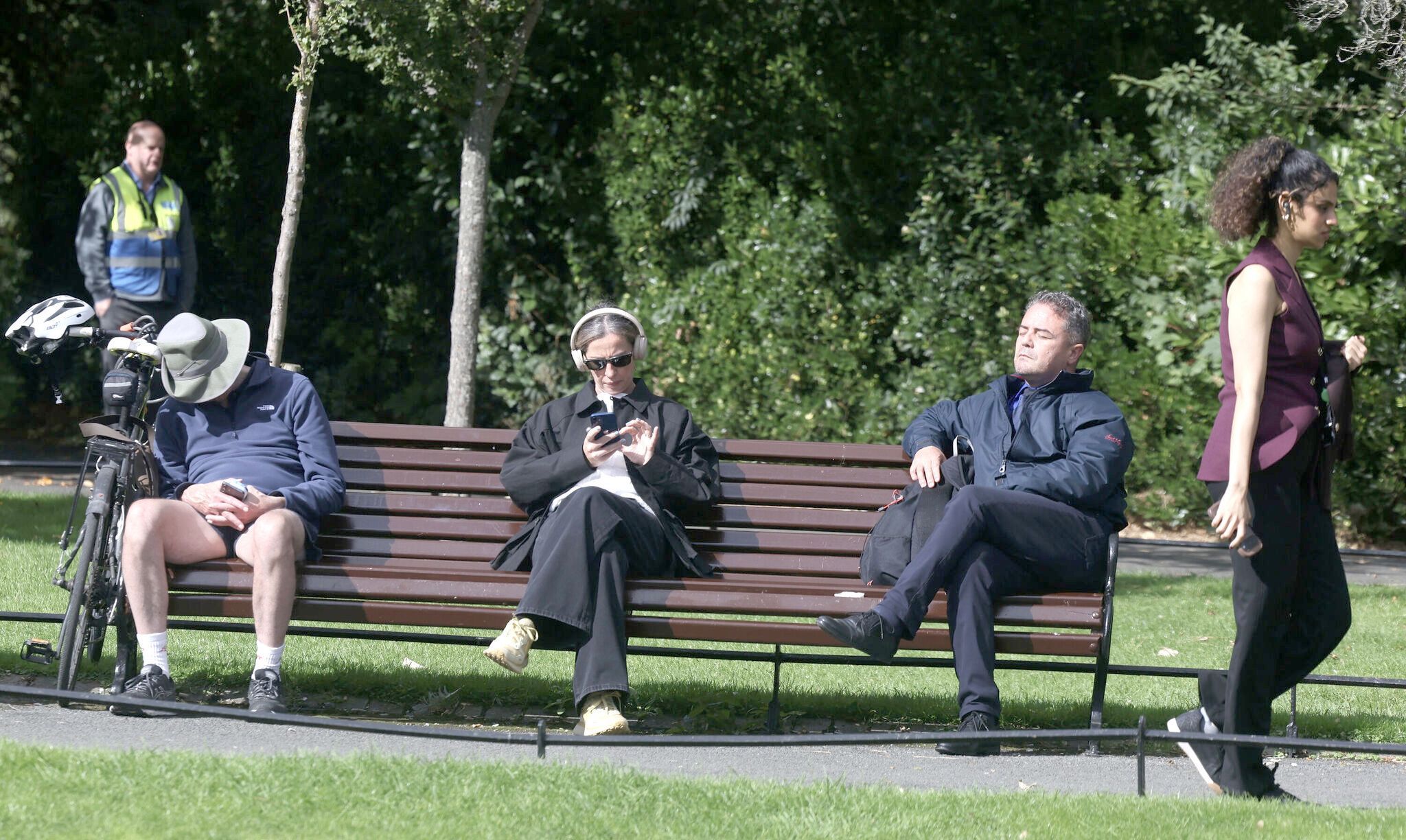
Many young people, aware of health issues, no longer drink alcohol, or do so sparingly. A good thing, no doubt, and yet Ireland has always been renowned for its characters, and you don’t reach that status by ogling your phone or doom-scrolling your nights away.
Part of the problem may be that universal buzzkill – affordability. It’s as prevalent in Wexford as New York. Going out costs money.
And it’s not just entertainment. The cost of housing is driving young people out of the country. Many fear they’ll never own their own houses, and so the emigrant plane awaits once again.
Unfortunately, no would-be expatriate I spoke to even considers the U.S. anymore; it’s too xenophobic, warlike, anti-democratic, you name it. So they opt for Canada, Australia or various EU countries. What a loss, as most are highly educated and would contribute greatly to the U.S., both economically and socially.
And yet, when it comes to people, customs, and just general social interaction, it’s hard to beat Ireland.
My brother, Brendan, had an old-fashioned funeral. Our family always had one foot in the town, the other in the country. Brendan and his family lived on a scenic plot of land within striking distance of Wexford.
He ran the family headstone business for many years, hence the undertaker was a concerned friend. The wake was held in Brendan’s house, and he lay there in his open coffin. His many friends and neighbors called to say goodbye, and perhaps more importantly, to console Brendan’s family in their time of loss.
It could have been the 19th Century. They brought food, drink and great concern; some ran the kitchen and served the delicacies, allowing the family time to commune with their guests.
The following morning, after a loving service in the local evangelical church, we buried Brendan in the graveyard where he had erected so many headstones.
Some days later, I took the new, and very efficient, local bus the hundred miles or so to Dublin Airport.
No need any more for the painful emigrant family drive with tearful farewells.
And as the Aer Lingus plane took off, I felt an unusual sense of peace – Ireland, though changing rapidly, will always retain its ritual dignity at a time of loss. The soul of the country remains in good hands.