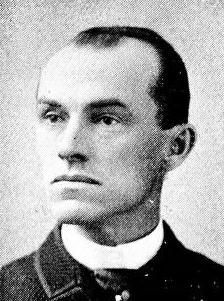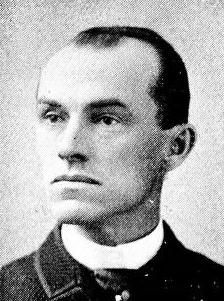
It is election season, and we are inundated with polls, predictions, and talking heads confidently forecasting the November results. Recently, while watching an American football game, I was astonished that seemingly every commercial was a political advertisement. Sick of polls and pundits, I began thinking about one of the greatest political upsets in New York City history: the 1893 election in which a humble Williamsburg bartender defeated the heavily favored Irish-American political boss Patrick H. McCarren.
First, a little background on McCarren.
His name might sound familiar to anyone who has visited North Brooklyn. McCarren Park, on the border of Greenpoint and Williamsburg, bears his name because he used his considerable political influence to secure funding to purchase the expensive land on which the park sits.
Today, McCarren is largely forgotten, but in his day he was one of the most powerful—and breathtakingly corrupt—politicians in a city notorious for political corruption. Although skilled at bringing public money to North Brooklyn, he was also an early corporate lobbyist, widely reviled for serving the interests of Standard Oil and the Sugar Trust at the public's expense.

In 1904, the New York Press expressed the disgust many reformers felt toward him: "We shrink from even the thought of what would happen to our national institutions and ideals if its Pat McCarrens should succeed in cornering the nation at the ballot box."
The son of poor Irish immigrants from County Tyrone, McCarren rose from humble beginnings to become an Albany kingmaker. Born in 1849, he began his working life as an apprentice cooper, making barrels for Brooklyn's booming sugar industry.
Ambitious from an early age, he challenged a candidate backed by Brooklyn's powerful Democratic machine and was soundly defeated. But the machine's boss, Hugh McLaughlin, who had amassed a fortune through political graft, recognized McCarren's potential and brought him into the organization.
McCarren quickly became one of McLaughlin's most trusted lieutenants. Elected to the State Assembly, he made certain that legislation did not interfere with the interests of Brooklyn's Democratic machine or its powerful corporations.
Intelligent and resourceful, McCarren studied law independently and passed the bar. He became corporate counsel to the Sugar Trust and Standard Oil, whose money helped finance political influence at the local, state and even national levels.
During elections, corporate money flowed freely. Local saloons offered free drinks in exchange for votes, while longshoremen were paid to intimidate political opponents. Loyal supporters received patronage jobs and the police even threatened to arrest people distributing anti-McCarren literature.
In 1886, McCarren was elected to the State Senate, representing Williamsburg. Although Democrats were in the minority, he proved remarkably effective at getting legislation passed. A master dealmaker, he traded favors, cultivated allies and persuaded political opponents to support even unpopular measures.
His cynicism was legendary. He once assured Brooklyn Republican Senator Foelker that he need not fear his constituents: "If you are afraid of possible re-election or have any doubts at election time, I can fix it up for you so that you can name your own opponent at the coming election."
By 1893, however, public disgust with the McLaughlin machine was growing. That October, The New York Times published an exposé condemning the "shameful misrule" of Brooklyn. It identified McCarren as one of the borough's "real rulers," noting that he had accumulated a fortune of $100,000, "not by years of honest toil or by reputable business."
Even loyal Democrats were becoming disgusted.
McCarren, however, remained supremely confident of reelection. He was seeking his third two-year Senate term, and George Mason, the Republican he had previously defeated, declined to challenge him again.
Certain of victory, McCarren instructed his lieutenants to find a token Republican opponent to give the appearance of a genuine contest. They settled on George Owens, an Irish-American bartender from Williamsburg.
Owens initially refused, explaining that he lacked the money to run a campaign. McCarren's aides assured him that the senator himself would cover his expenses. When Owens approached the Williamsburg Republican Committee for campaign funds, its members practically laughed him out of the room.
Disgusted by their indifference, Owens tried to withdraw, only to discover that it was too late to remove his name from the ballot.
McCarren barely bothered to campaign. He made a few halfhearted speeches, confident that his political machine would deliver another easy victory. He was so certain of winning that he even permitted some supporters to vote for Owens to make the contest appear competitive.
Owens, meanwhile, threw himself into the race. With little money and almost no party support, he made speech after speech denouncing McCarren and the corruption of the Brooklyn Democratic machine.
When Election Day arrived, virtually everyone, including the Republicans, expected another McCarren victory. But beneath the surface, resentment against the machine had reached a boiling point. Many Democrats quietly cast a protest vote for Owens.
Exhausted from campaigning and certain he had lost, Owens went to bed early without waiting for the returns.
The following morning, friends burst into his room with astonishing news: he had won.
Owens, furious at being awakened, assumed they were playing a cruel joke.
"If you fellows had been working like me, you would not think it much of a joke to be roused up at this time of the morning and have a pack of idiots make a guy of you," he complained.
"Guy nothing," his friends shouted. "This ain't a joke. You're elected, you damn fool. Get up, you chucklehead. You are the State Senator-elect."
And so a bartender with no money, little political support and almost no expectation of winning had defeated one of Brooklyn's most powerful politicians.
The lesson of 1893 is worth remembering amid today's endless polling and confident predictions. McCarren had money, powerful allies, a formidable political machine and every reason to believe he could not lose. Owens had almost nothing except a willingness to fight.
The voters had the last word. As they sometimes do, they made fools of everyone who thought the outcome was certain.