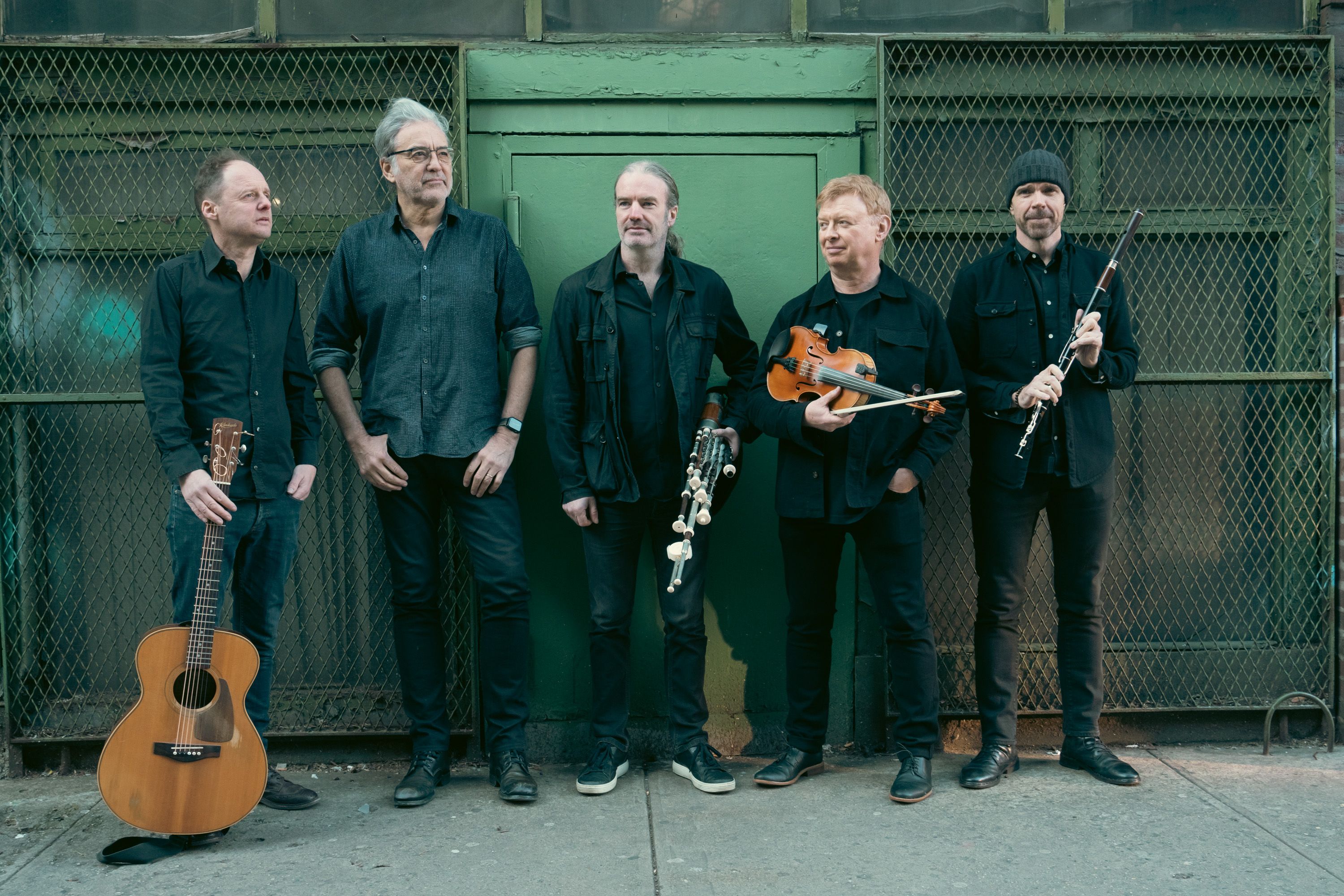
It is easy, even for a top traditional musician, to go unnoticed when you play in a Celtic supergroup like Lúnasa. The band features Kevin Crawford, one of Ireland’s top flute players, the famous ex-Waterboys bassist Trevor Hutchinson, Colin Farrell, a multiple award-winning fiddler, award-winning fiddler Sean Smyth and accomplished accordionist Alan Kelly, along with U.K. folk scene great Ed Boyd. Though they are all fine musicians, to me what makes Lúnasa’s music so special is the haunting sound of its Uillean pipes player, Cillian Vallely, who adds a mystical, ancient quality to the band’s sound.
I met Cillian and asked him about how it felt to play with such talented musicians, and what continues to hold the band together. He said that It was hard to comment from the inside on Lúnasa, but that he felt lucky to be in a band where all the players were among the very best on their instruments. Vallely supposes the band has stayed together for two main reasons: they get on well personally and the band’s success. He added that most bands collapse from personal animosity or financial troubles, which are not issues with Lunasa.
Like many great Irish traditional musicians, Cillian honed his talent in an amazing musical family. His parents, piper Brian and fiddler Eithne Vallely, formed the legendary Armagh Pipers in 1966, an organization dedicated to teaching and preserving traditional Irish music.

Cillian learned at their feet. His first instrument was the tin whistle, which he began playing at age 7 or 8. Since his father was a piper, taking up the instrument seemed like a no-brainer. Cillian explained that his decision to learn the pipes stems from its unique sound, which has always captivated him and probably kept him playing them, even at times when other kinds of music were more appealing.
When I asked Cillian about his parents’ influence, he responded with great reverence. Talking about himself and his brothers who are all accomplished musicians, he said, “They sparked our love of the music simply by teaching us, playing with us and bringing us all over Ireland to hear and play the music. Their mission was to promote Irish traditional music, and they’ve been teaching now for 60 years, without taking a penny for themselves, which is incredible dedication.”
He spoke about the massive influence his parents have had on traditional music education explaining, “At this point thousands from all over the north have learned from them. It was probably only when I started to travel in my 20s that I realized the huge influence they had – I met people in America, Australia, Asia, Europe that had gotten hold of their tutor materials.”
These international musicians learned traditional music from his parents’ materials in a pre-internet era when access to teaching materials was extremely limited. Meeting these diverse musicians helped him to appreciate the huge influence his parents’ books and CDs had not only across Ireland, but also around the world.
Cillian is intent on keeping the musical tradition alive in his own family. His wife Katy plays the flute and tin whistle. Their daughters Ciara, 19, Sinead, 16, and 12-year-old Eimear are all following in the family musical footsteps, as well as learning to master Irish dance. He uses his experience with his own parents as a guide for fostering their love of music. He and his wife do not pressure their daughters to become professional musicians.
Cillian told me, “Enjoying the music as part of a community is more important than excelling at it. Generations of my parents’ families have played this music so it would be nice if they continued this tradition in some form and maybe pass it on themselves.”
He added, “Hopefully they will also one day discover the worldwide community that plays traditional music and they’ll get surprised when they walk into a bar in Rome or Madrid or Tokyo and hear people playing the same tunes that they play.”
I am looking forward to seeing Cillian play at the Irish Fleadh Ceol, which will be held for the first time in Belfast. I asked him about playing there and he said that he was really looking forward to it. He marvels when he thinks back to what Belfast city center looked like when he was young, with barricades and British soldiers on every corner. For him, it’s incredible that the very same area will be hosting the All-Ireland Fleadh in 2026.
He added, “The city center will be pedestrianized with thousands of people playing traditional music on the streets and no one will be looking back at that tough past or trying to stop them expressing their culture. With Lúnasa, I’ll be playing Irish music on a big stage outside Belfast City Hall, which would’ve been unthinkable growing up. Times have truly changed for the better!”
If you have never caught a Lúnasa gig, you should. Better still, catch Lúnasa Friday, Aug. 7 at the Belfast City Hall for a historic and unforgettable show.
Daniel Neely is on vacation this week.