Towns change. We leave them one way, and find them so different when we return.
Wexford is a case in point. So many people now live on its outskirts you could almost call them suburban. The accent sounds closer to South Dublin than the medieval street patois of my youth.
Wexford itself more resembles a pleasant European town than the Breughel-like teeming burgh I emerged from.
But if Wexford in the 2020s is different than its 1960s version, what about Wexford in 1911? That was the year the owners of the three iron foundries closed their gates to employees who wished to join a union.
Perched strategically on Ireland’s South-East corner, Wexford had for long been a thriving international seaport. My great-grandfather, master of a sailing vessel, regularly undertook voyages carrying goods to Odessa in the Russian Empire.
Sailors tended to live in the south side of town in an area called The Faythe. There, too, lived foundry workers employed by Pierce & Sons and The Star Iron Works. Though the town’s population was then over 11,000, close to 1000 were employed by those two firms and Selskar Ironworks on the north side.
There’s barely a trace of this industrial base now, though even in my time, burly, muscled men still strode to and from the south side foundries.

James Connolly.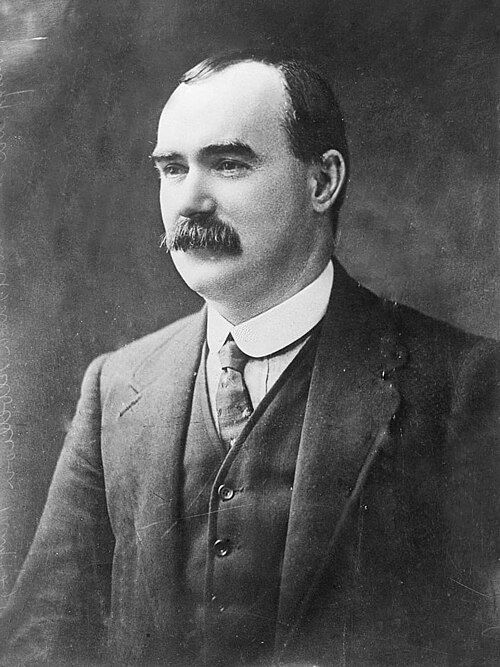
There’s no sign either of ships or vessels, though some sturdy looking trawlers still moor within view of Commodore John Barry’s statue, the local lad who went on to become “Father of the American Navy.”
In 1911 however, Wexford was a major manufacturing and export center. It was close to the heart of political affairs too, as another local lad, John Redmond, led the Home Rule Party in the British Parliament.
But things were changing. Though the employers did well financially, and the clerical staff enjoyed a decent standard of living, the same could not be said for the regular foundry employees who put in 60-hour work weeks in hazardous conditions for a pittance that could barely maintain their large families.
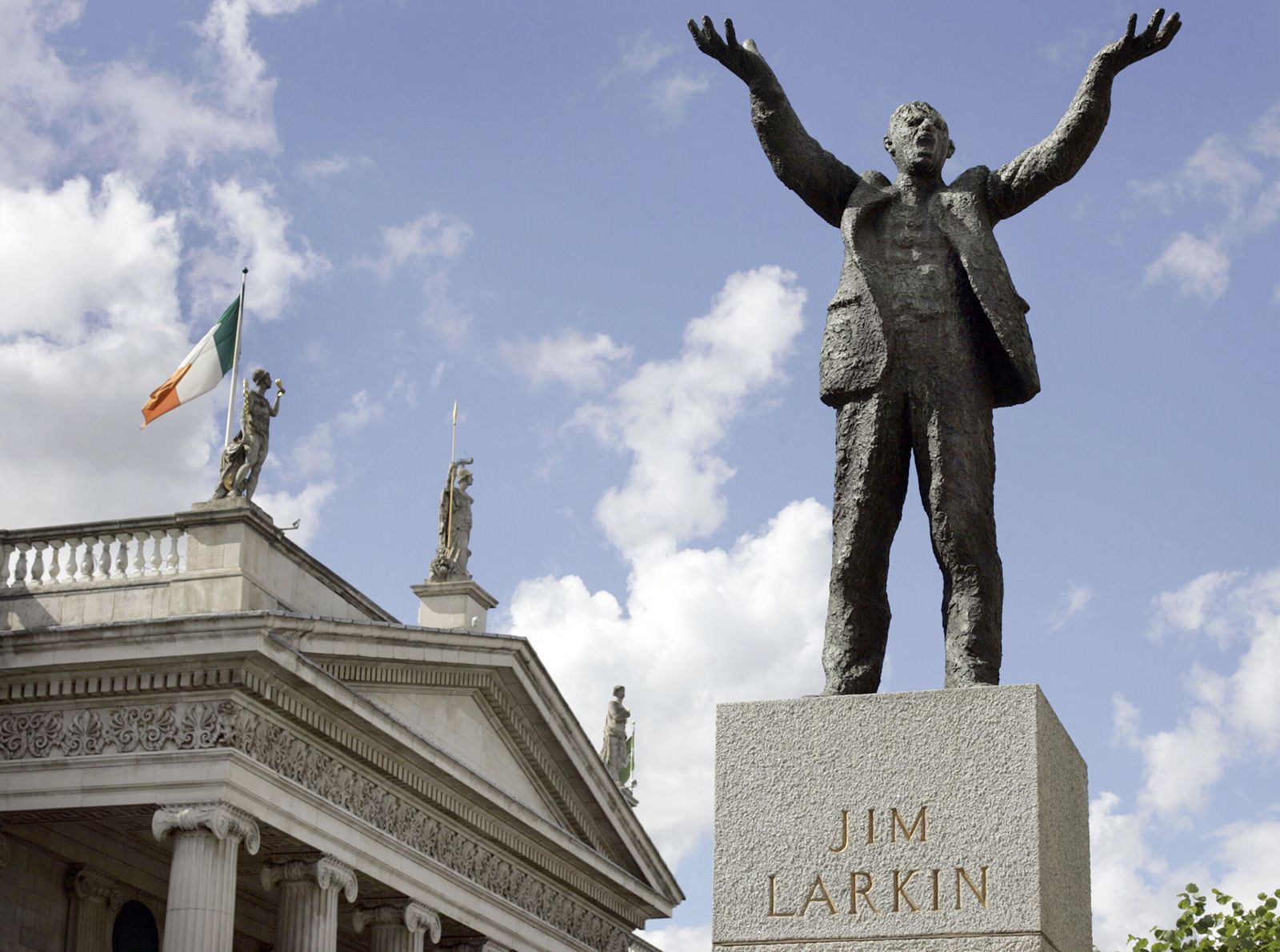
In 1910 the new militant Irish Transport & General Workers Union (ITGWU) came to town. Led by Big Jim Larkin, and James Connolly, who had recently returned from the U.S. after some years of organizing for the Industrial Workers of the World (The Wobblies).
The dockworkers were first to join, but soon the foundry workers began signing up. This was met with some alarm by the local political, business, and church leaders, none of whom cared for this new proletarian power base barging its way into Wexford’s class-conscious stratosphere.
My maternal grandfather, an ardent Irish republican and small businessman, was of the opinion that James Connolly was “nothing but a little Scottish troublemaker.” He wasn’t the only one with such views, for the foundry bosses let it be known in no uncertain terms that union members would not sweat on their floors.
By September 1911, 700 workers were locked out and soon thereafter scabs from as far away as Belfast and Britain were hired to fill the union members’ jobs. This led to great disquiet in the back lanes of Wexford.
Over 150 extra RIC men were drafted in to protect the scabs from the fists, pegged stones and insults of the townspeople, and in one baton charge Michael O’Leary, an innocent bystander, was clubbed to death.
The lockout dragged on through the bitter winter. The families of the locked out workers suffered great deprivation. In the end the scabs saw the light, or had it beaten out of them, and began to withdraw from the town.
With dwindling profits the employers showed signs of relenting but still refused to accept the ITGWU. Connolly, who had battled American oligarchs, proposed a compromise: Wexford workers would form their own union. The employers grasped at this semantic straw and the workers returned to their jobs in February 2012.
Oh, that we had more “troublemaking” compromisers the likes of James Connolly in our contemporary world of fearless social media warriors.
If you ever visit Wexford, take a walk down the narrow Main Street and up to The Faythe. The natives may look blandly modern, but look behind their eyes and you’ll catch a glimpse of the men of iron and their courageous women who held firm for their right to organize during the great Lockout of 1911.