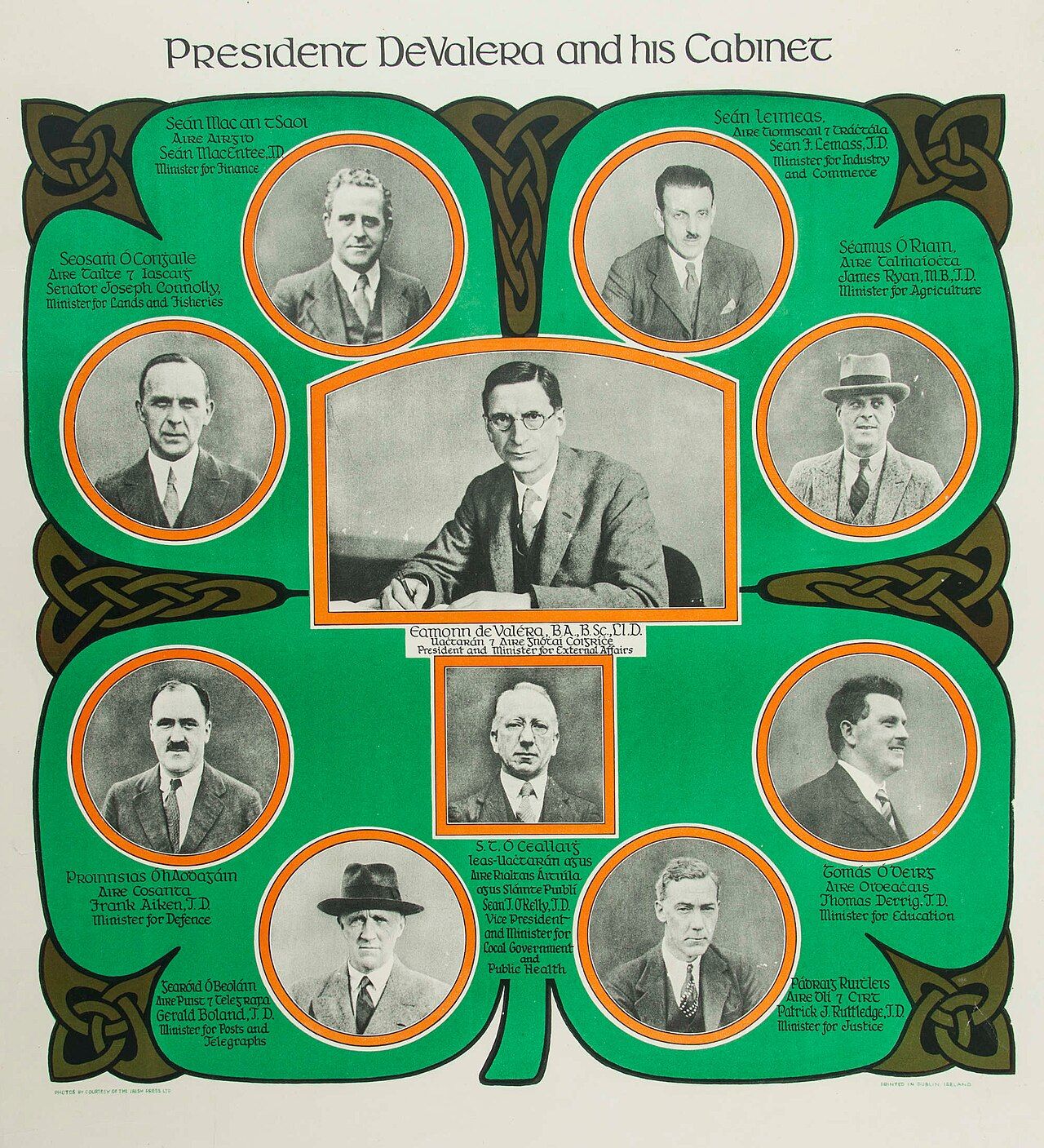
A visit by Taoiseach Eamon de Valera in 1945 was one the worst and most embarrassing actions ever taken by the Irish government, and more than 80 years later it still haunts Ireland. On May 2, 1945, de Valera visited the German representative in Dublin, Dr. Eduard Hempel, to express his condolences on the death of Adolph Hitler, who had died two days previously by his own hand. Joseph Walshe, the Secretary of the Department of External Affairs, accompanied the Taoiseach. Walshe and his deputy Frederick Boland tried to dissuade de Valera and warned of the consequences to the country’s reputation, already low because of Irish neutrality during World War II, but the Taoiseach ignored their pleas not to go.
De Valera defended his controversial visit, arguing that it was standard practice to offer condolences on the death of a head of state. He claimed he was simply extending customary diplomatic courtesy. He added that the visit did not denote approval or disapproval of Hitler. The Taoiseach maintained that Ireland had to treat all foreign diplomats equally, just as protocol had previously been observed when U.S. President Franklin D. Roosevelt died three weeks earlier. De Valera described the visit as a necessary courtesy to Minister Hempel personally because he had conducted himself correctly and helped respect Irish neutrality throughout the war.

Both de Valera and Walshe knew that their visit would be controversial, but neither of them anticipated the international firestorm of criticism their visit would provoke. The New York Times reporting on the visit in July of 1945 wrote, “No act of Prime Minister Eamon de Valera's public life has evoked more worldwide criticism than his call upon the German Minister to Dublin to express his condolences upon the reported death of Adolf Hitler. In many places it was described as a first-class blunder.”
Last December, the National Archives of Ireland released files covering Ireland’s legation in Washington during the war, much of it surrounding the reaction to de Valera’s visit. The files show the outrage the visit sparked. “I respectfully ask you to close the Irish legation. It is a standing insult to all of us. You stink, you are swine,” James O’Callaghan cabled, adding that he was from Donegal. “Please give us full facts concerning de Valera’s actions on the death of Adolf Hitler. Local controversy makes immediate answer imperative,” cabled Jack O’Loan, the secretary of the Gaelic League in Detroit. “Every man and woman of Irish blood regrets the stupid action of prime minister [sic] Éamon de Valera of Éire,” wrote Irish American lawyer Frank Hogan.
Though time has moved on, the controversy still lingers. Twenty years ago, then President Mary McAleese was asked if she should apologize for de Valera’s actions, but she declined. Two years ago, the Russian Ambassador to Ireland Yury Filatov mentioned that visit on International Holocaust Memorial Day and claimed that Ireland was in no position to lecture other countries on morality given its neutrality during the Second World War. Last year Cork City Council passed a resolution calling on the Taoiseach to apologize. Green Party Councilor Oliver Moran, the sponsor of the resolution, said that the original insult has been compounded by the failure of the State to atone subsequently. Israel often cites the visit as an example of what it claims is Irish antisemitism. In December last year, Israel closed its embassy in Dublin. At the time minister for foreign affairs Gideon Sa’ar cited Winston Churchill’s famous speech at the end of the second World War which criticized de Valera and rebuked him for his visit to Dr Hempel.
Northern Irish Unionists also cite de Valera’s visit when they criticize the Republic of Ireland. Unionists emphasize that Ireland was the only democracy in the world to offer official condolences for Hitler’s death. For unionists, the visit symbolizes a failure of the Irish state to distinguish between the Allied fight for democracy and the atrocities of the Nazi regime, a contrast made sharper by Northern Ireland’s heavy involvement in the Allied war effort.
Shouldn’t the Irish government simply issue an apology for this disastrous visit, whose repercussions Ireland still feels? Certainly, the German people would take no offense at an apology. Ireland gains nothing by remaining silent on the visit. The refusal to issue an apology gives the enemies of Ireland a cudgel to attack the country. Issuing an apology would allow the Republic to move on from this ill-conceived visit more than 80 years ago. It’s high time for Ireland to offer an apology and close the book on this disastrous decision by de Valera.