There's an old comic dig at the old time Soviet leadership standing stiff on the Kremlin Wall reviewing one of those interminable Moscow military parades.
The leaders are all suitably grim. Occasionally, one of them drops out of sight only to be immediately replaced by a new and even grimmer stalwart, though one of virtually identical features.
Number 10 Downing Street is not the Kremlin Wall. And today's Russia isn't the Soviet Union. When somebody pops off in Moscow these days they simply do that. There are no pop up replacements. There's only Putin.
The Russian leader, as with many world leaders, has to be counting on fingers the number of British prime ministers that have popped off over the past decade, or, more accurately, have walked off the political stage - physically alive but politically dead.
Since a majority of British voters opted for Brexit a decade ago this week there have been six prime ministerial residents of Number 10. Before a few weeks have passed the number will rise to seven.
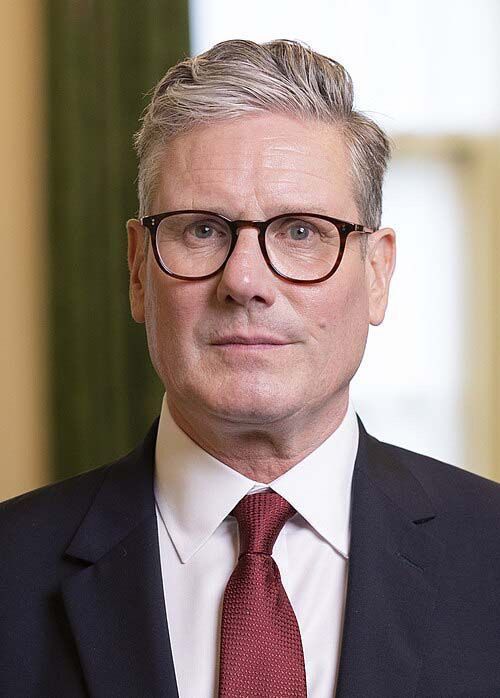
In fairness to said prime ministers, they are a more varied bunch than that Soviet assemblage. And so, since 2016, we have had the varied, though in political terms distinctly variable, David Cameron, Theresa May, Boris Johnson, Liz Truss, Rishi Sunak, and the now departing Sir Keir Starmer.

The longest serving British Prime Minister remains Sir Robert Walpole, who served for almost 21 years between 1721 and 1742. The shortest serving was Liz Truss who managed 49 days. Many are still asking why so long.
Starmer might be considered unfortunate. One minute he led his Labour Party to a resounding general election victory with a House of Commons majority to match the population of some of those small islands still constituting the empire. The next minute he's unpacking his sock drawer at Number 10 and preparing for that always vague next chapter.
Perhaps he will leave a note in said drawer for his successor, rather like some American presidents leave notes for the next White House occupant in the Resolute Desk.
"Dear successor, no need to fully unpack. Like me you might not be here long."
As this page opined recently, Starmer stepping down would be the latest in a recent political phenomenon of pop up prime ministers in a part of the world that prides itself on political stability.
That reputation for stability, and an oft self proclaimed British common sense, took a hard hit with Brexit.
The hard hits keep coming with Brexit looking ever more like a dumb and dumber move, one with ever expanding negative political and economic consequences.
After the recent local elections in Britain, which delivered a thumping to Labour, the walls of Number 10 began to close in on Starmer.
Starmer duly delivered a post-vote speech that was billed as a make or break moment for his prime ministership. It didn't quite deliver what was widely seen as being required
There was a sense that Starmer wanted to say things with regard to Europe, but could not outright utter them.
Those things could well have gone on the lines of admitting that, post-Brexit, the United Kingdom is, for all intents and purposes, economically broke and politically diminished.
In his speech, Starmer talked about a desire to see the UK sit at the center of Europe. He wanted to see a situation in which young British people can move through Europe, somehow seamlessly and as in the days pre-Brexit.
He almost sounded like he would like to lead the UK back into the European Union fold. He did not state this.
It will be interesting to see how Starmer's likely successor, Andy Burnham, will try to move the ever more splintered United Kingdom into what yet seems an uncertain future.
Burnham, should he succeed, will be under extreme pressure to spend, to borrow, to spend, to raise taxes, spend, borrow, spend etc.
It doesn't sound like a barrel of fun.
The pop up PMs over the last decade - with the possible exceptions of party hearty Boris and oblivious Liz - would likely agree with that assessment.