Where the ingenious twists and turns in the plot came from, I have no idea – but about 22 years ago I began to think about writing a novel based on some of my experiences as a reporter in Belfast during the 1980s and 90s for the BBC, RTE, Reuters and The Irish Echo.
My husband poured cold water on the proposal, scoffing at the very idea of little old me being able to write a convincing and sufficiently sinister murder scene. I promptly set to work and prove him wrong (he later conceded I had).
I then decided to seek advice from a long-time friend – an established and successful author – but she informed me soberly that every sentence in a novel must work on three levels: plot, character and theme.
That seemed like extremely hard work and completely beyond me. Yet the original concept niggled and wouldn’t retreat to whence it came.
Over several gin-and-tonics one evening in my local bar – “The Stores” in Portsalon, County Donegal - I shared the bones of my plot with two friends. They listened politely - but very possibly with glazed eyes.
As I spoke, however, the plot seemed to take on a life of its own and, by the end of the evening, I had decided to give it another try - although that might have been down to the gin …

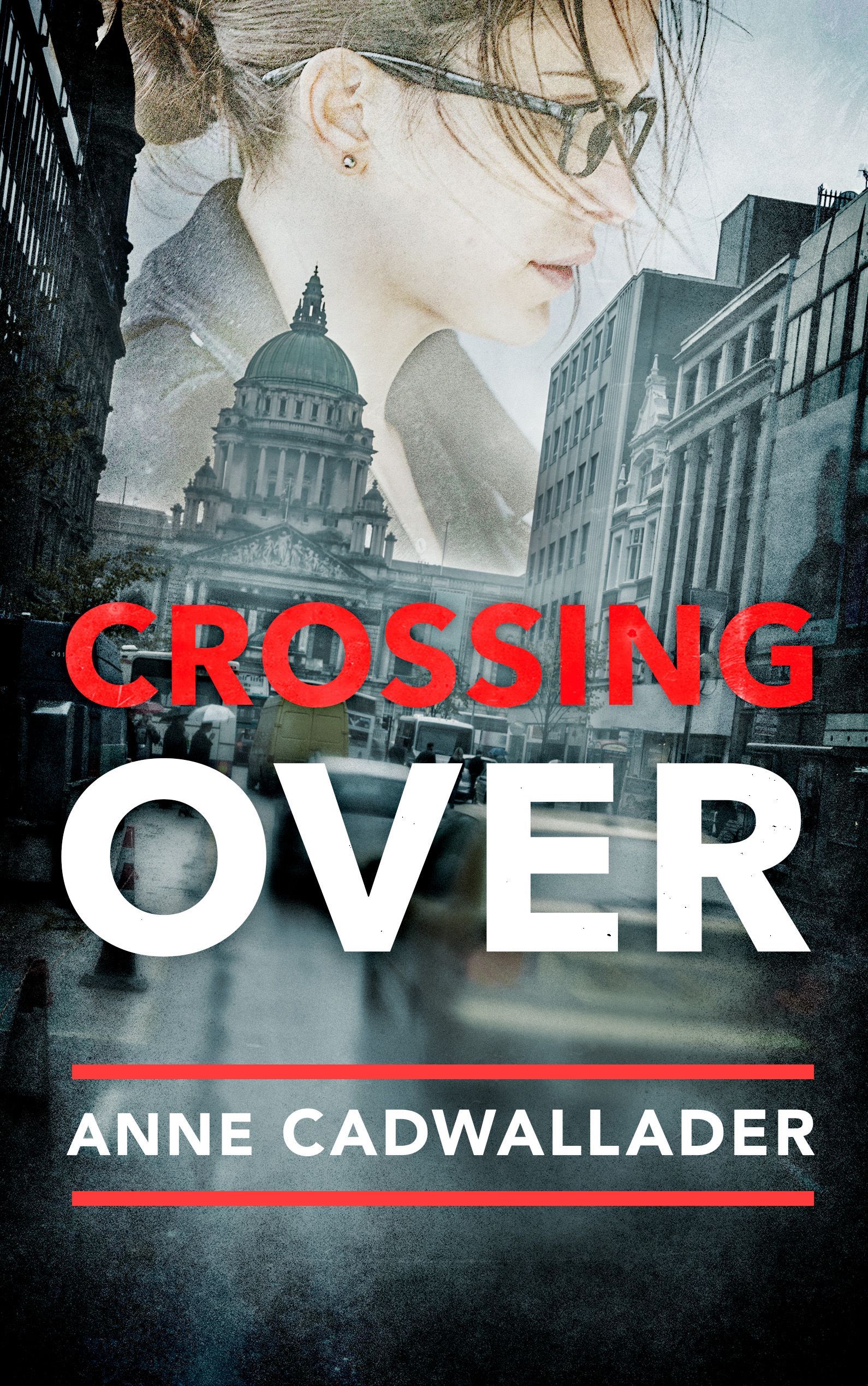
The next step was to give it a title and "Crossing Over" occurred to me from the heart-breaking Tommy Fleming song of the same name that can still bring tears to my eyes.
All of the above took place in 2004. Shortly afterwards, my husband was diagnosed with Parkinson’s and I quit journalism to better care for him.
I began working as a part-time case-worker with The Pat Finucane Centre, based in Armagh city, and was asked to write a very different book – non-fiction – based on the Centre’s decade of research into collusion in Mid-Ulster in the 1970s.
That book became "Lethal Allies: British Collusion in Ireland" (Mercier Press 2013) a best-seller that focused on collusion between state forces and loyalists in 120+ murders in Mid-Ulster and elsewhere, carried out by a group that is now referred to as “The Glenanne Gang."
Lethal Allies led to two coast-to-coast U.S. speaking tours, congressional hearings in D.C. and later Sean Murray’s RTS award-winning film, "Unquiet Graves" (Relapse Films). Also, to a speaking tour of six Australian cities and New Zealand.
None of that, needless to say, assisted me in progressing "Crossing Over" – and neither did my beloved husband’s death or my own serious health problems leading to open-heart surgery in February, 2025.
But I ploughed on through it all, discovering writing prevented me from descending into self-pity and depression.
The book starts with thirty-something London solicitor Lena (ambitious, flawed but principled) arriving in Belfast, determined to advance her career. Her first customer is Darren Barrett, a loyalist facing murder charges in Crumlin Road Jail, Belfast, who goes by the delightful nick-name of “The Shankill Stinger."
When Lena wins him bail, she attracts the attention of leading republican ex-prisoner Luke Maguire, but Lena has already fallen for UDR man Edward Gordon (wealthy, unionist, talented pianist) and is reluctant to represent Maguire and thus incur Gordon’s disapproval for “taking sides."
Lena denies any claim she is taking sides. She is acting professionally on behalf of her client as any self-respecting lawyer would.
Maguire had a twin brother, Danny, who was killed by the RUC in an alleged “shoot-to-kill” incident while he was in jail, several years before the action of the book begins. Surly but articulate, Maguire is near-obsessed with his conviction that the RUC acted illegally.
Without risking spoilers, all I will say is that "Crossing Over" relies on a plot which, while intricate, is not impossible to follow, or so I am reliably informed. The cast of characters is, I hope, authentic but not impossibly complicated.
Suffice it to say that the book follows Lena’s interactions with loyalists and republicans, barristers and judges, police and secret agents, victims and perpetrators, bombs and house-raids, love and hate.
It also includes one key U.S. character – a lawyer called Steve Sullivan, created for the sole reason that (at a very early stage in writing) my real-life friend, Stephen McCabe, a frequent visitor to Ireland from his then home in Long Beach, New York, insisted on a “cool NYC attorney” being included.
Now the book is finished and for sale, people commend me for managing to write a novel against the backdrop of grief and illness. What they don’t appreciate is that I didn’t “save” the book. The book saved me.
During months of heartache (both literal and metaphysical) I disappeared from real life into the lives of my two main characters, Lena and Edward who became more real to me than my own grim surroundings and I lived vicariously through them for months. But it goes even further back.
Part of the reason for writing "Crossing Over" dates back to 1982 when I was working overnight in the newsroom at the BBC in Belfast. The RUC press office rang to say the force had just shot dead three armed and dangerous IRA men after their car broke through a roadblock in County Armagh.
I duly wrote up the story and it was reported on the news.
Later, I discovered the entire police story was untrue. Eventually, the RUC was forced to ask Manchester police chief John Stalker to lead an inquiry and - after they successfully smeared him - Yorkshire’s Colin Sampson. Neither of the two reports have ever been published.
When I originally discovered I had unwittingly repeated an RUC lie, I naturally felt guilty but then decided that it wasn’t my fault. What else could a newbie BBC journalist have done? After all, the police don’t tell outright lies. Do they?
Guilt turned to disillusionment and anger and, after many twists and turns, forty-four years later, "Crossing Over" was born thanks to Mercier Press of Cork, who also published "Lethal Allies."
Its geographical backdrop extends from the mean streets of the Falls and Shankill Roads in Belfast to the Gordon family’s large estate in County Fermanagh and the high basalt plains of County Antrim, but I was also determined to set some scenes in the remote and beautiful Fanad peninsular, County Donegal.
Since I retired, I spend half my time in this, Ireland’s most northerly county, but it wasn’t until three-quarters into writing "Crossing Over" that I discovered a way of factoring in the golden sands of Ballymastocker beach, lumpy Knockalla mountain and a certain white-washed farm house in the townland of Fán an Bhualtaigh.
Sad to say, the Donegal-based action does include a fairly vicious row between two of the book’s main characters. It isn’t as scary as other parts of the book – but nevertheless definitely a nasty fight.
The themes of "Crossing Over" are the universal ones faced by any reporter covering civil conflict: when (if ever) is non-state (ie paramilitary) violence justifiable and when - if ever - is it ok for the state itself to bend its laws to breaking point?
Another theme in the book is the right and duty of every lawyer to act impartially for their client without fearing retribution, either from the state or their client’s political or sectarian enemies. With the public inquiry into the murder of Pat Finucane imminent, that remains at issue.
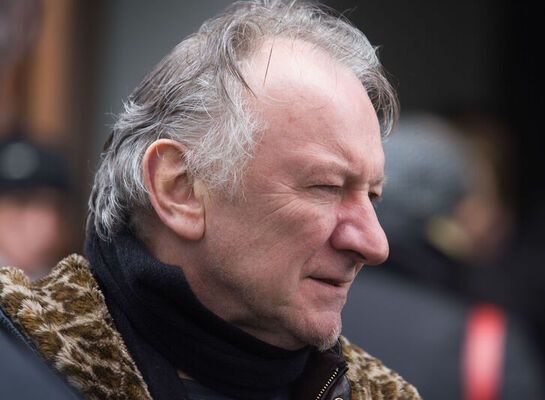
First reviews are in and, to my surprise and relief, people seem to be enjoying it. The Oscar and IFTA-nominated actor, Stephen Rea, (my late husband’s oldest friend) launched it for me in Belfast and I launched it myself, a second time, in Donegal to thank my friends and neighbours for supporting me during the long months and years of its gestation.
I now believe I may have written something worthwhile that both illuminates the conflict in Ireland and is, at the same time, a thoroughly entertaining read. Deo gratias.
Crossing Over is available from. https://www.mercierpress.ie/books/crossing-over/. It is also available from Amazon. Photos by Kelvin Boyes, Press Eye.