The Ancient Order of Hibernians has been playing a prominent role throughout the U.S. in holding the British government to account, especially in recent years.
When it comes to legacy, a border poll and Brexit, the AOH has played a pivotal role in lobbying the main players in Washington and advising members of Congress on Capitol Hill.
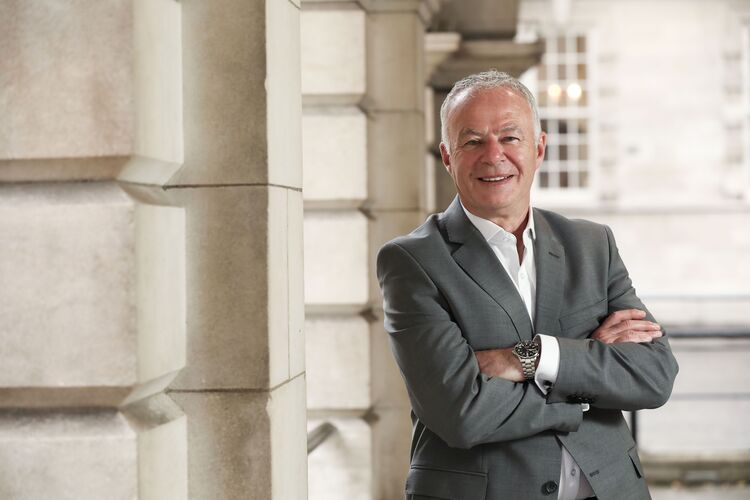
The National President of the AOH, Sean Pender, was back in Ireland this week and spent a number of days in Belfast.
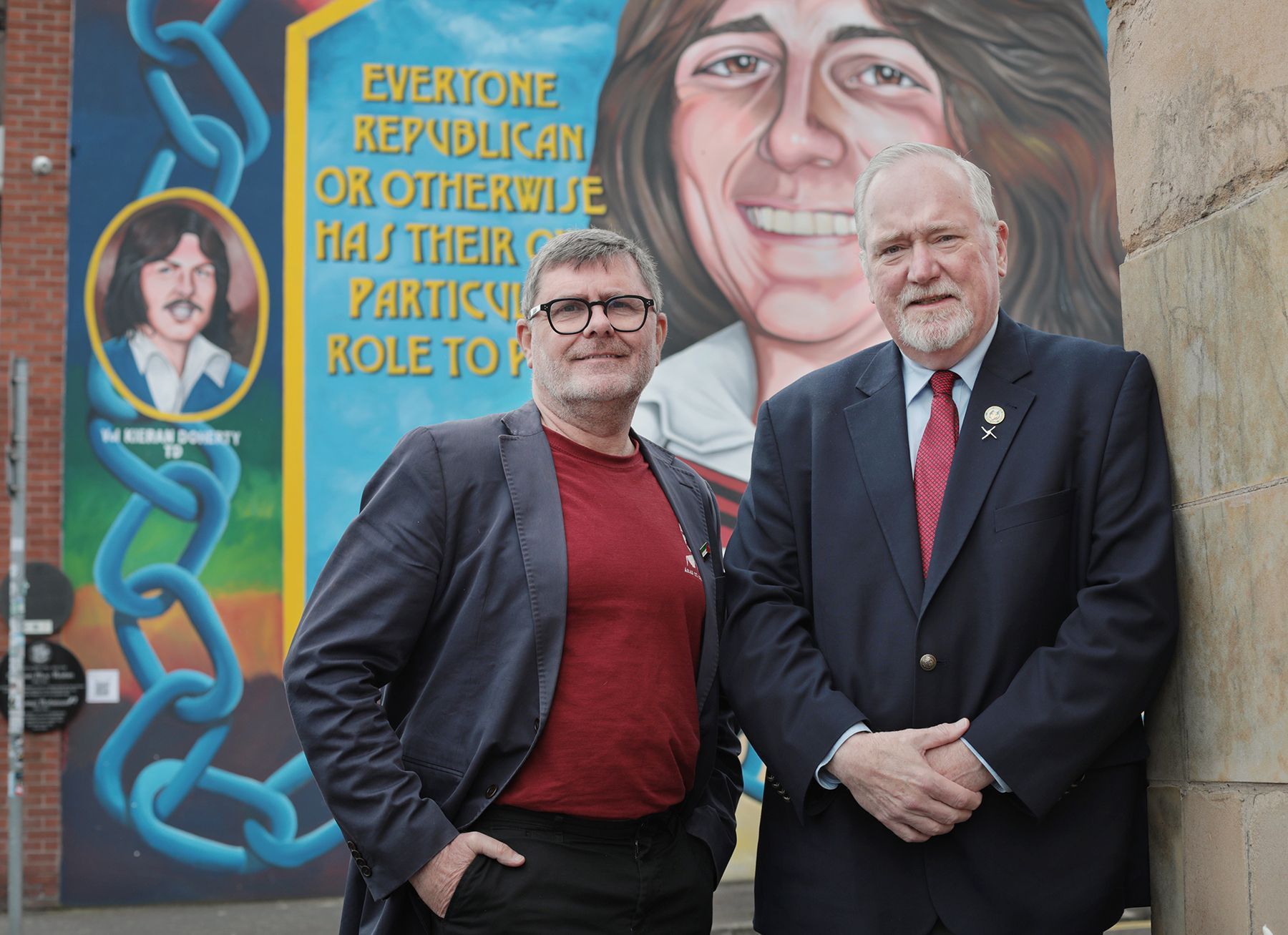
With a father from County Carlow and a mother from County Kerry, Pender has been a regular visitor to Belfast over the past quarter of a century and since he first met Clara Reilly and Mark Thompson in the Relatives for Justice office on the Falls Road.
It was around the same time as the Holy Cross dispute when loyalists tried to prevent Catholic schoolgirls from going to school in Ardoyne over a gruelling four-month period. He said Clara Reilly is still his hero and admits that those early visits to Belfast left a deep and lasting impression on him.
Growing up in New Jersey, Sean joined the AOH in 1981, having always had an interest in Irish history. Today, the Hibernians are active across the States on many crucial issues.
“Constitutionally we cannot endorse a party or a candidate,” he says.

“So therefore, when we go to a Republican or a Democrat we're speaking to an issue. That's it. And I think what that’s done over the years has given us credibility, and it also has made us an honest broker.”
One of those issues that the AOH is concerned with is the current immigration policy in the United States which is most visible with the actions of U.S. Immigration and Customs Enforcement (ICE).
“We [the Irish] were the immigrants who spoke a different language, worshipped a different God," said Sean.
"We were called, you know, apes, drunks and everything like that. And we got to make sure that doesn't happen to anybody else. So the current climate that's going on in our country and everywhere, I try to remember our people. That's not who the Irish are.
"You know, the Irish have been treated with oppression, aggression, discrimination, but we got to make sure it doesn't happen to other people. So we're very involved, like I said, with looking for a fair, equitable immigration policy, looking to peace, justice and unity in Ireland.”
In recent years the AOH has lobbied and met with members of Congress to help ensure that there would be no hard border in Ireland as a result of Brexit. It has led the campaign in Washington against the British government’s legacy plans and successfully pressed the Irish government to take an inter-state legal case against the British government over its controversial Troubles Legacy Act.
Its strong connections with victims’ families back in Ireland, while also bringing those families out to the U.S., means it is a trusted voice in the States on the legacy issue.
“Irish America helped bring the peace to this island,” adds Sean.
“And we are the largest [Irish-American] group there. We're not taking credit for that, but we have the cohesiveness with members in every state. We're able to reach out and say, let's reach out to our elected officials here. We’re proud of the other work we did. I think it came about because we need to finally finish the job. We see what was coming over here with the whole legacy thing, which has been heartbreaking.”
Sean said that after the UK voted to leave the European Union in 2016 there was a fear in AOH circles that it would be used as an excuse by the British to put up a hard border in Ireland.
“So on a trip to Ireland, one of the first stops we made was the Border Communities against Brexit in South Armagh.
"We were a very tired bunch of people because we just got off the plane, but I remember the diversity of the people who spoke to us. There were Irish republicans, there were farmers. So we lent our support to that right away, and we had the National President two times prior to me speak at that, so we knew that was important. We said 'We’re here for you. We're going to take the message back to the States.'"
The AOH is also a leading player in the campaign for a border poll on Irish unity. Sean believes that all the political parties in the South should start planning for unity, especially after the disaster that played out following the Brexit vote.
“The British say there’s no conversation around a united Ireland. Well, hold on. Take a look at the elections. You know that's the Sinn Féin First Minister up there. Take a look at the demographics. Take a look at the opinion polls – one that was just released today. Take a look at some of the work that's been done by academia about the value of going to a one-island system across everything.
“The year I've heard most is 2030, right? Okay, 2030 is going to be 32 years after the Good Friday Agreement. If we can't start talking about unity 32 years after the Good Friday Agreement we're not rushing into this. We'll have waited for a generation-and-a-half by then. So, it's time to move this thing forward.”