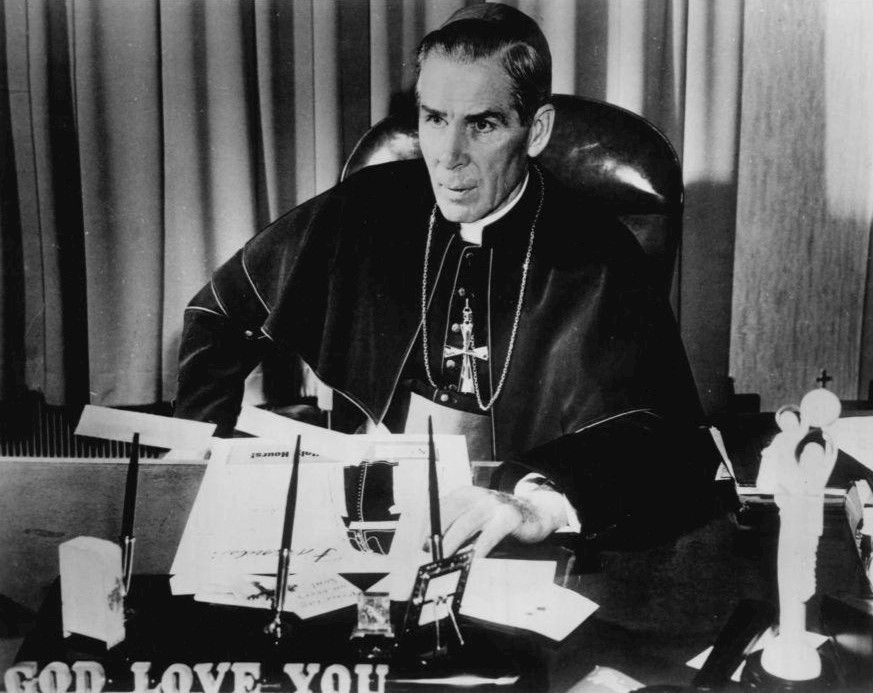
A beloved Irish American, Archbishop Fulton Sheen of Peoria, Illinois, has been beatified, putting him on the path to canonization. When Bishop Louis Tylka of Peoria, Illinois, announced on Feb.9 the Vatican had approved the archbishop’s beatification, he praised Sheen as “one of the greatest voices of evangelization” in the 20th century. “As he journeyed through the different stages of his life, his ability to share the Gospel and truly relate to people drew countless souls into an encounter with Jesus — one that transformed not only his life, but more importantly, the lives of those he touched,” Bishop Tylka said.
The long-awaited news ended a six-year-long delay. The case for Sheen’s canonization was delayed because the diocese of Rochester, N.Y., where Archbishop Sheen served as a bishop for several years in the 1960s, had to review “his role in priests’ assignments,” which stemmed from concerns he condoned sexual abuse by at least one priest in the diocese. After years of inquiries, including a probe by the state attorney general, however no allegations against Sheen have come to light.
The miracle attributed to Sheen, required for beatification, involved a stillborn boy in the diocese of Peoria in 2010. His parents had named the boy James Fulton after the archbishop, and they began praying for the archbishop to intervene. After just over an hour of prayer and medical intervention, the boy suddenly came to life.

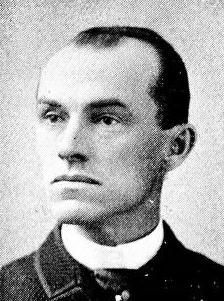
Peter John Sheen was born to Newton and Delia (Fulton) Sheen in El Paso, Illinois, on May 8, 1895, and was raised in a devout Irish-Catholic family. He served as an altar boy at St. Mary’s Cathedral and displayed intellectual brilliance. At age 8, while serving Mass for Bishop John Spalding, the churchman predicted Sheen would one day study at Louvain in Belgium and become a bishop. Sheen went to high school at Spalding Institute, then studied at St. Viator College in Illinois and attended Saint Paul Seminary in Minnesota before his ordination to the priesthood on Sept. 20, 1919. In 1920, he came to the Catholic University of America to continue his studies. He soon left to pursue advanced study in philosophy at the Catholic University of Louvain. Five years later, he returned to the Catholic University of America to teach. He became a superstar educator at the Catholic University, teaching there for 23 years.
In 1930, at the height of the Great Depression, he entered radio hosting "The Catholic Hour," which quickly became a hit. Sheen eventually gathered a weekly listening audience of 4 million people, and in 1946 Time Magazine described him as "golden-voiced" and "Catholicism's famed proselytizer.” Legendary evangelical preacher Billy Graham called him, “the greatest communicator of the 20th century.”
In 1951, Sheen moved on to television, then a brand-new medium. With piercing eyes, a powerful voice and a handsome face, he was tailor made for the small screen. His presentations of religious issues in terms any person could relate to drew up to 30 million viewers a week to his syndicated show, "Life Is Worth Living.” He won an Emmy for most outstanding personality in 1953, besting nominees that included Edward R. Murrow and Lucille Ball. Some experts credit Sheen’s television success for helping to enable the election of John F. Kennedy as the country’s first Catholic president in 1960.
Sheen became such a media superstar that he was named the national director of the Society for the Propagation of the Faith, which was based in New York City. Sheen would serve under Francis Cardinal Spellman who allegedly became jealous of Sheen's fame as "America's Bishop" and his successful TV show. Spellman demanded $1 million from Sheen’s Society for the Propagation of the Faith for government-donated milk intended for the poor. Refusing to pay, Sheen appealed to Pope Pius XII and won, which enraged Spellman. The New York cardinal reportedly vowed revenge, subsequently forcing Sheen off television and, in 1966, orchestrating his "exile" to the Diocese of Rochester. Sheen, to his credit, never spoke publicly about his conflict with Spellman.
Sheen had a strong identification with his Irish roots and believed the Irish had a unique relationship to God. He believed Ireland had a special connection to America and made dozens of trips to Ireland across the six decades of his priesthood. In 1952, he visited Croghan, Co. Roscommon, to consecrate the restored St. Michael Church where his grandmother was baptized.
Sheen loved Irish humor; he attributed the cheerful disposition of the Irish to how they view the world — and beyond. He once preached, “The Irishman enjoys life, I repeat, because he lives in a bigger universe than anyone else. He lives in the universe of eternity as well as of time,” Sheen once addressed a Friendly Sons of St. Patrick banquet at New York’s Astor Hotel stating, “Ireland may be a small island, but every Irishman is bigger than Ireland. The earth may be a small earth, but every Irishman lives on a bigger earth than the earth. In a certain sense, it is therefore true to say that no Irishman is ever at home in Ireland, or that every Irishman is homeless at home.”
One example of Irish faith that impressed Sheen occurred outside the Great Southern Hotel in Killarney. Sheen remarked to the doorman, “Oh, it’s raining.” The doorman stuck his hand out into the sprinkles and replied, “You call that rain, Father. That’s holy water from Heaven and it’s blessing yourself you ought to be doing with it.” Sheen laughed and then made the Sign of the Cross.
Sheen once preached on his television show about unique manifestations of the Lord the different peoples of the earth would receive when Jesus returned. He said:
The German people, who love pomp, might see Christ return as a glorious king, while Spaniards, who love the beauty of religion, could see Jesus with a face radiant like the sun, with garments as white as snow. He will come to the people of India, who love mortification, showing scars on hands and feet and side, but to the Irish, he will show something he showed no other people. He will show them his gratitude for their humor — he will show them his smile.