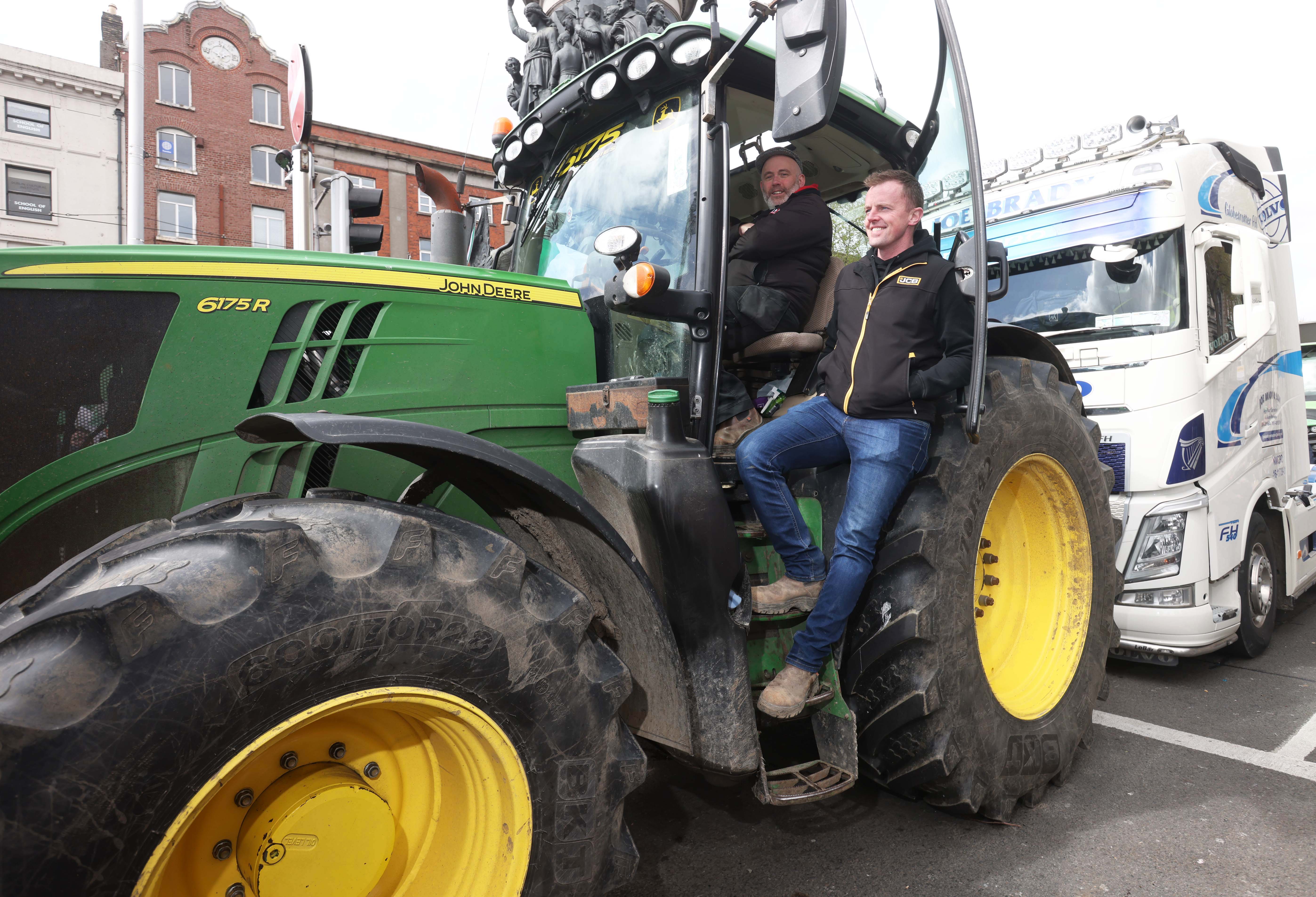
THE blockade of fuel depots, motorways, towns and Dublin city centre was entirely avoidable if the FFFG government had taken the growing crisis around the cost of living and increasing fuel and energy bills seriously months ago. Instead, Micheál Martin and Co stuck their heads in the sand and ignored the mounting anger.
Following days of public demonstrations, the government was forced into producing another half a billion Euro for a range of measures aimed at mitigating the impact of high fuel costs.
Over six months ago Sinn Féin brought forward a private member’s motion in the Dáil proposing a range of measures to tackle the cost of living crisis and the impact of rising energy costs. Households in the South were confronted by higher than average household bills as the number of families in energy arrears approached half a million. Electricity prices are the highest in Europe and gas prices are the fifth highest. Many energy suppliers had also increased their energy prices despite the sector boasting substantial operating profits.
Sinn Féin proposed a series of measures, including legislation which would have reduced energy costs for consumers. Predictably, the government voted it down. The track record of FFFG governments has been to prioritise the profits of energy companies and the energy needs of data centres over working families. The current protests are a direct response to failed government policies.

The government has in the past week gone from belittling people to threatening them with the Defence Forces to refusing to talk. This is not good government.
As Pearse Doherty said: “What is urgently needed now is a transparent system in which the regulators have the power to ensure that families can afford to keep the lights on and to heat their homes.”
As the protests begin to spread north, the choice is between the needs of families and the massive profits of the energy companies. I know what side I’m on.
While the world watches Iran, Gaza still suffers
AS I write this the talks between Iran and the USA, over the illegal Israel/US war against Iran appear to have foundered. It is likely that the energy and economic crisis that has resulted will continue.
Israel’s leader Benjamin Netanyahu has been lobbying the USA for decades to attack Iran. Other Presidents refused. President Donald Trump agreed. The bombing of Iran and Lebanon result from Netanyahu’s war aim of expanding Israel’s borders.
NO-GO: US Vice-President JD Vance and Pakistan PM Shehbaz Sharif at the opening of the Islamad talks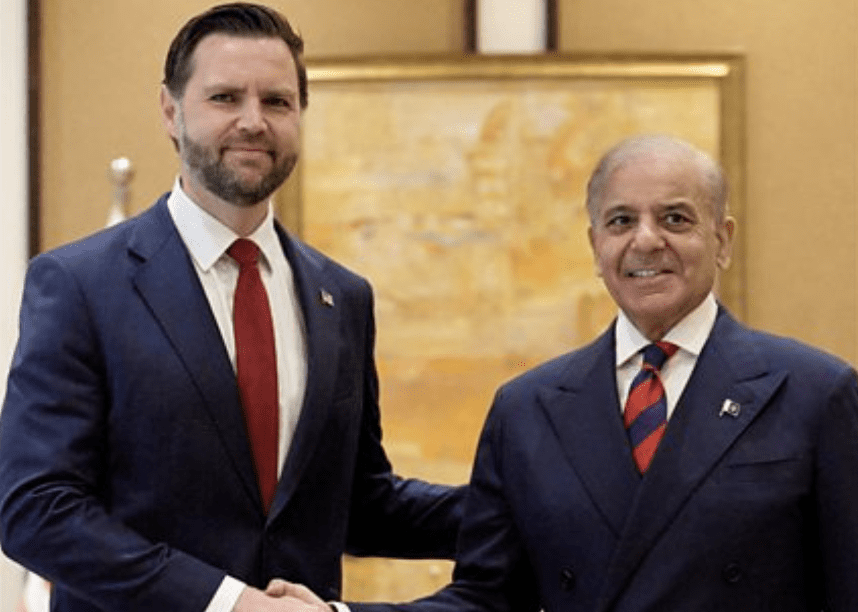
The failure of many EU and western governments to confront this aggression is scandalous. Refusing to stand up for human rights and international law has encouraged the violence of the Israeli apartheid regime and the Trump administration.
One consequence of this is that the plight of the Palestinian people has been largely sidelined. The ongoing murder by Israeli forces of civilians within the Gaza Strip and the West Bank, the new law by Israel allowing it to hang Palestinian prisoners, the denial of adequate supplies of aid promised in the ceasefire agreement for Gaza, are all evidence of Israel’s genocidal strategies.
In addition, there is increasing speculation emerging from talks involving Nickolay Mladenov, the Director General of Trump’s so-called Board of Peace, that we are on the cusp of a new and dangerous offensive against the Palestinian people in Gaza. Mladenov has been involved in talks in Cairo with representatives of the Palestinian people, including Hamas. There are strong indications that Israel is planning to launch a new all-out military offensive.
Currently, Israeli forces are obstructing the urgent infrastructure repairs, including electricity, water, and sewage networks which are essential in Gaza. Israel has refused to allow the entry of heavy machinery that is required for infrastructure works, as well as the recovery of thousands of bodies still buried under the rubble.
Contrary to a claim by Nickolay Mladenov that 602 trucks had entered the Gaza Strip on April 9, the reality is that the number was 207, of which only 79 were aid trucks. This is around one third of the aid promised as part of the ceasefire.
While people across the world march in protest at the actions of Israel and the USA, the reality is that it will only be when governments, including the Irish government, stand up against these injustices and pass legislation that impacts Israel’s economy that we will see a change in policy.
In the meantime, citizens in Gaza are preparing for the next phase of the genocide.
Prisoner talk
THIS Friday is Palestinian Prisoners’ Day. It is a day set aside internationally and dedicated to the freedom of Palestinian political prisoners and in support for their rights.
A just published report – titled ‘Another Genocide Behind Walls’ – by Euro-Med Human Rights Monitor (euromedmonitor.org/en) documents the appalling widespread patterns of brutality and sexual violence, including rape, used by Israel against detainees from the Gaza Strip.
Beginning at 10.30am in the Felons Club on the Falls Road these issues will be discussed in contributions from Kieran McEvoy, Professor of Law and Transitional Justice at Queen’s University; former republican hunger striker Pat Sheehan MLA; Professor Ron Dudai; and Dr Azadeh Sobout. There will be a keynote address at noon from Dr Jilan Wahba Abdalmajid, Ambassador of the State of Palestine to Ireland.
A vital read
CAOILFHIONN Ní Dhonnabháinnn’s book, ‘A Nation for All’, is a must-read primer for anyone interested in the struggle for the re-conquest of Ireland by the people of this island. I wholeheartedly recommend it. Especially to activists or those brave souls who are on the journey into activism and who are trying to figure out how, in this turbulent world, the struggle for equality, solidarity, democracy and sovereignty in Ireland is to be taken forward. As always it is important to get the basics right. A Nation For All does that.
Caoilfhionn’s writing is compelling, optimistic, factual and accessible. She blends elements of her own family’s history with our national history. I found the personal reflections especially poignant and intriguing, right from the first paragraph in the first chapter. A Nation For All takes us from the Great Hunger and the efforts to kill the Irish language to 1916. And the counter revolution. It is a scathing critique of the politics of “the victors of the civil war who created a state that was reactionary’’ and all that followed from that with the founding of Fianna Fáil, the deepening impact of partition and the entrenchment of the unionist regime in the North, to the malign influence of neo-liberalism at this time. There is also a timely and up to date critique of the EU.
But it soon becomes clear that this narrative is also a manifesto for change. Social and economic change as well as political change. This is a detailed and persuasive argument for the nation state and the primary issue of national democracy and the need for the empowerment of citizens. A Nation For All does not minimise the challenges facing us. Indeed, by setting them out graphically and clearly, we are compelled to face up to them and the work we must do.
A Nation For All is a great argument for committed change makers, especially in the South, to complete the unfinished revolution in all its aspects, including the exercise of our right to self-determination by all the people of this island. It is also an eloquent assertion that this can be done.
The Good Friday Agreement’s commitment to referendums on the future of Ireland and the need to secure and to win these referendums so that the new Ireland can be created is of paramount importance in the time ahead. That is not to suggest that the battle for rights, against neo-liberalism, for solidarity, democracy and sovereignty should wait until then. On the contrary this is that battle. It needs joined up and intensified.
A Nation for All by Caoilfhionn Ní Dhonnabháinn. Published by Greenisland Press. Available from An Fhuiseog, Bothar na bhFál, Belfast, and Sinn Féin Bookshop, 58 Parnell Square.