It didn't enter the conversation over the shamrock in the Oval Office on Saint Patrick's Day but Ireland is heading down a path that will see the neutral Republic take significant steps towards beefing up its military capabilities on land, sea and in the air.
Ireland, the Republic, has always been a militarily neutral country though, as its political leaders like to remind people, not a politically neutral one.
And military neutrality does not imply pulling up the drawbridge. Irish military personnel have a long and proud tradition of serving the United Nations in far flung countries. In that UN context Afghanistan is included.
But Ireland remains outside NATO, though there are well established lines of contact between the Irish military and the NATO command structure.
Being outside NATO means that you are primarily responsible for your own defense. But defense against whom?
Lately, the answer that springs to mind is Russia.
The skies around Ireland and most especially the seas have become realms of close interest to Moscow in recent years.
Between Russian bombers flying up and down Ireland's west coast and Russian ships sailing close to Ireland in Atlantic waters, and indeed the Irish Sea, there has been all manner of concern raised with regard to what the Russians are up to.

Likely no good is the generally agreed answer.
In the skies, the Irish Defense Forces lack the kind of air response capability that can shoo away bombers. There are plans to rectify this by means of purchasing interceptor fighters, quite possibly from Sweden.
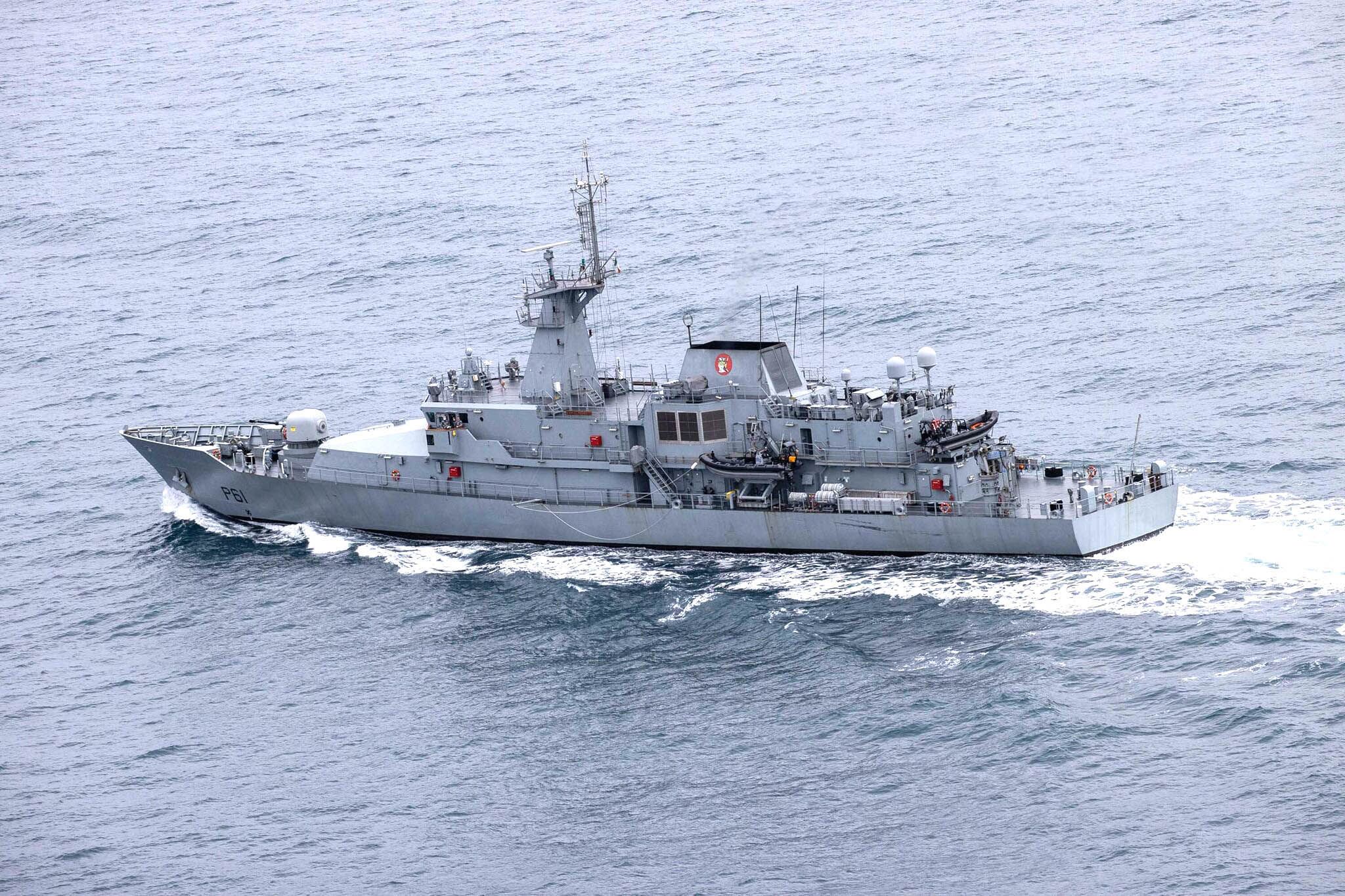
The Irish Naval Service - soon to be simply the Irish Navy - has eight ships in its fleet. The four most modern are all named after Irish Writers: Yeats, Beckett, Joyce and Shaw. All four were built in Britain.
These ships are well suited enough for fisheries protection and drug interdiction, but not for dealing with submarines or drones, as was illustrated during last year's visit to Ireland of Volodymer Zelensky when a mysterious drone appeared in the skies off Dublin and close to the flight path of the Ukrainian president's plane.
The Irish ship on duty in the area lacked the technology to potentially jam the drone.
The quartet of literary warships will need some serious technical upgrading. They will also need more crew. A lack of personnel means that only four of the eight ships in the Irish naval fleet are operational at any given time.
Signs of change are in the air though. And on land and water.
As the Irish Times reported: "Ireland has made considerable advances on conventional defence in recent months. Military attaches are to be sent to embassies in Washington, London and Paris for the first time. Ireland will allow French and British vessels to patrol Irish waters, and will participate in exercises with the Joint Expeditionary Force, a British-led alliance on maritime security. Dublin has announced the planned purchase of up to €600 million in French armoured vehicles and artillery.
During her visit to the U.S. in February, Helen McEntee, whose extensive ministerial portfolio includes defense, indicated that Ireland might be open to purchasing military equipment from the United States.
What exactly Ireland might buy has not been specified but the arrival of an Irish military attaché in Washington will be an interesting development and something to watch.
Neutral Ireland does not have to be a militarily neutered Ireland. That seems to be now broadly accepted.
Finland and Sweden were, until recent years, both neutral. But both were heavily armed. That said, even strong defense postures were ruled insufficient when Vladimir Putin invaded Ukraine. Helsinki and Stockholm duly joined NATO.
There's no sign of Ireland joining the North Atlantic Treaty Organization. But a next step could see Dublin becoming more of a well armed neutral, or at least a better equipped one that works with NATO for mutual benefit.