“Census Day — Next Sunday.”
So announced the Irish Independent on Friday morning, April 16, 1926, That was a fourth-deck headline on a leading news page. The three headlines above it were in all caps, saying: “Public Zeal for the Census"; followed by “Minister Says it is a Good Omen”; then “New and Valuable Facts.”
Now, people in the 21st century, specifically from Saturday, April 18, 2026, will get to see the information citizens wrote down for the first census taken in independent Ireland.
The Irish Independent report was built around a detailed statement to the press by Free State Minister for Industry and Commerce Patrick McGilligan. There was some concern voiced about the possibility of the data being used to impose a “bachelor’s tax,” and the minister did nothing to allay such a fear, saying the government would look at the number of single men, married men and widowers who had no or just a few dependents. The government then might consider a “reasonable weekly sacrifice on the part of the single would give to those who have dependents a wage that would be more equitable.”
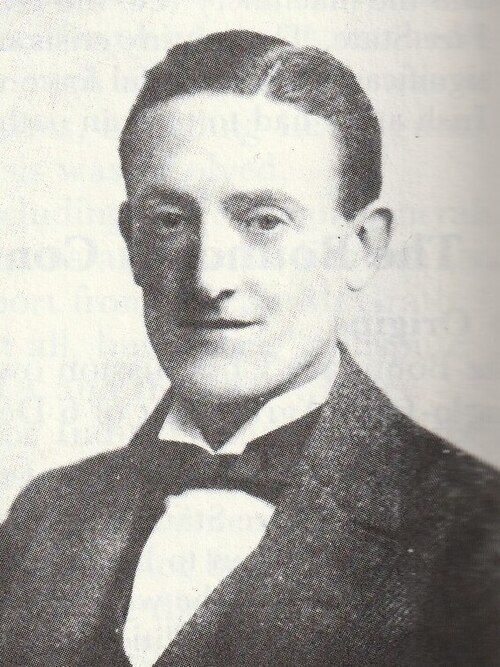
Patrick McGilligan.
Although soon to be identified with the successful Shannon hydroelectric plan and was later a convert to more liberal, Keynesian tax-and-spend policies, in 1926 the minister was known to be among the most austerity-conscious in the post-Civil War government. Taking office, he said, “People may have to die in this country and may have to die of starvation.”

McGilligan, single and near the beginning of a long political career, would marry in 1929 and have four children. He had been one of 12 born to Patrick McGilligan Sr., the late former Member of Parliament for South Fermanagh, and a draper in Coleraine,. The future Cabinet member and an older brother are listed together as university students at a hostel in Dublin in the 1911 Census, the last previous such undertaking.
By 1926 of course, partition was in effect, and in Northern Ireland forms had also been distributed for a separate census in that jurisdiction. This drew a letter to the editor in the context of an instruction that people should not list “Protestant,” or at least not without citing a specific domination. The letter-writer, a priest from County Antrim, said that there were no similar guidelines for Catholics, adding, “but I am aware that some members of the R.U.C. have instructed Catholics to write ‘R.C.’ under the heading [‘Religion’]. It is hoped that they do nothing of the kind.”
The priestly writer quoted from a recent book by the Most Rev. Dr. Patrick Morrisroe, the Catholic Bishop of Achonry (comprised of parishes in Counties Mayo, Roscommon and Sligo), in which he said the faithful should “resent the term ‘Roman Catholic.’” Morrisroe continued, “The phrase is incorrect. Moreover, it contains an implied insult, as though the Church of Rome was not identical with the world-wide organization known everywhere as the Catholic Church.”
(Alas, other than the broad statistical outlines of its findings, the Northern Ireland Census of that year was lost. The late historian Dr Éamon Phoenix told the BBC in 2013, "There had been rumors since the 1950s that the 1926 census was actually pulped and burned during the [1939-45] war as part of a waste-paper campaign, apparently without any authorization. This had been forgotten, it became something of an urban legend in historical circles, but it's now emerged as fact.”)
In the Free State, some wondered if going door to door helping people with the census and collecting their forms was not a distraction from the Garda’s main job, the prevention and detection of crime.
Another issue raised was whether they were equipped to gather information in Irish. “Conditions in the country from 1918 to 1921 did not permit the young men who form the backbone of the Garda to attend Irish classes,” the Irish Independent said. However, it reported that through “hard work and self-sacrifice upwards of 500 Gardai qualified for the Fainne, and over 2,000 Gardai have a fair knowledge of the language.”
Available in 10 days
“The 1926 Irish census recorded a population of 2,971,992, a decrease of 5.3% from the 1911 census,” according to the National Archives, via its website nationalarchives.ie, where the census will be available in 10 days’ time.
It’s an exciting development for both historians and family researchers. The Echo asked four prominent members of one of the most dynamic genealogy groups in the country, the Long Island-based Irish Family History Forum (ifhf.org), what they’ll be looking for first when the 1926 Census is released.
Frank McKenna, Executive Vice President, IFHF
My paternal grandmother Mary Ellen Donaghy McKenna was born in July 1896 in Buncrana, Co. Donegal. She and her sister Madge immigrated to New York in 1924. They left behind their parents – Bernard Donaghy and mother Grace McLaughlin Donaghy and many brothers and sisters, including Bernard, John, Theresa. The 1926 Census should list all their names and possibly more. Looking forward to finding out.
Pat Phelan, Vice President of Programs, IFHF
In the 1911 Irish census, Michael Phelan, 51, was living on the family farm in the townland of Strahard in County Laois with his wife and four young children. However, he was not the head of household; his older brother, Cornelius, was. Michael’s occupation was mistakenly given as “farmer’s son” instead of “farmer’s brother.”
In the 1926 census, will Michael be head of household? Will there be any farm laborers living in the household?
Maureen Winski Maloney, Treasurer, IFHF
I expect to find my mother in the 1926 Irish census. She was born in 1925 so she should be listed. Her older brother was born in 1924 so he should be there too. The others were born after 1926.
My great grandfather died in April 1926 so he may not be listed. My great grandmother died in December 1926 so she should be listed as a widow. I want to see who she was living with at the time.
Joanne Dillon, Chairperson of the Publicity Committee, IFHF
I hope to find my maternal great aunt Jane Lynch in the 1926 Census. Jane was born in 1880 to Michael Lynch, a teacher at Rathea National School in County Kerry, and his first wife Ellen Walshe. In the 1901 Census, I found Jane, also a teacher, visiting Kirby cousins, also teachers, in a nearby townland.
In 1911, Jane was living with her brother Patrick, a hardware merchant in Killorglin, Co. Kerry; she was probably there to help out after the untimely death of his first wife and infant son the month before the 1911 Census was taken. No occupation is listed for Jane in 1911-- just a line drawn next to her name.
One year later, Patrick married for the second time. And Jane seems to have disappeared. Did she marry? Emigrate? What happened to my great aunt Jane? I hope the 1926 Census provides me with a clue.