What happens when an actual trained historian decides to use years of research as the raw material for a work of fiction?
Well, for one thing, the historian doesn’t have to worry about tedious footnotes. Or grouchy peer reviewers.
That makes things a lot more pleasant. It also makes the material a little more, well, dramatic. And there’s nothing like a little drama to help tell a story.
Although I am indeed an actual trained historian, I thought it might be fun – and perhaps even educational – to tell a story that tested my limited imagination instead of one that relied exclusively on facts.
The result is my first novel, based on events and people many Irish Americans will recognize.
Non-fiction full of historical characters.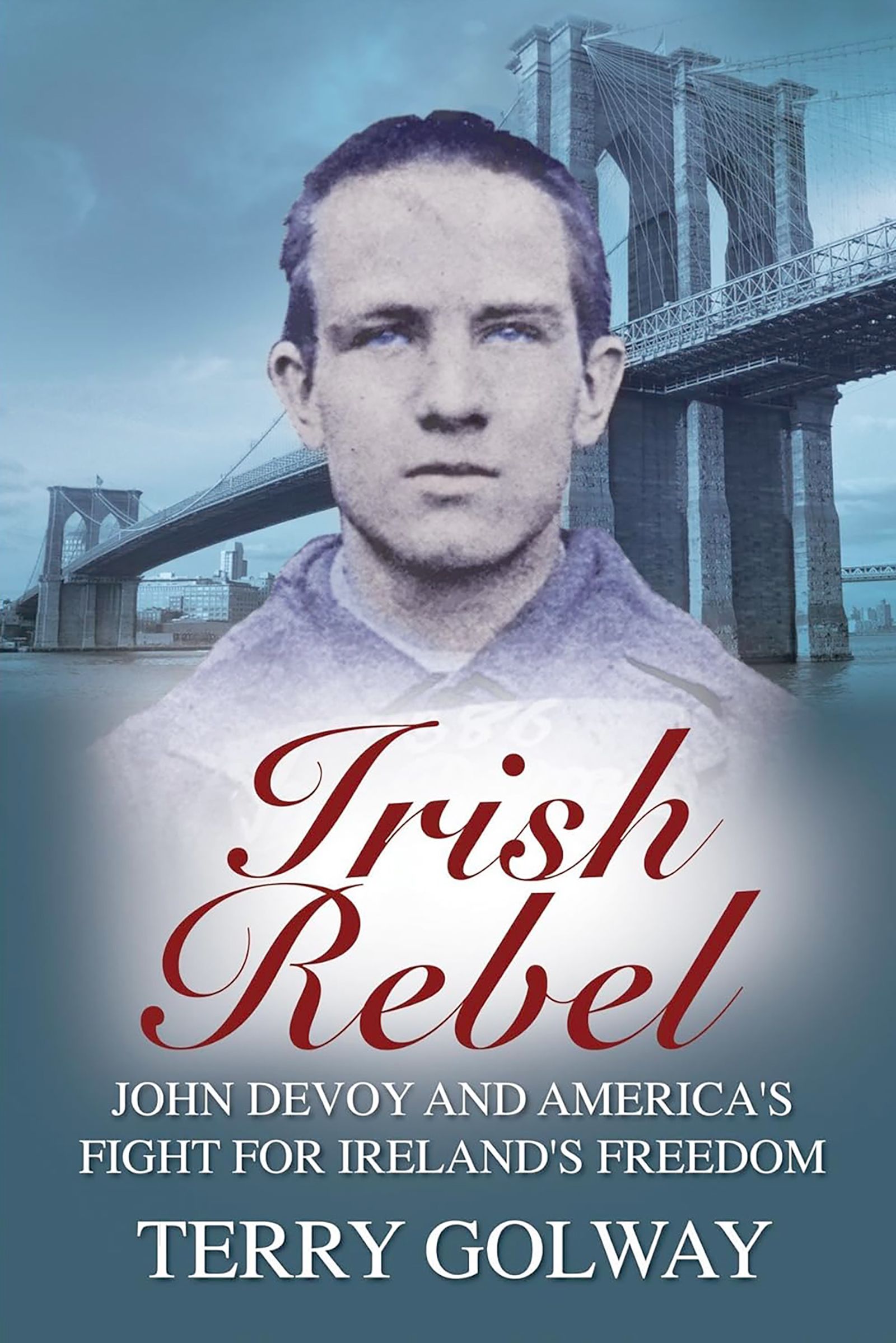
The book is set in 1884 and 1885 in New York City and London, during the tail end of the Irish-American dynamite campaign in England. The characters include John Devoy, the great Fenian whose biography I wrote 30 years ago, Jeremiah O’Donovan Rossa, and NYPD Inspector Thomas Byrnes.
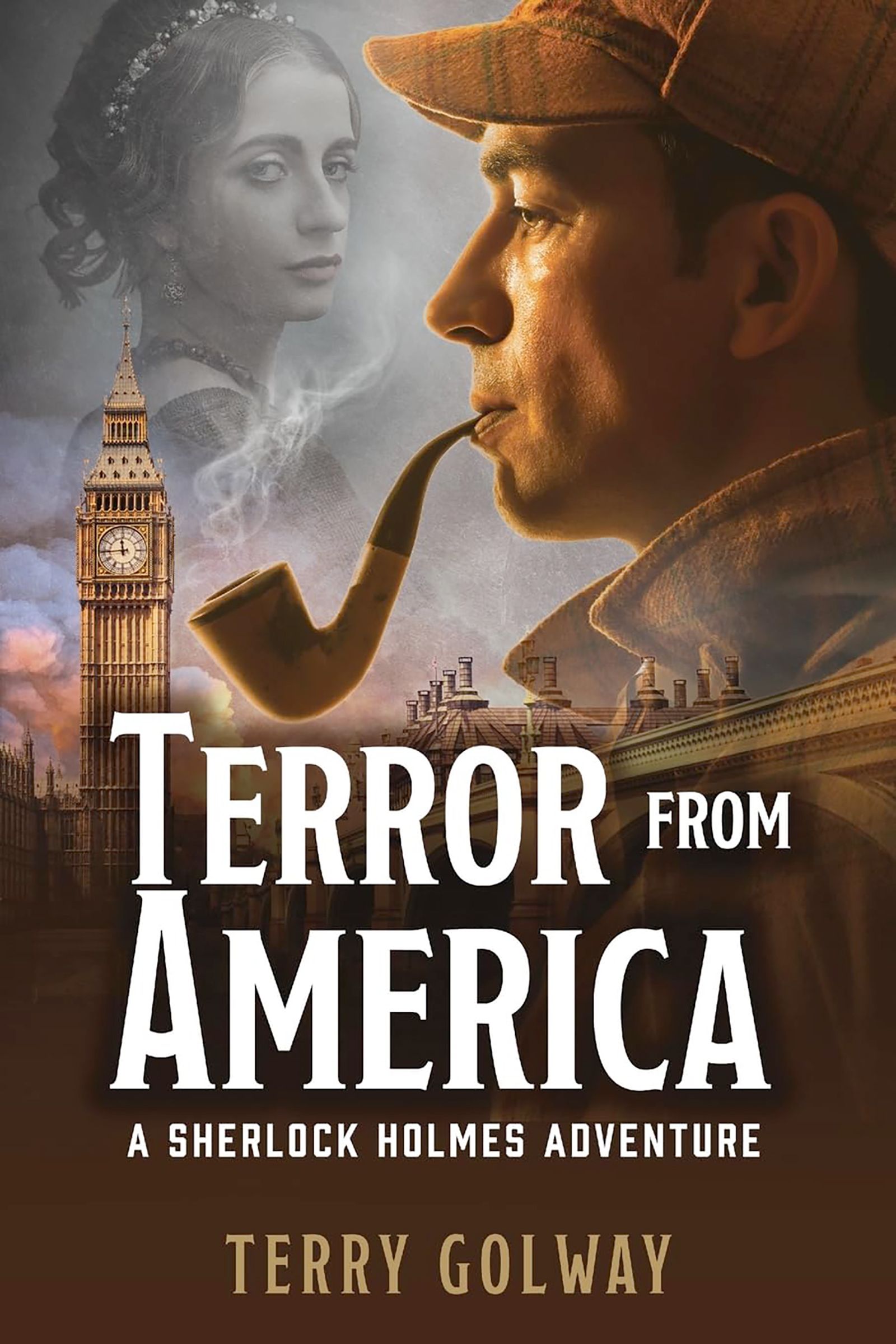
Oh, and Sherlock Holmes as well. The novel is called “Terror From America: A Sherlock Holmes Adventure,” and it has the great English detective matching wits with the likes of Devoy and other Irish exiles living in New York in the mid-1880s.

It will be published in a few weeks.
Please pardon me for letting you know that it is available for preorder on Amazon and other sites.
I would not discourage you from putting aside this very interesting article for a moment and placing your order right now.
Are you back yet? OK, let’s continue.
The dynamite campaign of the 1880s is forgotten by all but a few on both sides of the Atlantic.
I certainly didn’t know much about it until I started researching John Devoy’s life in the early 1990s. Devoy at the time was trying to build a bridge between Irish nationalists in America and the political movement headed by Charles Stewart Parnell, the great Irish member of Parliament.
Many of Devoy’s colleagues in America and in Ireland, Rossa included, condemned him for working with politicians rather than fomenting violent revolution.
That’s the backdrop for my novel: The conflict between reform and revolution, between those who believe they can achieve change through politics and activism, and those who say the system is irredeemable and must be brought down through violence.
And if you’re wondering if there’s a correlation between the events in the novel and real-life decisions made in Northern Ireland in the early 1990s, I’d say you’re right.
There are other themes in the book, including ever-present Famine memories, which, in my telling, Sherlock Holmes comes to understand as he tries to figure out what makes these New York Fenians tick. Many of the events in the book are based on real history, even if I’ve changed some of the details for dramatic purposes.
To cite the biggest example, at one point in the book two British officials are murdered in Central Park not long after Holmes arrives in the city. The incident obviously is based on the Phoenix Park murders in Dublin in 1882, although the time frame and circumstances clearly are not the same. At another point in the book, Irish Americans bomb the House of Lords and Trafalgar Square, based on actual bombings of the House of Commons and Tower of London on the same day in 1885. I changed the circumstances to suit my story, something no real historian would ever attempt. But this is a novel, after all.
Not having to stick precisely to the facts and not having to worry about real evidence to prove an argument can be liberating, no doubt. But there’s a danger, too, at least for somebody like myself who is used to the discipline of nonfiction.
The relationship between John Devoy and Jeremiah O’Donovan Rossa is a key part of the tension in the book, and tense it really was. In trying to dramatize that tension, I put words in both their mouths that they never said (well, I did use some of the actual insults they hurled at each other – they were so good I couldn’t resist).
Scriptwriters, movie directors and playwrights do this all the time, of course. Do you really think Julius Caesar said “et tu, Brute” as he was dying? And let’s not get started on Henry V’s speech at Agincourt. But as both a journalist and historian, I felt uneasy about turning real people I’ve studied, people whose letters I’ve read, into quasi-fictional characters.
Was I fair to Rossa in describing his instability, the result of his drinking? Did I make Devoy into too much of a grouch? Would the founder of the NYPD’s detective bureau, Irish immigrant Thomas Byrnes, really have …. Oops. I almost gave away a clue there.
I hope readers will conclude that I not only captured Devoy and Rossa, but that I also did justice to one of the great fictional characters in the English language, Sherlock Holmes himself.
I tried to imagine how my version of Holmes – the Holmes who often seems skeptical of the rich and powerful in the original stories – would react to people like Devoy and Rossa.
think I’ve pulled it off. But that’s not for me to decide.
That’s up to you. What’s inarguable, though, is that Irish Americans like Devoy and Rossa had an extraordinary impact on their community and our history, creating a legacy that we continue to celebrate.
Later this summer, Irish Americans (hopefully) will remember that 2026 is not only the 250th anniversary of America’s birth, but also the 150th anniversary of the successful rescue of six prisoners from Western Australia.
The Catalpa rescue – named for the rescue ship -- was one of Irish America’s greatest victories of the 19th Century.
And, who knows, maybe it’s material for another novel for another day.
Terry Golway has been writing about Irish American history for three decades, including as an Irish Echo columnist for many years. He currently teaches US history and politics at the College of Staten Island.