(Editor's note: this piece was written before the NYU Contract Faculty labor dispute was settled.)
As another Irish-American Heritage month nears completion, it’s a good time to remember Terry Golway’s comment that the “three pillars of Irish power” in the United States were the Catholic Church, the Democratic Party, and labor unions.
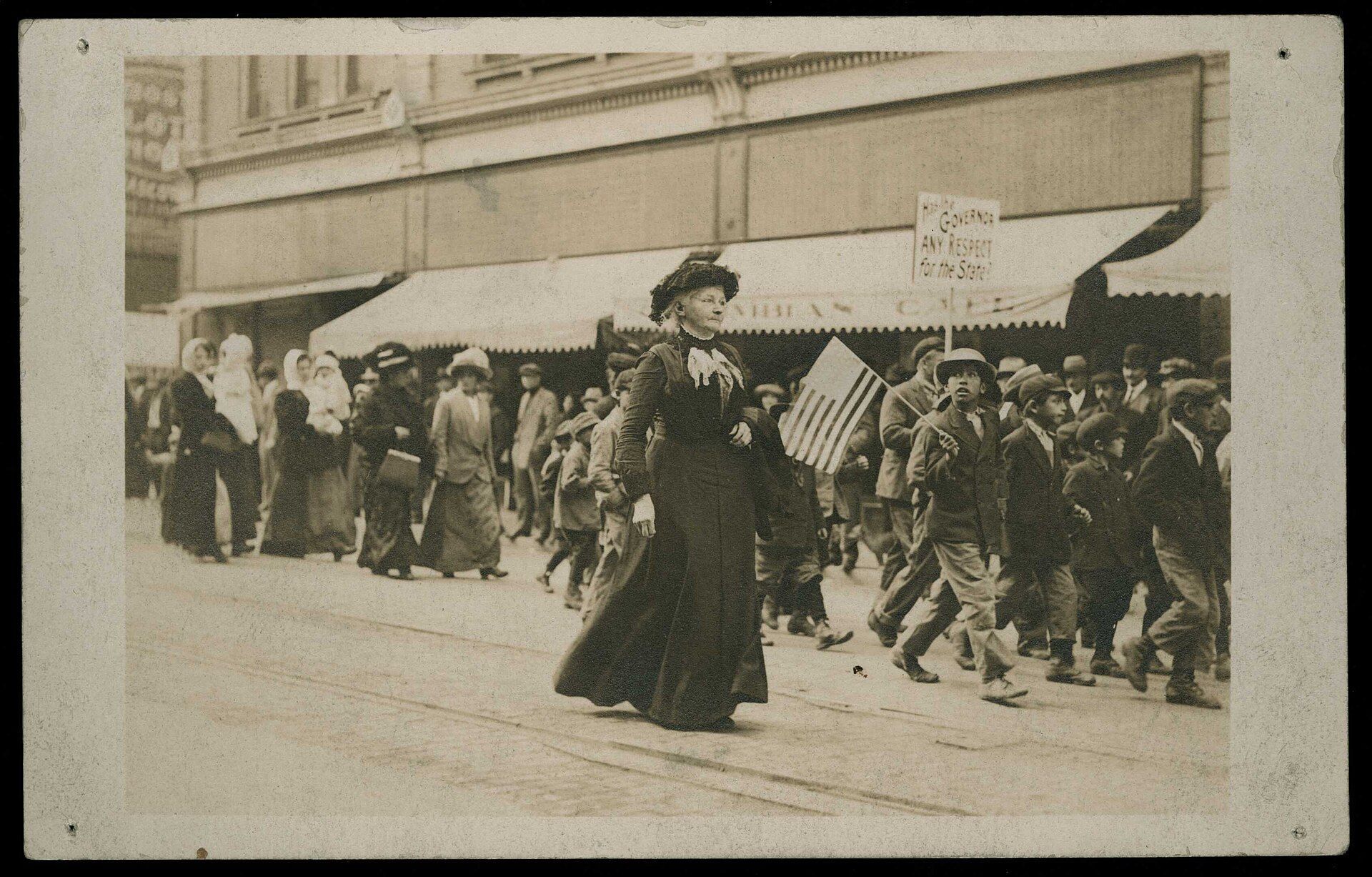
While religious leaders such as “Dagger John” Hughes, the Archbishop of New York, and political bosses like James Michael Curley, Boston’s “Rascal King,” are well-remembered, the litany of influential Irish American labor leaders is less celebrated. That litany includes names such as Terrence Powderly, leader of the Knights of Labor, Peter J. McGuire, a co-founder of the United Brotherhood of Carpenters, Mother Jones, a co-founder of the Industrial Workers of the World, George Meaney, first president of the combined American Federation Labor-Council of Industrial Organizations, and last but not least, John Sweeney, a Bronx native and Iona alumnus, who led first Local 32-BJ, then the Service Employees International Union, and finally the AFL-CIO.
Many Irish and Irish-American families have deep connections to organized labor. Take for instance my wife’s extended family, which includes three generations of Dunleavy men who have worked as Sandhogs, Local 147, digging the tunnels beneath New York City. There’s also a cousin who married a cousin of Mike Quill, the legendary leader of New York’s Transport Workers Union, and another distant relation who was married to Daniel McNamara, a higher-up in the Transport Workers Union in Chicago.

In my family, four of my Whelan relatives were members of Local 608 of the Carpenters. My brother and his son have been members of the Uniformed Sanitation Association, Teamsters Local 831. And I spent my many years of graduate school as a card-carrying member of Local 32-BJ.
My father, a crane operator for Con Edison, was a longtime member of Local 1-2 of the Utility Workers of America. In the summer of 1983, when I was four years old, he and his co-workers, led by Union President Thomas F. Kelly and Business Manager, Patrick J. Gallagher, went out on strike for two months. During the strike, the New York Times described the key points of tension between workers and management as “economic issues” and “job security." Aren’t those always the key points in any labor dispute?
On Monday, my current union, Contract Faculty United at New York University (CFU-UAW) went on strike over just these bread-and-butter issues. My Contract Faculty colleagues are half the full-time faculty at NYU; we include the entire Expository Writing Program in which I teach, as well as some of the faculty at Glucksman Ireland House. We get paid, on average, 36 percent less than our Tenured Faculty co-workers, while at the same time, we teach, on average, 33 percent more than they do. And rather than the lifetime security of tenure, we work on three to five year contracts that are subject to annual review. Additionally, there is a chronic problem of wage compression whereby longer serving contract faculty make less than newer hires for the same labor.
While college professors might not fit the typical image of exploited labor, the NYU Contract Faculty’s struggle for better pay and less precarity place us in solidarity with all those previous movements that raised the standard of living for the Irish-American working class, and helped improve the conditions under which all American workers toil.