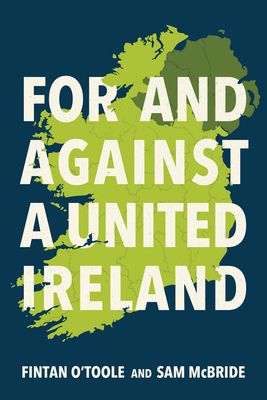
For and Against a United Ireland. By Fintan O'Toole and Sam McBride. Blackwell's.
For most readers of The Irish Echo, the prospect of a united Ireland often feels like an approaching freight train: powerful and inevitable.
The prevailing narrative suggests a border poll is imminent and will successfully sweep across the island with the force of history. However, after reading and reflecting upon Fintan O’Toole and Sam McBride’s, For and Against a United Ireland—recently awarded the biennial Ewart-Biggs Prize for work promoting peace and understanding between the peoples of Britain and Ireland—even the most ardent Irish nationalists might be advised not to hold their breath.
A partnership between the Royal Irish Academy and the Keogh-Naughton Institute at Notre Dame University, the ARINS Project (Analysing and Researching Ireland North and South) deserves praise for its mission to move beyond a 'parade of prejudices' and provide the public with clear-eyed data.
Born of this initiative, the book’s structure is perhaps its most salient feature, offering a masterclass in evidence-based debate. Instead of a standard, two-sided, for-and-against set-up, the authors were each tasked with arguing both sides objectively, providing four essays in total. Dropping their personal biases to the degree humanly possible, this 'switch-side' format allows readers to see the logic of the opposing side from two perspectives. Sam McBride and Fintan O’Toole, Co-Authors of ‘For and Against a United Ireland’, in conversation with WIP Alumni Aoife Joy Keogh.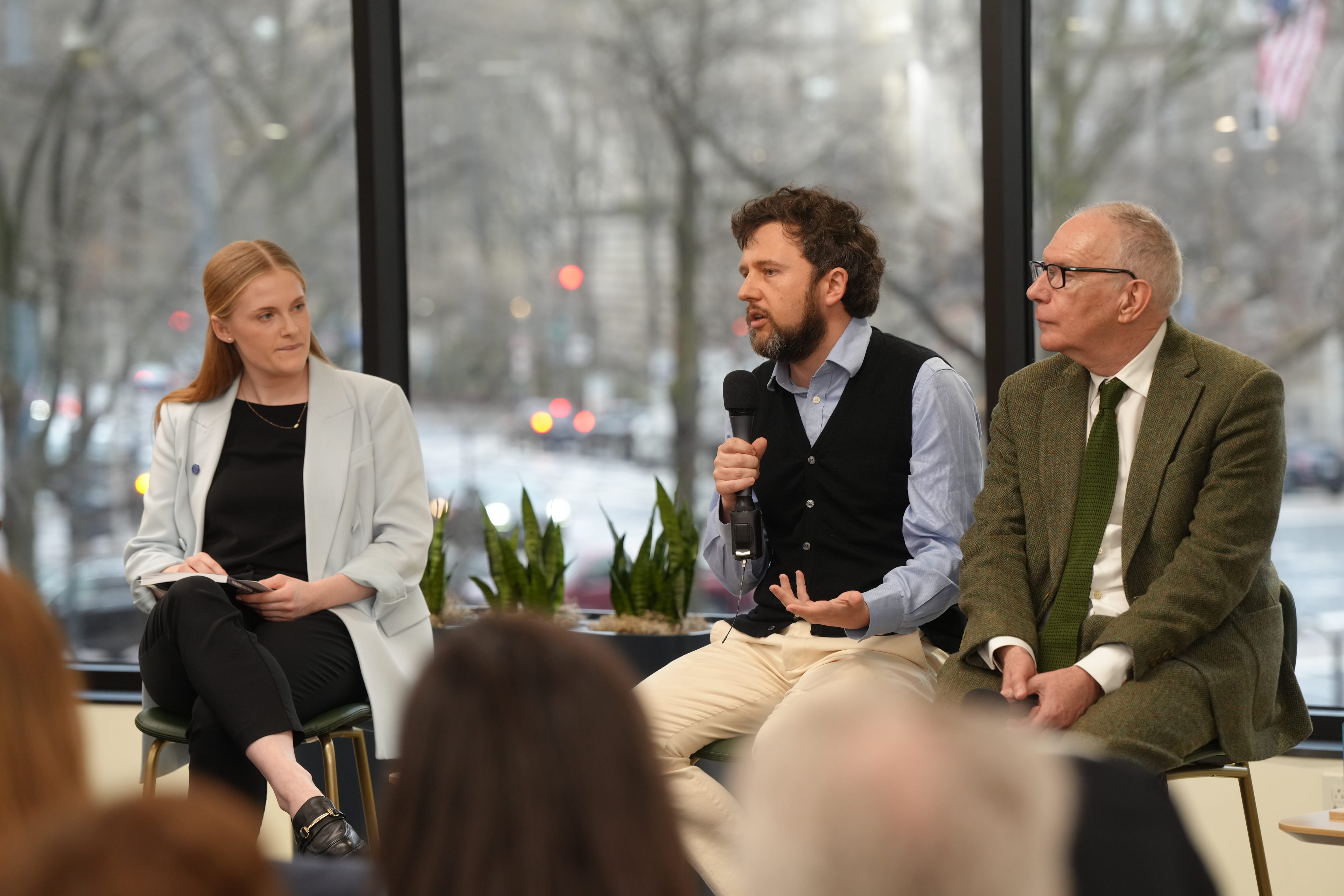

ARINS could not have chosen two better authors bringing unparalleled intellectual heft to the project. Sam McBride is the Northern Ireland Editor of the Belfast Telegraph, while his counterpart, Fintan O’Toole, is an award-winning columnist for The Irish Times. Having audited a course he taught while a visiting professor in Irish Letters at Princeton University, I personally witnessed Fintan outline eight hundred years of Irish history impeccably—without notes nor pause for a single "um".
The authors have taken For and Against a United Ireland on tour, drawing sold-out crowds in Dublin, Belfast, Washington, New York and even India. Their spirited presentation, during which they even change chairs as they swap sides of the debate, has captivated audiences.
When I asked Fintan and Sam about the common assumptions among the diaspora after they spoke at Princeton on March 20, they cautioned that a border poll could still be a decade away. The push for a timelier poll in Northern Ireland reflects growing instability in the United Kingdom, where July assembly elections are expected to produce pro-independence or pro-exit majorities in Scotland and Wales.
However, both authors stressed that the real challenge is on the Republic of Ireland to present a clear, credible plan to voters, North and South, to avoid the uncertainty that surrounded a poorly defined Brexit. Whether they can do it convincingly remains an open question.
Will it be the Republic of Ireland that is the undisputed world leader in attracting foreign direct investment in the technology and pharmaceutical industries since the 1958 Lemass-Whitaker plan? Or will it rather be the Republic that has spent over €2.2 billion, taking more than two decades to construct a single National Children’s Hospital?
Alarmingly, the authors underscore the potential for armed Unionist resistance. Sam tellingly cites Padraig O’Malley’s, The Unfinished Business of Uniting Ireland, in which a loyalist paramilitary leader suggests that a few bombs in Dublin ahead of any border poll would discourage voters in the Republic from supporting Irish unity.
For impassioned Irish Echo readers, this book is essential. It cautions that a united Ireland is not merely a single event to be won, but a gargantuan process demanding a more robust Southern state and a more settled Northern community, with an emphasis on cross-border education in the meantime.