“It’s a lovely day. A pity about the weather.”
Kevin Sharkey tries always to bring his mother’s spirit and attitude to his life and work even when, or especially when, it’s raining outside.
“She used to say it all the time,” he remembered.
But there’s another positive message from his younger days in Derry that features in his work and it’s about peace.
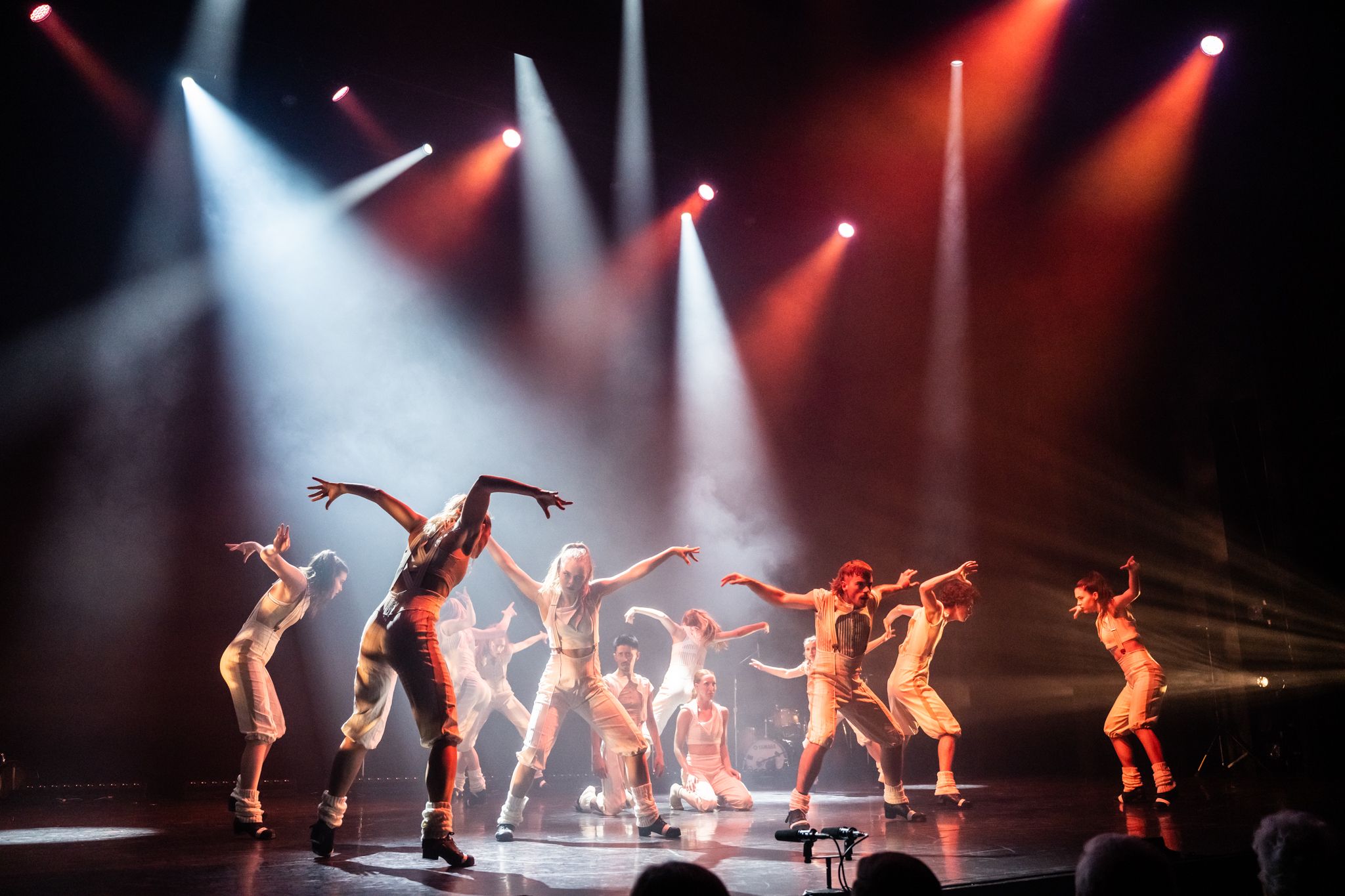
Sharkey is the composer of the music for “The Sash,” which will be brought to New York’s Joyce Theater by the Chicago-based Trinity Irish Dance Company from Feb. 17-22.
His previous collaborations with the company and its founding artistic director Mark Howard were via Different Drums of Ireland, a group he described as half-Protestant and half-Catholic.
“We did quite a bit of work with Trinity and with Mark,” he said.
The group put instruments such as the Lambeg drum, the bodhrán and the uilleann pipes front and center, but with a “kind of decommissioning of the contentious element” and with a view, too, to reconciling identities, whether Irish, Northern Irish, Ulster, Ulster Scots, Caledonian or whatever.
“The whole point of it was about coexistence,” said Sharkey, who lives in Cumbria, England, with his wife Cassie and their three teenage children.

There certainly wasn’t much co-existence in his background. “An insane place to grow up in,” he said of the Northern Ireland of the 1970s and ‘80s.
The story of his own career begins with a fatal bomb explosion. “It something you can’t unsee,” Sharkey said of the carnage, but he preferred not to discuss the incident in which young soldiers died.
He lost some hearing in one ear and during his nine-week absence from school he listened for the first time to his brother’s record collection — to the music, for instance, of bands like the Velvet Underground, to reggae, to Latin music, to funk. “It was all vinyl,” he said, remembering the ritual of putting on and listening to a record in its entirety.
“When I was really young I was exposed to amazing pub sessions in Donegal, brilliant storytellers, singers -- it was just Irish culture in its purity,” he said. “But after the explosion was when I really discovered music.”
Sharkey got his own drum equipment and practiced four to five hours a day. Within three years, he was a professional.
“I was making a living at it at a very young age,” he said. “Music saved my life,”
His early career was on the showband circuit. “I saw the real Ireland,” he said. He even played with Daniel O’Donnell.
A few years on, Sharkey was a musician in a friend’s play that represented Ireland as one of 27 nations at a theatre festival in Provence, and that eventually led him to living in France for more than five years. “It’s bonkers, he said, “but I can speak French better than I can speak English.”
Sharkey still travels there, but it’s his annual trips to Donegal that are most special to the family. His children experience the same sand dunes and the same rock pools he did.
“My kids are really connected to their Irish roots,” he said of Milo, Orla and Ely. “They’ve a genuine love for their Irishness.” That has helped him, he believes, with the grieving process for his late parents.
“Donegal was my happy place,” he said. It was father’s, too, relieved to be past the checkpoints and away from Derry for a while.
They had a difficult relationship, however. “He didn’t understand me, he was very hard on me,” the son recalled. His brothers and sisters, being “academically quite sharp,” passed the UK’s Eleven-plus examination, which put them at that tender age on an academic track and enrollment in the higher-achieving schools. The future musician, who was dyslexic and had ADHD, failed it.
He was embattled on all sides, though.
“I was separated from my tribe. I lived in a Protestant part of town. It was quite dangerous for us,” he said. “I used to lie about my name just to get home safe.”
And then there was school, which was a hotbed of support for the Provisional IRA. “I was really badly bullied,” he said.
“It was known that my dad used to be in the British services years and years ago,” Sharkey said, adding that he had that in common with thousands of other fathers in the Catholic community. “It was just a job,” he said, when there weren’t too many for Catholics.
It was also known that his parents were opposed to the “armed struggle” and didn’t vote for Sinn Féin.
Both died four years ago. Sharkey missed his father’s passing by three hours. He had dementia and was suffering from lung cancer. “I wanted to forgive him before he passed,” he said, “The day after the funeral, my mother had a heart attack in my arms.”
She spent seven weeks in the ICU in Belfast before dying. “I was there for her last breath,” Sharkey said. “That kind of helped.”
He added,“Grief, it bites you in the ass when you don’t expect it.
“But the wonderful thing about the Irish, particularly from the north of the island, we’re survivors. I’m not a victim, I’m a survivor. I’ve never been bitter.
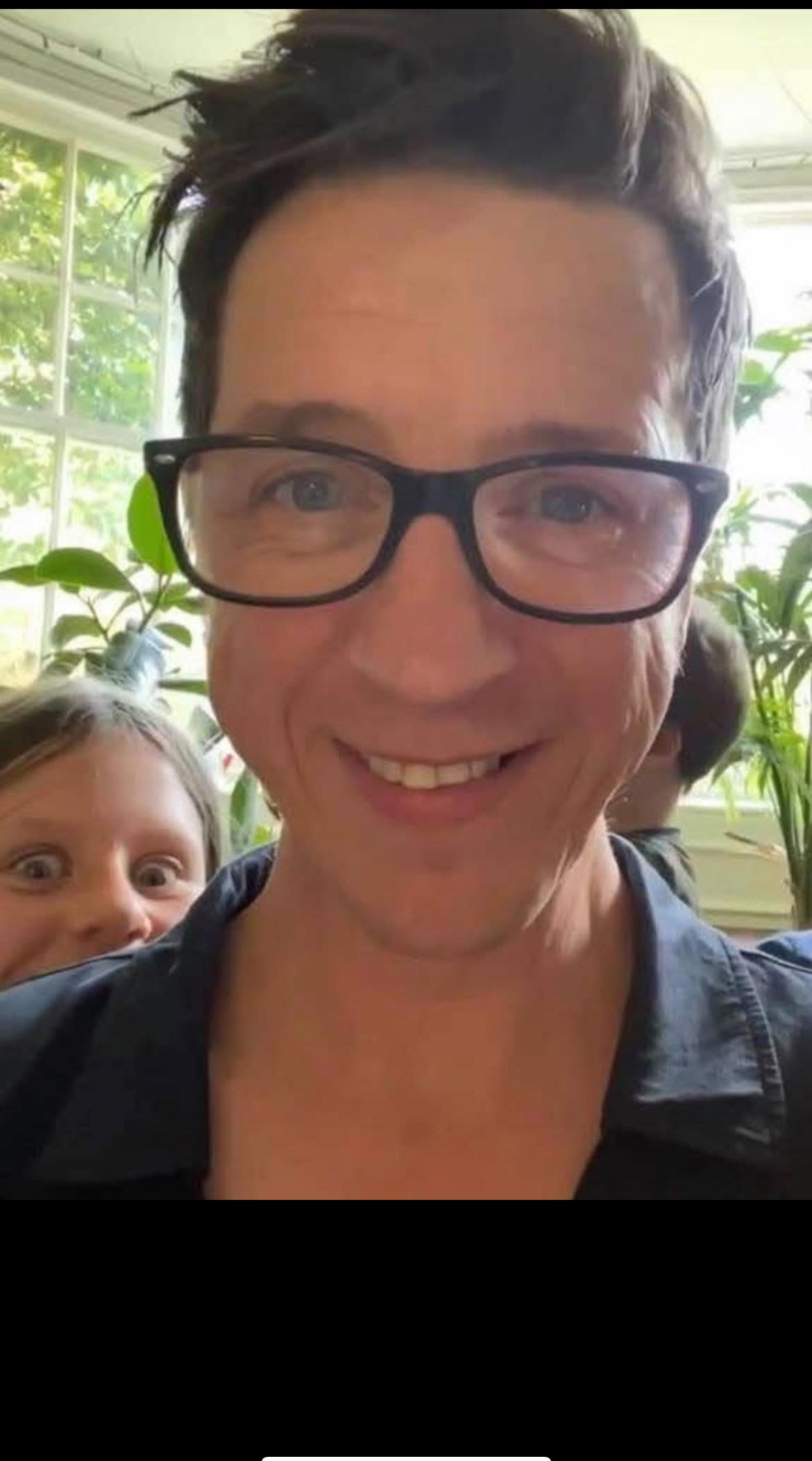
Orla photobombing her dad Kevin Sharkey’s selfie on during a family holiday in Donegal.
“We laughed, we danced,” the musician remembered. “I might seem to be contradicting myself, but there was so much kindness. My father was old school Irish.”
Sharkey is old-school himself in that he holds traditional nationalist views, speaks of British colonialism, the Six Counties and believes in the goal of a united Ireland, though he added that “Dublin couldn’t afford the North right now.”
He said, “I’m not a staunch republican. I’m an Irishman.”
Yet, “The Sash” is not just about where he grew up. “It’s global. It’s about coexistence. It’s acceptance.
“Politeness is free,” Sharkey said. “And kindness costs nothing.”
For tickets and information, for tickets or more information about the Joyce Theater run from Feb. 17-22 and a show at the Auditorium, Chicago, on Feb. 28, visit here.