Matthew Jude Barker has been familiar with the past for a long time now.
“I started tracing my family history in 1981, at age 8,” said the genealogist who is the resident historian at the Maine Irish Heritage Center in Portland.
His decades of scholarship and teaching culminated in 2025 with the release of two impressive books about the history of Portland in the mid-19th century. Their particular focus is the immigrant Irish community, but inevitably both tell the broader story of Portland, the state of Maine and the United States in the periods covered.
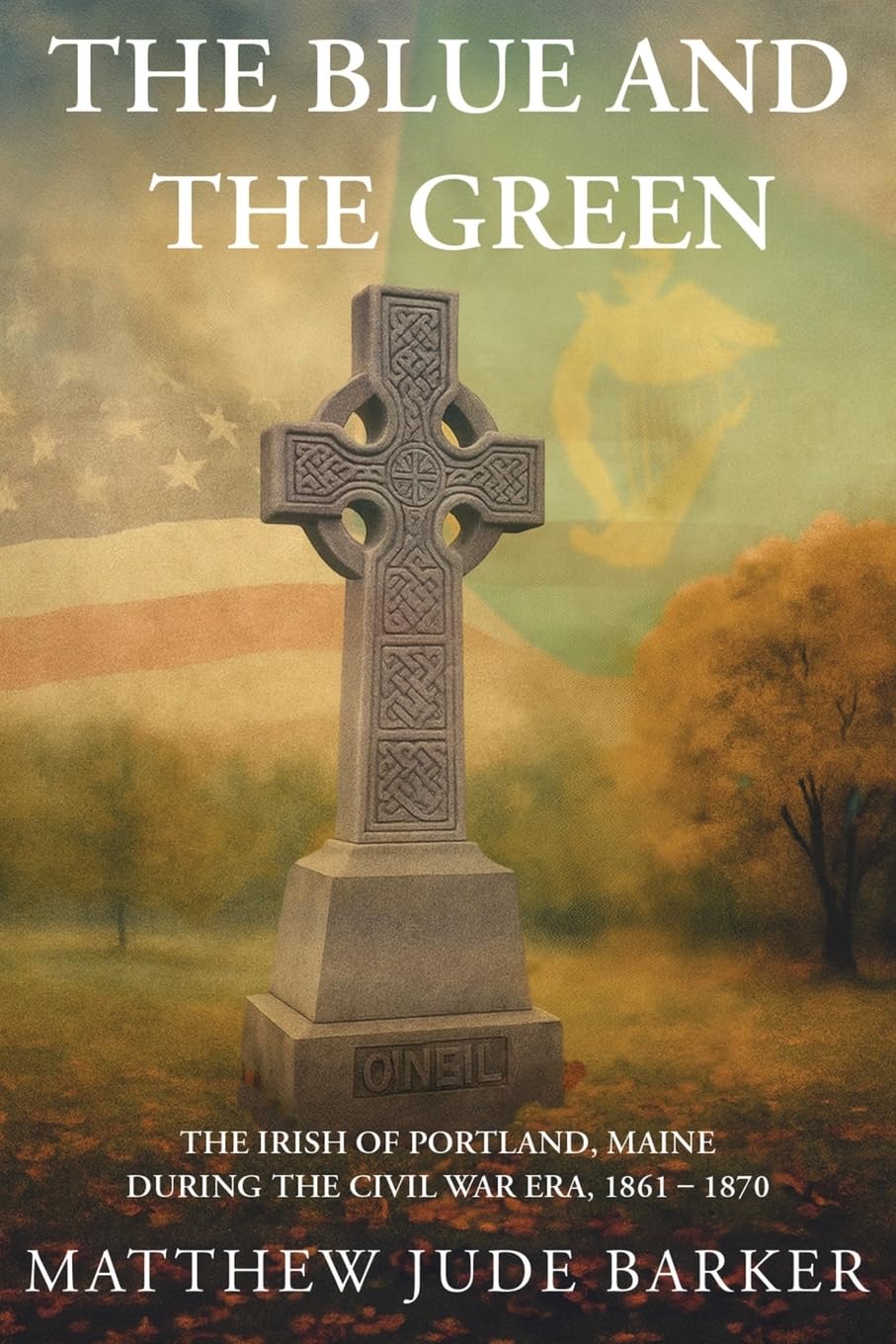
One is “Becoming American: Portland’s Irish, Maine and the Making of Immigrant America, 1840-1861”; the other, “The Blue and the Green: The Irish of Portland, Maine during the Civil War Era, 1861-1870.”
Portland makes for a fascinating case study as the census of 1860 showed that of the 27,000 people living there precisely one in 10 were from Ireland; and, of course, many more of Irish heritage in the city had been born in the U.S., Canada, Britain and elsewhere.
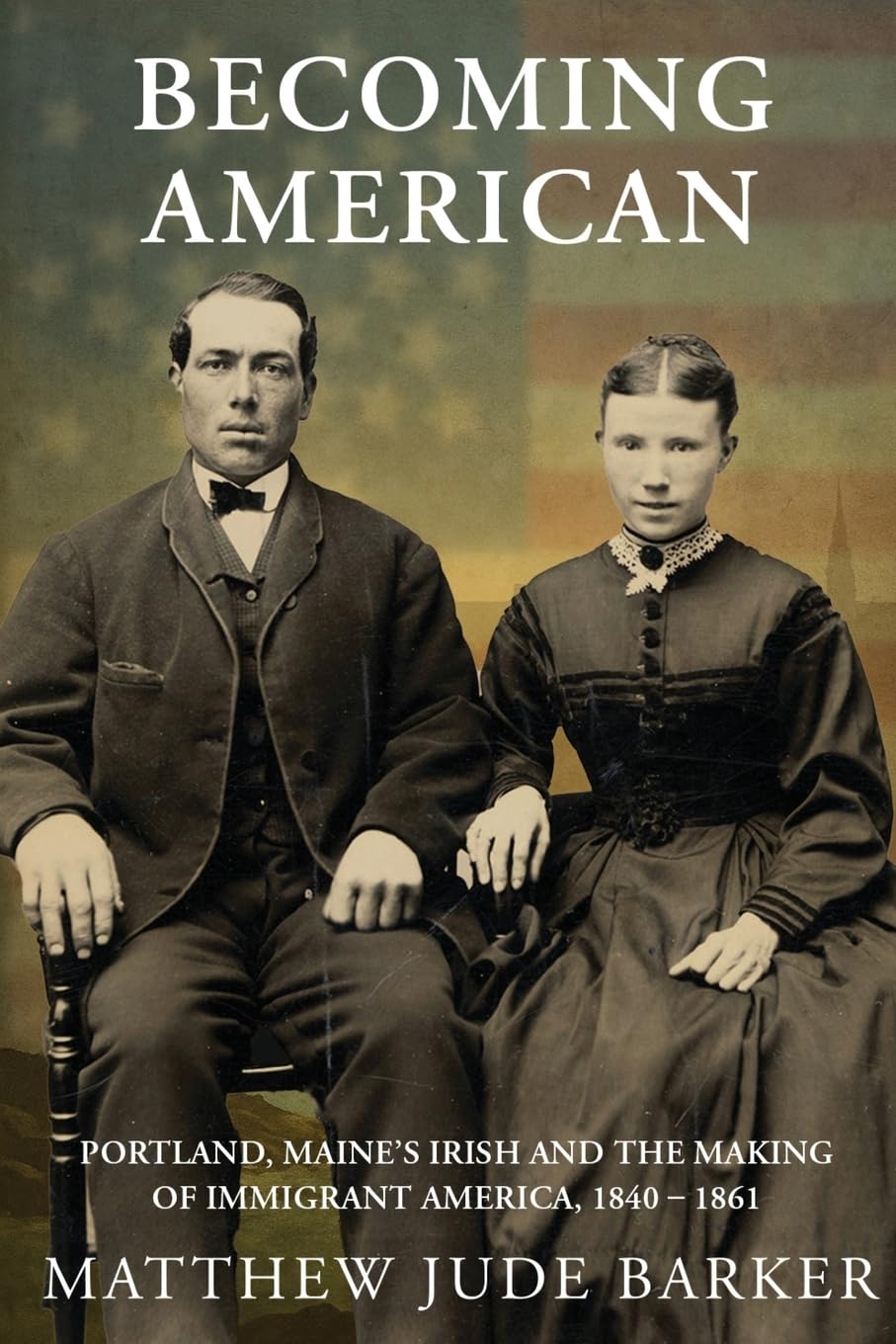
The year 2025 saw the publication of two books by an Irish Echo 40 Under 40 recipient for 2012.
The Civil War is of intrinsic interest to lovers of history, and so some will want to read about the experience of the most northerly state on the East Coast. “More than 70,000 Maine men and boys served, and almost 9,000 never returned,” the author says.

The volumes’ close to 1,500 pages are packed with stories and here below is one in outline, from the Civil War book, about an Irish Canadian that has particular resonance for the community in Portland.
Michael Charles Boyce joined the army initially in May 1855. At that moment, writes Barker, “The official enlistment papers described him as 21, a cooper, with gray eyes, dark hair and a fair complexion. He stood well over six feet.”
However, the army discharged him in May 1857 at Fort Snelling, Montana Territory, by “Civil Authority” — because it was discovered that, even a full two years into his service, he wasn’t yet 21.
He was born in New Brunswick in or about 1836 to Irish immigrant parents, who moved with their family to Portland in the late 1840s. Records show they resided in a tenement building with at least one another Irish family, the O’Kains, who’d originated from the same Canadian city, Saint John.
Boyce, no longer a minor presumably, reenlisted in the army in Boston in March 1858. It’s believed that in late 1861 he started courting fellow Canadian and resident of his childhood tenement building in Portland, Mary Ann O’Kain. Michael and Mary were married in St. Dominic’s Church on March 16, 1863.
Soon afterwards, he was redeployed back to the front with Company A, 10th U.S. Infantry. In a charge during the second day of the Battle of Gettysburg, July 2, 1st Lieutenant Boyce was shot in the left arm and left hip, and he died on July 28, at the 2nd Division, V Corps Hospital. Barker writes, “The cause was erysipelas, a nasty, painful and often fatal skin malady.”
Boyce’s body was shipped back by train to Portland and after funeral services at his home on Hanover Street, a requiem Mass took place at St. Dominic’s, officiated by Fr. Eugene Muller, who’d married the young couple months earlier. George M. Howe, the organist, and Chandler’s Band provided the somber music.
Barker says, “A detachment of the 17th U.S. Infantry, stationed at Fort Preble, escorted Michael’s body to the O’Kain lot at Calvary Cemetery, where they laid him to rest, ‘with military honors.’”
A letter from a “Brother Officer” published in the Portland Daily Press, on Aug. 11, the day after the funeral, paid tribute to a “Departed Irish Patriot.”
It said, “He passed through the battles of Yorktown, Williamsburg, the seven terrible days in which our army was driven from the Peninsula, the 2nd Bull Run, Antietam, Fredericksburg and Chancellorsville without a scratch.”
It continued, “Besides family and home friends, many, very many, officers mourn the loss of their gallant and much-loved comrade.”
Barker recounts what happened later to Mary who, after she died in Boston in 1921 at age 86, was buried next to Michael at Calvary.
The author would develop and broaden his historical research and investigative skills over the years, but his first love, genealogy, provided the foundation.
“My mother, Mary Gillan, always said to be proud of my Irish heritage, from the time I can remember. She has helped me out in all my endeavors,” said the South Portland native Barker. “I have ancestors from eight Irish counties, especially Galway, Clare, and Cork. I joined the Maine Historical Society at the age of 11. I turned 20 years old in Ireland on my first trip there to meet distant relatives and do genealogy.”
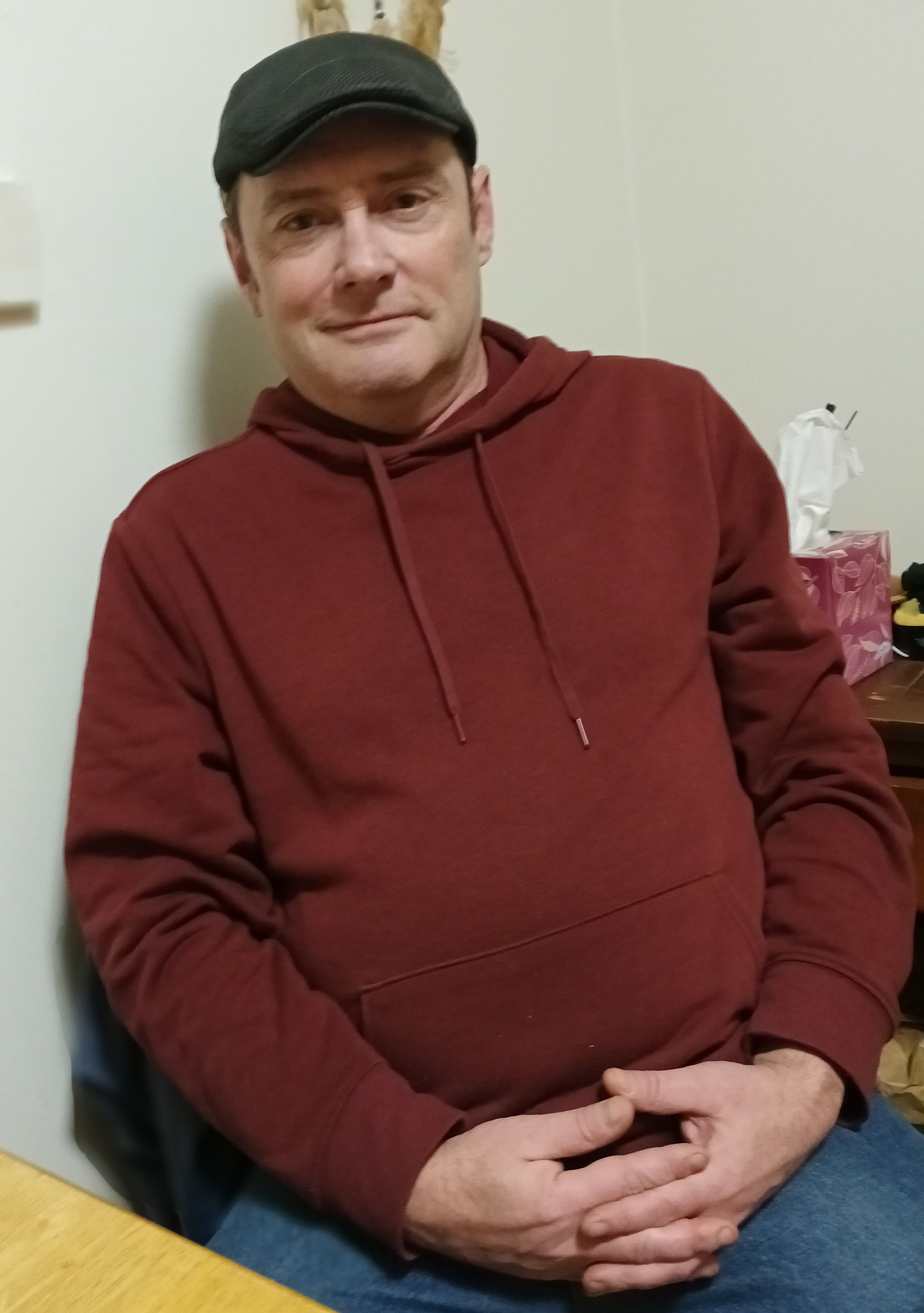
Matthew Jude Barker
Date of Birth: Oct. 5
Place of Birth: Portland
Residence: West End, Portland
Published Works: Author of “The Irish of Portland, Maine, A History of Forest City Hibernians” (2014), contributor to “They Change Their Sky, The Irish In Maine” (2004), “John Ford In Focus” (2008), “Becoming American” (2025) and “The Blue and The Green” (2025). I have also written Maine history articles for periodicals since 1995.
What is your writing routine? Are there ideal conditions?
In the last two years, I have developed an early morning writing habit, from about four to nine a.m. It is peaceful and quiet.
What advice do you have for aspiring writers?
Write every day, even if it’s only a paragraph, and even if you do not feel like it, especially if you do not want to.
Name three books that are memorable in terms of your reading pleasure.
So many to choose from! But I can mention “The Boston Irish, A Political History,” by Thomas O’Connor; “This Republic of Suffering,” by Drew Gilpin Faust; and “When The Irish Invaded Canada,” by Christopher Klein.
What book are you currently reading?
Several, including “The Great Museum of the Sea,” by James P. Delgado, and, again, “The Witching Hour,” by Anne (O’Brien) Rice.
If you could meet one author, living or dead, who would it be?
Too many to mention, but maybe St. Matthew, or one of the other Evangelists (gospel writers).
What book changed your life?
Too many to mention.
What is your favorite spot in Ireland?
One would be the Castlehacket (Belclare) area of County Galway, where I still have relatives. My Newell and Greaney ancestors left there in the 1880s-90s. Also Fenloe, near Newmarket-on-Fergus, in County Clare, near where my great-grandmother Alice Carrigg Gillan was born.
You’re Irish if…
You can find humor in everything, or try to! Also, forgive but never forget!