I am visiting the beautiful central American country of Guatemala, where one of the most controversial figures in Latin American history is honored by a red ale. Chela Guevara, whose cans proudly displays an image of Argentinian revolutionary Che Guevara, is made here by Cervecería 14, a brewery just outside the world heritage city of Antigua, Guatemala.
Though Guevara is known around the world, not so many know of his Irish roots. Che, whose full name was Ernesto Guevara de la Serna, was a descendant of Patrick Lynch, a Galway man who left Ireland in the 18th century. Lynch first fled to Bilbao in the Basque region of Spain, and then to Rio de la Plata, which would later become Argentina. Lynch became a prominent figure in the Spanish government. After traveling to Buenos Aires in 1749 to work as a captain in the Military, he married a wealthy heiress and became a rich landowner. His descendants played prominent roles in South American history, setting up a shipping company, fighting in the Argentine army and Chilean navy, painting and founding a movement for rural libraries in Argentina. Che’s ancestor Benito Lynch wrote more than 100 short stories that blended the real world with a magical realm, in true Latin American style.

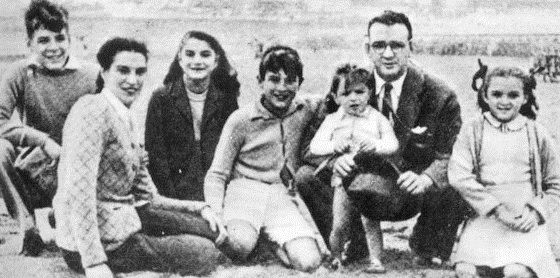
Che was born was born to Ernesto Guevara Lynch and Celia de la Serna y Llosa, on 14 May 1928, in Rosario, Argentina, the eldest of five children in an upper-middle-class family. He studied medicine and, in his 20, toured South America by motorcycle. He wrote his later celebrated “Motorcycle Diaries” about his travels, which was published posthumously in 1995 and made into a film in 2004.
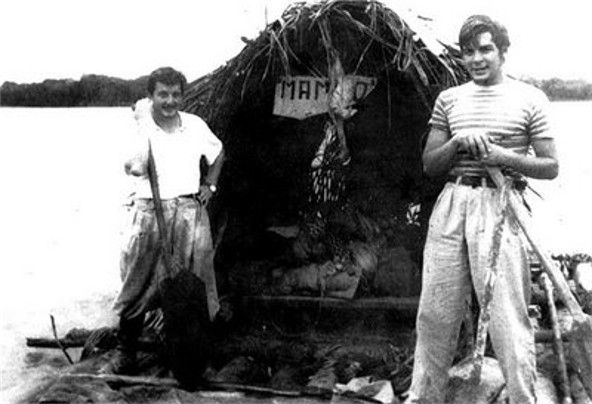
Che Guevara with his friend Alberto Granado in June 1952 on a vessel given them by lepers the two young doctors had treated.
His trip across Latin America exposed him to the grinding poverty and massive inequality of 20th century Latin America. He spent only eight months in Guatemala in 1953- 54, but his experiences in transformed him into the world-famous revolutionary. In Guatemala, Guevara discovered a small Central American republic of 3 million mostly indigenous Mayan inhabitants where 70% of the land was owned by 2% of the population, mostly “blancos” of European descent. Horrified by its poverty and massive inequality, Guevara understood that Guatemala needed massive reform.
In 1951, Jacobo Arbenz, a progressive military officer, had won one of Guatemala’s few genuinely democratic elections. His policy of land reform challenged the rule of the local oligarchy and the all-powerful U.S. -based multinational United Fruit Company, which owned vast swaths of Guatemalan land. Arbenz push for progressive change, however, was gathering considerable sympathy throughout Latin America, as well as deep hostility from the United States,
While Che was here, a mood of crisis pervaded the country as U.S. destabilization efforts began to bear bitter fruit. On June 18, a band of oligarchic mercenaries armed and directed by the CIA entered the country. Led by Col. Castillo Armas, they were supported by American warplanes, which strafed and bombed civilian areas, sowing panic and terror. By the end of the month, Arbenz was overthrown and replaced by the dictatorship of Col. Armas.
The overthrow of Arbenz radicalized Che, who suffered the collective trauma that Guatemalan progressives felt, as a democratically elected regime was shattered by US military intervention and an entire nation suffered a wave of right-wing reaction. Che threw in his lot with Fidel Castro’s July 26 Movement and traveled to the island nation where he would help lead the revolution. When Castro took power, Guevara was put in charge of the La Cabaña Fortress prison, where many opponents of the revolution were held. According to some sources, Guevara ordered the extra-judicial executions of between 156 and 550 people during his tenure as warden of the prison. He was a senior government minister from 1961 to 1965.
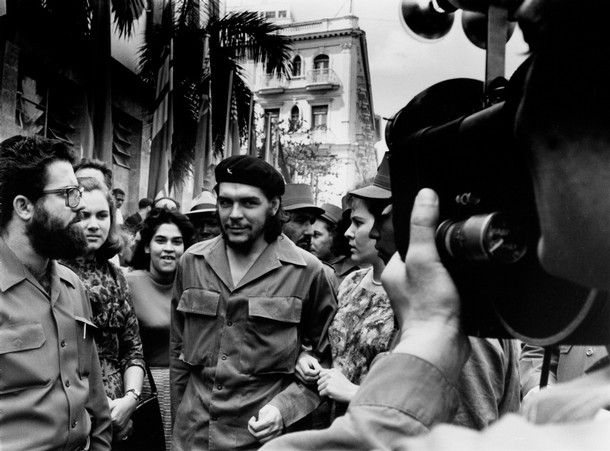
Che Guevara walking in the streets of Havana with his wife in 1960.
Che then disappeared from view. It turned out he was aiming to export the Cuban revolution to Bolivia, where he eventually captured and executed by U.S.-backed Bolivian forces on Oct. 9, 1967. He was shot by a soldier after being wounded and captured the previous day, with his hands later cut off for identification. His remains eventually found and reburied in Cuba. His father famously claimed after his death, “In my son's veins flowed the blood of the Irish rebels.”
Guevara visited Ireland twice. Guevara was flying back to Havana from Moscow in 1961, when his jet experienced mechanical problems and landed at Shannon airport. Che was eager to visit the country and a taxi driver suggested he and his two companions visit Kilkee. Che stopped into Kilkee’s Marine Hotel, where 16-year-old Jim Fitpatrick was working. Fitzpatrick, recognizing the Cuban revolutionary, was astonished to see him in a rural Irish town and greeted the Argentinian. Che shocked Fitzpatrick when he mentioned the Irish War of Independence and IRA guerrillas like Dan Breen (by then a long-time Fianna Fail member of the Dail) and Tom Barry. He even referenced the famous and very brutal Kilmichael Ambush by Barry.
Fitzpatrick also recalled Che claiming “I’m Irish anyway,” explaining that his grandmother was of Irish descent and ‘taught him everything about Ireland.” His second visit came in 1964 while he was en route from New York to Algeria; fog diverted his flight to Dublin. He was interviewed by RTE and spoke with reporter Sean Egan, discussing Cuba's political situation.
In 1968, Fitzpatrick used Albert Kordo’s famous photo of Che as the base for a poster that became the iconic image of the Argentinian revolutionary. For years, Fitzpatrick never enforced his copyright, but when a cigarette company began using the image he changed his mind, and today the proceeds from the copyright fund a children’s hospital in Cuba. I
In 2017, the Republic of Ireland issued a Che Guevara postage stamp using Fitzpatrick’s iconic image. The stamp created a firestorm of protest. Cuban American journalist Ninoska Perez of Miami 710 Radio called for the stamp to be banned. She claimed Guevara was a mass murderer and should not be commemorated in Ireland.
"I really don't know what it is that people find that there is to celebrate about the figure of Che Guevara. I would love to see that stamp abolished. What does Ireland think they are doing by putting Che Guevara on a stamp? This is objectionable," Perez stated.
Though Che is a controversial figure, tourists in Antigua quaff the red ale with his picture on the can without qualms and in the interest of journalistic investigation I myself downed a few of the delicious red ales. Locals here in Antigua seem to have no problem drinking Che’s red ale.