Love it or loathe it, fruitcake is one of Christmastime’s most iconic foods. I make no apologies for being one who loves it, and over the years I’ve amassed quite a collection of recipes from sources near and far. While we might credit our Irish mother or grandmother with carrying on the holiday fruitcake-making tradition, we can look even further into history to uncover its possible origin (see FRUITCAKE HISTORY below).
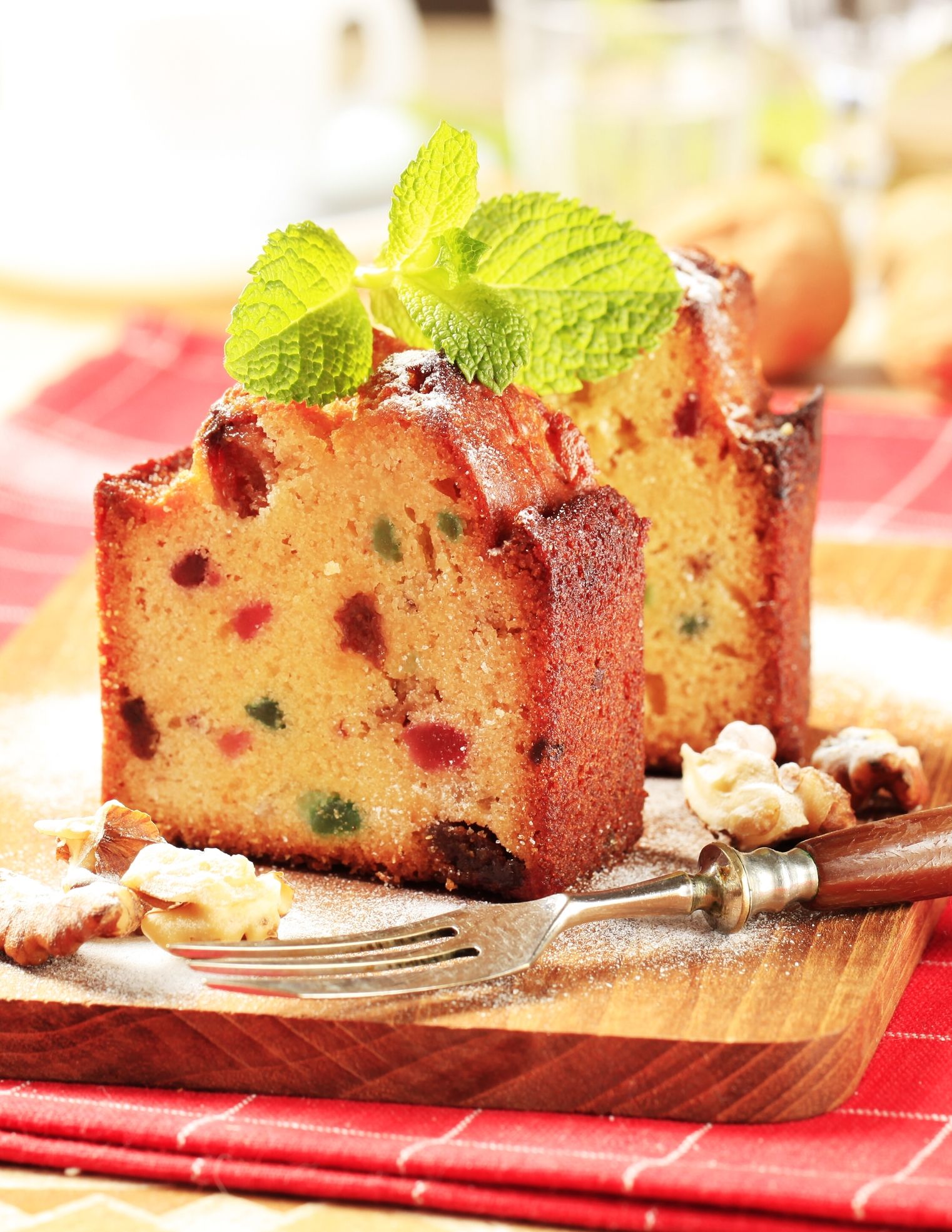
Dyed red and green glacé cherries, candied/preserved pineapples, lemons, and oranges sweeten and moisten fruitcakes, lend festive color, and “feeding” the cakes with rum, brandy, or whiskey helps to preserve them (the alcohol kills bacteria and prevents mold). Aged fruitcakes can last for 6 to 12 months in the refrigerator. Fruitcake-deniers often associate their distaste with the dark varieties that include molasses, brown sugar, and dark fruits like currants and dates, so I would advise rethinking that position with one of these lighter, fruity cakes that are a delicious addition to the holiday table. They’re meant to be eaten without aging and are made with granulated sugar, golden and yellow fruits, and candied fruit and peel. For both dark and light recipes, have a look at my Festive Flavors of Ireland cookbook that contains both. Signed copies are available at irishcook.com.

Mother’s White Fruitcake
Makes 1 Loaf
This non-traditional “white” fruitcake was a favorite in my family, especially for those who preferred a lighter, more-cake-than-fruit holiday sweet with no spices and no alcohol. I like to bake it in a *Ceramic Tea Loaf pan (12 x 4 x 2 1/2 inches), which is the same capacity as a 9 x 5-inch loaf pan but creates smaller slices. The bread is also perfect for baking in smaller, gift-giving sized pans (baking times need to be adjusted).
2 cups flour
1 cup sugar
1 1/2 teaspoons baking powder
1 teaspoon salt
1/2 teaspoon baking soda
3/4 cup orange juice
1 tablespoon freshly grated orange zest
1 ounce melted butter
1 large egg, beaten
1 cup mixed dried fruit (golden raisins, apricots, cranberries, cherries)
1/2 cup fruit and peel mix
1/2 cup pecans, roughly chopped
1. Preheat the oven to 350ºF. Coat a Ceramic Tea Loaf pan with no-stick baking spray.
2. In a medium bowl, whisk the together the flour, sugar, baking powder, salt, and baking soda. Stir in the orange juice, orange zest, butter, and egg. Mix until blended. Stir in the dried fruit, fruit and peel, and nuts. Transfer to the prepared pan; smooth the top.
3. Bake the bread for 55 to 60 minutes, or until a skewer inserted into the center comes out clean. Cool on a rack for 15 minutes. Remove from pan; let cool completely. Wrap in aluminum foil; store overnight.
*You can order this pan from kingarthurbaking.com ($22.95)
TEA TIME FRUITCAKE
Makes 1 loaf
One of Ireland's finest hotels, Dromoland Castle in County Clare is among the few castles that can trace its ownership back through history to Irish families of royal heritage. This signature fruit cake, served at Mrs. White’s Afternoon Tea, would be a delicious addition to your own teatime or to a holiday table. Be sure to start the preparation at least two days before you want to serve it to let the fruits soak and the flavors meld.
1 cup water
1 cup raisins
1 cup golden raisins
2 ounces candied red cherries
1 1/2 tablespoons dark rum
1 1/2 tablespoons sherry
1 teaspoon vanilla extract
4 ounces unsalted butter, at room temperature
1/2 cup sugar
2 large eggs
1cup self-rising flour
1 teaspoon pumpkin pie spice or Mixed Spice (
Softened butter, for serving
1. In a medium saucepan, bring water to a boil. Stir in raisins, golden raisins, and cherries; cook for 2 to 3 minutes. Drain the fruit; transfer to a small bowl. Stir in the rum, sherry, and vanilla. Cover; let stand at room temperature overnight.
2. Preheat the oven to 300°F. Coat a 9-inch loaf pan with no-stick baking spray.
3. In a large bowl, beat the butter and sugar with an electric mixer on medium speed until light and fluffy. Beat in the eggs, one at a time, beating well after each addition. With a wooden spoon, fold in the flour and pumpkin pie or Mixed Spice. Stir in to the fruit mixture. Transfer to the prepared pan
4. Bake the loaf for 60 to 75 minutes, or until a skewer inserted into the center comes out clean. Let cool completely on a wire rack. Remove loaf from pan; wrap in foil. Leave overnight before cutting into slices. Serve spread with butter, if desired.
MINCEMEAT CAKE WITH LEMON CURD CREAM
Serves 10 to 12for the mincemeat lovers in your family and can be served “as is” or with a dollop of lemon curd cream. It’s perfect for a post-Christmas buffet, for teatime, or for whenever you feel the need for just one more bite!
For the cake
12 ounces butter, at room temperature
1 cup sugar
3 large eggs
1 teaspoon vanilla extract
3 1/2 cups flour
3 1/2 teaspoons baking powder
1 teaspoon baking soda
3/4 teaspoon salt
3/4 cup milk
2 cups homemade or prepared mincemeat
1. Preheat the oven to 350º F. Coat a 10-inch Bundt pan with no-stick baking spray.
2. In the bowl of a stand mixer fitted with a paddle attachment (or with a hand mixer), beat butter and sugar on medium speed until light and fluffy. Beat in eggs, one at a time, beating well after each addition; add vanilla.
3. In a large bowl, whisk together the lour, baking powder, baking soda and salt. Beat in flour mixture in three additions, alternating with milk. Fold in the mincemeat. Transfer to the prepared pan.
4. Bake the cake for 45 to 50 minutes, or until a skewer inserted into the center comes out clean. Let cool on a wire rack for 25 minutes. Invert cake onto rack. Let cool completely.
For the lemon curd cream
2 cups heavy (whipping) cream
5 tablespoons lemon curd
Grated zest of 1 lemon
6 tablespoons confectioners’ sugar
1. In the bowl of a stand mixer fitted with a whisk (or with a hand mixer), whip the cream, lemon curd and zest on medium-high speed until soft peaks form; gradually add confectioners’ sugar. Continue to beat until stiff peaks form. Serve immediately or cover and refrigerate for up to 4 hours. Cut the cat into slices; serve with whipped cream.
Fruitcake’s History
Ancient Egyptians left fruit-and-nut cakes in graves, the theory being that they would provide sustenance in the afterlife. Romans mixed raisins, pine nuts, pomegranate seeds, and honeyed wine into barley cakes to feed soldiers. The cakes had a long shelf life and were incredibly portable, making them a perfect food for extended military campaigns. Starting in the 1400s, prized dried and preserved fruits and nuts were traded westward from the Middle East to Europe where they were baked into cakes. Due to the exotic and expensive cost of these ingredients, fruit and nut baked goods were reserved for special occasions, particularly Christmas, and plum or “figgy” pudding (a steamed fruitcake) was popular during Shakespeare’s time.
It was the practice of English nobles during the Dickens era to feed carolers with a slice of figgy pudding, which probably accounts for how fruitcake came to be so intertwined with Christmas in both England and Ireland. Victorians loved to have fruitcakes with their tea (don’t we all?), and Queen Victoria’s wedding fruitcake cemented its popularity, with other royals and commoners alike serving it at their weddings. In eighteenth-century Europe, fruitcake was eaten around the winter solstice to mark the annual nut harvest, again making the cakes popular at Christmastime. The tradition was brought to America by the colonists in the years before the Revolution, and giving a fruitcake in a decorated tin eventually became a firmly established holiday gift.
Margaret Johnson’s “Recipes” page now includes “Ireland Hopping: Adventures in Food, Drink, and Travel.” For further details on her work, including how to order her cookbooks, visit irishcook.com