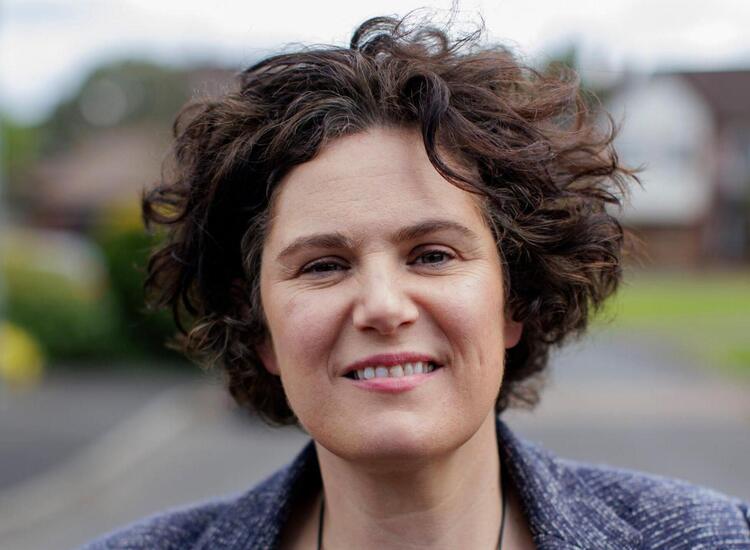
Liz Oyer has a great job title on her resume: the pardon attorney.
She was appointed to that position in 2022 and her U.S. Justice Department bio reveals that she has an interesting mix of both private and public sector experience, and also that she was a high-achiever academically.
However, that bio has been archived on the Justice Department’s website since spring 2025, when she was fired by the new administration for refusing to go along with the restoration of gun rights to Hollywood star Mel Gibson.
Now, the nation has another highly-qualified civil servant out of a job, but one at least who is free to comment on a particularly controversial aspect of the Trump approach to politics.
Oyer did just that this past weekend in an essay in the New York Times, which we’ll get to. Earlier this month, she was quoted briefly in a Washington Post article entitled, “Trump pardons major drug traffickers despite his anti-drug rhetoric.”
Its opening two paragraphs were: “On President Donald Trump’s first full day in office this year, he pardoned Silk Road founder Ross Ulbricht, who was convicted of creating the largest online black market for illegal drugs and other illicit goods of its time.
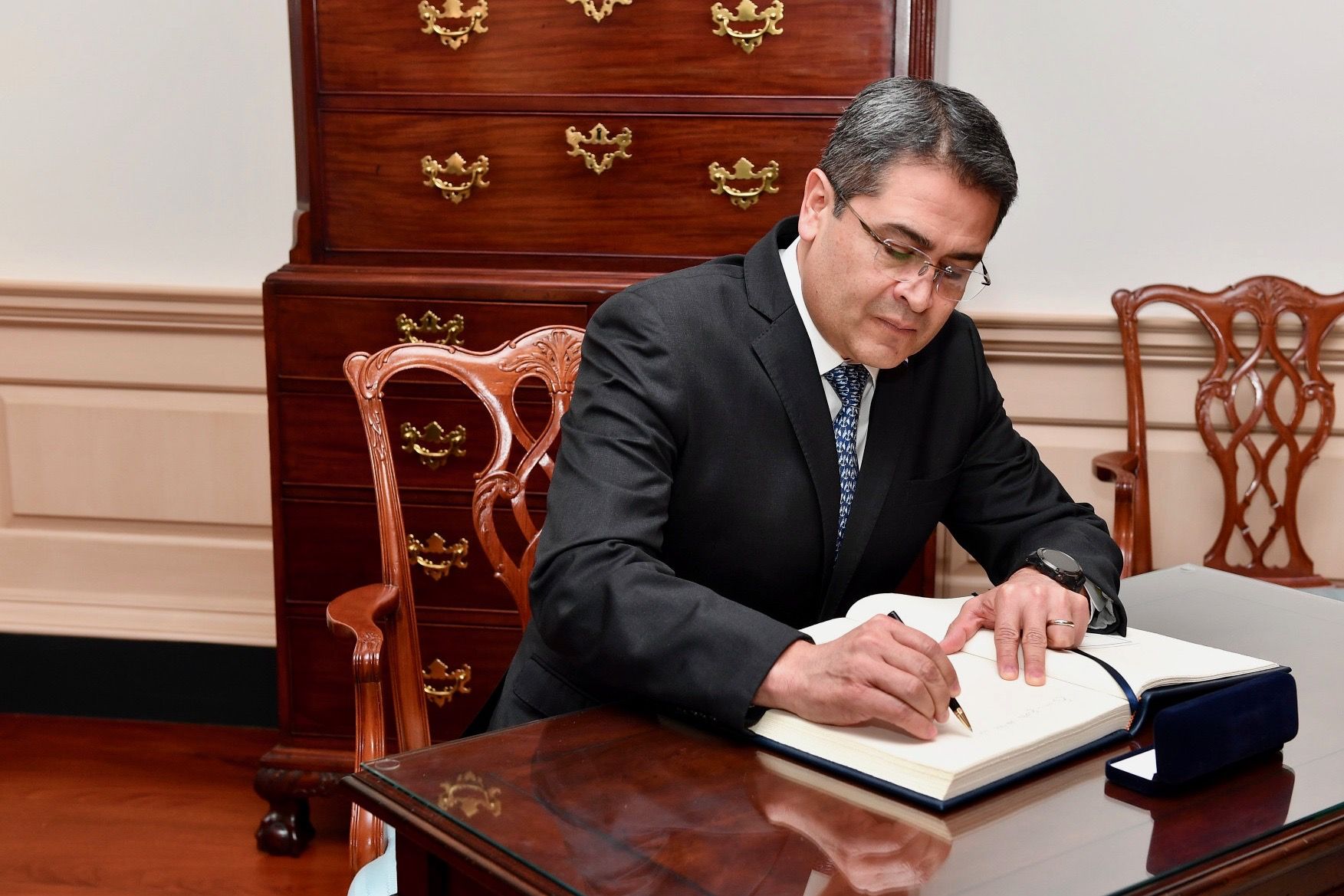
“In the months since, he has granted clemency to others, including Chicago gang leader Larry Hoover and Baltimore drug kingpin Garnett Gilbert Smith. And last week, he pardoned former Honduran president Juan Orlando Hernández, who had been sentenced to 45 years in prison for running his country as a vast ‘narco-state’ that helped to move at least 400 tons of cocaine into the United States.”

Writers Meryl Kornfield and Emily Davies said that according to Oyer, presidents “have long used their clemency powers to shorten the sentences of nonviolent drug offenders who have served substantial time and shown signs of rehabilitation.”
Said Oyer, in a direct quote, “The pardoning of drug kingpins is virtually unheard of.”
Until now, that is.
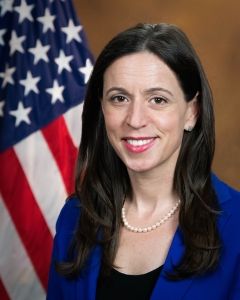
Lawyer Liz Oyer worked with the U.S. Justice Department from 2022 until earlier this year.Liz Oyer.
In her New York Times piece of Dec. 26, Oyer wrote, “President Trump took pardon abuse to a new level this year with a string of dubious clemencies that together present a unique case study in how this unfettered executive power can be used to degrade, corrupt and politicize the justice system.
“The president pardoned one of his supporters, Michele Fiore, a Nevada politician who was convicted of federal charges that she used money from a police memorial fund for personal expenses, including for plastic surgery. He pardoned another supporter, Scott Jenkins, a former sheriff in Virginia who took bribes in exchange for badges. He pardoned Todd and Julie Chrisley, reality TV personalities imprisoned for tax evasion and defrauding banks, whose daughter campaigned for Mr. Trump. He commuted the sentence of Imaad Zuberi, a major donor convicted of a host of crimes including illegal lobbying.”
“Mr. Trump has flipped the table on the deliberative approach favored by his predecessors. The damage won’t be easily undone.”
“Mr. Trump pardoned Tim Leiweke, a developer accused of bid rigging, after playing a round of golf with one of Mr. Leiweke’s lawyers.”
Oyer then cited the case of Hernández, the ex-Honduran head of state, who’d written Trump a letter saying he was of the victim of “political persecution” (by the American justice system).
She continued, “And he pardoned Paul Walczak, a former nursing home executive who had pleaded guilty to tax crimes, after Mr. Walczak’s mother attended a Mar-a-Lago dinner.
“After pardoning Changpeng Zhao, the billionaire founder of the cryptocurrency exchange Binance who had been convicted of money laundering violations, Mr. Trump told an interviewer, ‘I don’t know who he is.’
“Ignoring a careful, merit-based review of clemency applicants is a dangerous proposition,” Oyer wrote, “We have already seen alarming cases of recidivism among the Jan. 6 defendants pardoned on Mr. Trump’s first day in office. Some have been charged with or convicted of offenses involving sexual exploitation of children, threats against public officials, and even a plot to kill federal employees. Several clemency recipients from Mr. Trump’s first term in office — when vetting was similarly casual — have also returned to prison. They include at least two recidivist fraudsters, as well as a drug trafficker subsequently accused of violent assaults.”
Oyer, turning to the political process, added: “But instead of forcefully confronting the corrosive effects of Mr. Trump’s reckless pardoning, congressional Republicans have chosen to focus on investigating the pardons issued by his predecessor.
“Mr. Biden’s late-term pardons leave an unfortunate legacy. [She said she and her staff were not involved with them.] But no cleareyed American could conclude that they justify the current administration’s abuse of this power. Both quantitatively and qualitatively, what Mr. Trump is doing with pardons is far more damaging to the American ideal of delivering justice evenhandedly.”
“A former DEA agent called Hernández’s release ‘devastating,’” the Washington Post reported.
“It means any attempt to work your investigations to the highest levels is meaningless,” he said.
Trump’s allies claimed Hernández’s conviction was a “Biden set-up.”
“In fact,” the Washington Post reports, “it was federal prosecutors during Trump’s first administration who initially accused Hernández of trafficking drugs and weapons in their successful indictments of former Honduran National Police chief Juan Carlos ‘El Tigre’ Bonilla and congressman Juan Antonio ‘Tony’ Hernández, the president’s brother.”
In the words of Assistant U.S. Attorney Jacob Gutwillig, Hernández “paved a cocaine superhighway to the United States.”
Mike Vigil, the former Drug Enforcement Administration chief of international operations, told the Washington Post, “It just shows that the entire counter-drug effort of Donald Trump is a charade — it’s based on lies, it’s based on hypocrisy.”
This all has happened against the backdrop of Trump taking an active interest in the recent Honduran presidential election and his administration’s policy of strikes against boats suspected of involvement in drug trafficking, attacks which have claimed 100 lives of those on board. The assumption is that many of them were locally recruited fishermen who signed on to make some extra cash.
The “second strike” of Sept. 2, which resulted in two survivors clinging to wreckage being killed, has attracted most attention, including in Congress.
New York Times reporters around the country asked six Republican voters about the policy for a Dec. 6 article online (in print on Dec. 8), and found that four were supportive of it overall, including the second strike. One woman, the paper said, felt it was better that they were killed rather than having the taxpayer support the cost of their imprisonment, but was “torn about the strikes because she worried that Venezuelan fishermen or other innocent people could be accidentally killed.”
A fifth backed the policy, but as a veteran he strongly objected to the killing of the two survivors, while the sixth voter raised objections to the efficacy of such strikes in making any impact on America’s drug-abuse problem (most experts would seem to agree), but additionally voiced his strong moral objections to the U.S.’s actions.
The interviewee most unambiguously in favor of the policy, Brian D. Kozlowski, a lawyer from Orlando, Fla., 41, was described as a “strong” Trump supporter. The paper said, “he expected the military to have solid intelligence to justify the strikes” – which raises the question of what might be his attitude to the evidence in the Hernandez trial, being from some of the same sources but used in that context with more transparency and deliberation.
Erwin McKone, 55, of Flint, Mich., who voted reluctantly for Trump in 2024, according to the Times, “mainly because of border security, said he found it indefensible that Mr. Trump had decided to pardon the former president of Honduras.” (He was the only one of the six Republican interviewees to refer to the Hernández case.)
The sole opponent of the attacks as policy was quoted saying, “From what I understand, this is absolutely a war crime.”
“Mr. McKone also said he was outraged that some administration officials involved in the boat strikes profess to be Christian while violating, in his view, basic tenets of the faith.”
“We cannot claim to be Christian,” he told the Times, “and not have a sanctity of life philosophy.”
In one of the Washington Post’s articles on the issue, Georgetown University’s David Cole kept the argument strictly legal. “We are not at war with drug traffickers. The ‘war on drugs’ is a metaphor, not a legal term of art that authorizes killing the enemy,” he told its writers. “The human beings on these boats were civilians, and even if there were an actual war going on, the laws of war prohibit targeting civilians unless they are directly engaged in hostilities.”
The law professor Cole said, “In the absence of any conceivable military justification for these acts, it is difficult to view them as anything but premeditated murder, pure and simple.”