If you’ve not yet read it, I’d recommend you check out Ray O’Hanlon’s recent and lovely Echo piece about “The Family McMullen,” the just-released sequel to the 1995 hit “The Brothers McMullen.” In it, O’Hanlon covered a lot of bases but kindly left one open for me: did you know that the multi-instrumentalist and bandleader of trad supergroup Solas Seamus Egan composed music for both films?
It’s true. While Edward Burns was writing the film, a chain of serendipitous events put Egan’s 1990 album “A Week in January” in his hands, and he quickly realized he wanted to use Egan’s music for his film’s soundtrack. It was an extraordinary break and one that became even bigger after the film won the Sundance Film Festival’s Grand Jury Prize. As the movie was being readied for national release, Sarah McLachlan came on board, and she and Egan reworked his instrumental “Weep Not for the Memories” into “I Will Remember You,” which McLachlan recorded to great critical acclaim – an ear worm if there ever one there was!
Congrats Seamus and everyone else involved with “The Family McMullen” – hope it’s another hit! Get out there, folks, and see it!
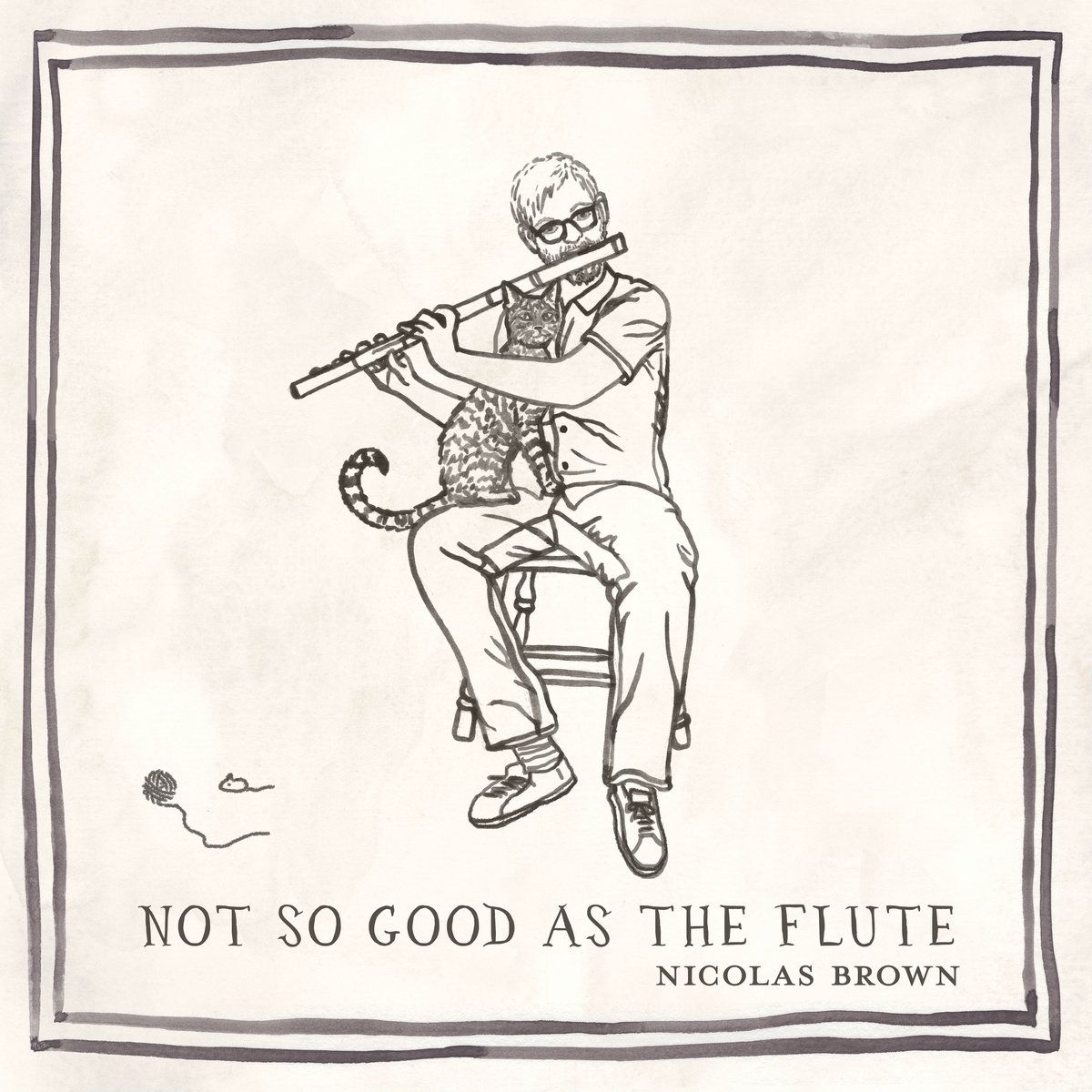
In other traditional music news: I have Nicolas Brown’s latest “Not So Good As The Flute” in the media yoke this week! Brown is perhaps best known as a talented uilleann piper originally from Ontario and now living in St. Louis, but with this album, the follow up to his 2020 piping release “Good Enough Music For Them Who Love It: A Selection of Historic Tunes played on the Irish or Union pipes,” he’s given us 15 tracks of unaccompanied flute playing, a bold move that’s paid off very nicely. The yield is an album of very tasty playing and superb tune selection that should attract enthusiastic approval from traditional music connoisseurs.

Brown is a strong player gifted with rich tone and a keen sense of phrasing, as can be heard throughout this album. It’s perhaps nowhere as evident as on the opening set of slip jigs, which is not only a strong start to things, but also tells the album’s story in miniature. In his liner notes, Brown explains how a philosophy championed by whistle player and piper Chris Langan has guided him over the years. “[Langan] placed an emphasis on making your own setting of tunes,” Brown writes, “and not treating tunes from old collections as sacrosanct.”
Brown applies this philosophy to the first tune on this track in an especially striking way: he’s constructed a distinctive four-part setting built from elements drawn from variants found in eight different historical collections. His take on the tune is interesting and attractive, the embodiment of an evolved musical vision.
He applies it elsewhere, too. For example, “Irish Lostrum Ponia,” a hornpipe Brown found in a 1727 publication as he was researching his first album, is presented here as a seven part slip jig. It’s a fascinating take. “Come in From the Rain / What Ails You?” is another. Francis O’Neill included the two tunes here among the double jigs in his book “Music of Ireland,” but Brown thought they worked better as slides, which is how he’s presented them here, and to great effect.
In fact, each of the album’s tracks possesses some interesting facet that draws the ear. There are some excellent runs on “The Humours Of Drinagh /…” and “The Bottle of Porter / …” that stand out to me. Brown’s reasoned approach to tune writing is put on display with “The Volunteer / The Tiger,” a pair of super compositions about his cat. His affinity for and taste in hop jigs is another point of interest. His track “Master, I Go Hunting / …” comprises three recently composed hop jigs, one by Armand Aromin (https://thevoxhunters.com/), one by Patrick Hutchinson, and the last by Aaron Olwell (https://www.olwellflutes.com/), each of which is lovely and of course well-executed.
I also find “Streams of Bunclody,” a great slow air from O’Neill’s, to be another stand out track here. Played on a John Gallagher flute in the key of F, Brown delivers a very poignant rendering that gets to the core of the air’s spirit. Marvelous stuff!
“Not So Good As The Flute” is a charming and intimate expression of Brown’s music. And while his playing is excellent, what I might like best about this album is his great good taste. The tunes here are very well chosen and the way he’s assembled them tell little stories – he’s done a fine job to make these tunes his own. As with Brown’s first album, I’m again reminded of the great uilleann piper Jerry O’Sullivan, not so much for the “O’Farrell”-style material (although there is a bit of that vibe here), but because like O’Sullivan’s 2018 flute album “An Fheadóg Mhór Chill Lasrach,” this album is also a superb collection of unusual tunes played beautifully by a noted piper stretching out on the flute. If you dig great, pure drop flute playing, give this album a spin, you might find yourself delighted! To learn more and to purchase, visit here.