The world has arrived at one of those moments.
It's not just to do with wars going on but rather to do with what goes on next in the matter of, well, human survival.
Once again we are facing an energy crisis rooted in oil, or potentially the lack of it.
Twenty percent of the world's oil passes through the Strait of Hormuz but its absence from the global market would appear to be one hundred percent disastrous.
Not all that many years ago countries were contemplating oil running out - which it hasn't - or reducing dependency on oil, which hasn't exactly taken broad hold.
If it had, the Strait of Hormuz would be a sun holiday destination by now and little else.
So here we are.
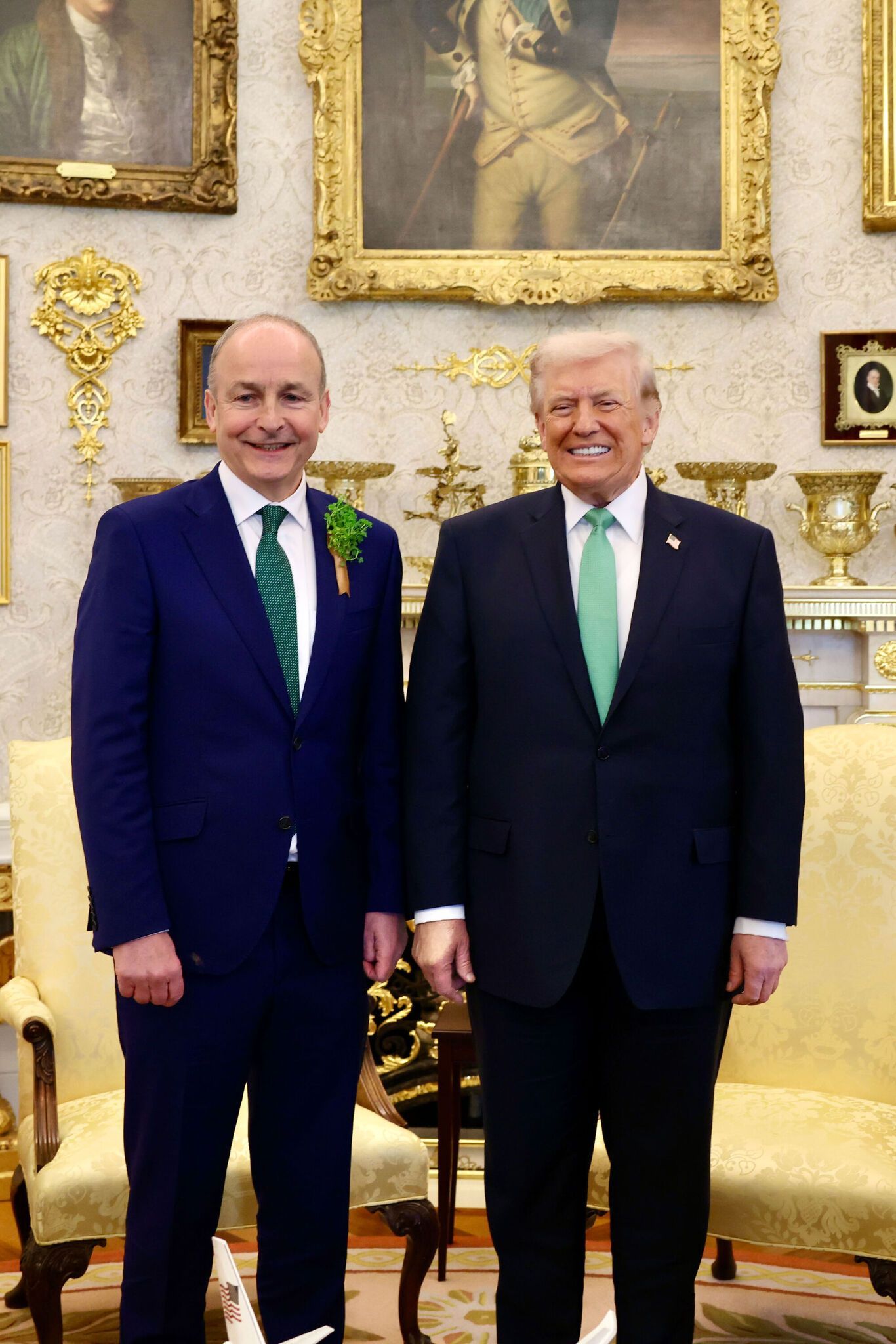
A few days ago Taoiseach Micheál Martin said that looking ahead, Ireland needed to be less reliant on fossil fuels.
“If you go back over the last five, six, seven decades, there’s always been, almost every decade now, a crisis in terms of fossil fuels, energy issues, the most recent being the Russian invasion of Ukraine and the energy crisis that arose from that," said Martin
“And so fossil fuels are volatile. And so to create security and stability for ourselves and economic security, we need to really double down on renewables. And we need people to facilitate us in terms of onshore wind, in terms of solar and in terms of the offshore wind agenda.”

Across the Atlantic, in the capital of the Free World, the view is very different.
President Trump believes climate change to be a Chinese hoax, wind power by way of windmills can be a cause of cancer, and the only way forward is the so-called "drill baby drill" option.
Here in part is Trump's Executive Order on energy published back in July, 2025.
Section 1. Purpose. For too long, the Federal Government has forced American taxpayers to subsidize expensive and unreliable energy sources like wind and solar.
The proliferation of these projects displaces affordable, reliable, dispatchable domestic energy sources, compromises our electric grid, and denigrates the beauty of our Nation’s natural landscape.
Moreover, reliance on so-called “green” subsidies threatens national security by making the United States dependent on supply chains controlled by foreign adversaries.
Ending the massive cost of taxpayer handouts to unreliable energy sources is vital to energy dominance, national security, economic growth, and the fiscal health of the Nation.
Sec. 2. Policy. It is the policy of the United States to:
(a) rapidly eliminate the market distortions and costs imposed on taxpayers by so-called “green” energy subsidies;
(b) build upon and strengthen the repeal of, and modifications to, wind, solar, and other “green” energy tax credits in the One Big Beautiful Bill Act; and
(c) end taxpayer support for unaffordable and unreliable “green” energy sources and supply chains built in, and controlled by, foreign adversaries.
Sec. 3. Tax Credits and One Big Beautiful Bill Act Implementation by the Department of the Treasury.
(a) Within 45 days following enactment of the One Big Beautiful Bill Act, the Secretary of the Treasury shall take all action as the Secretary of the Treasury deems necessary and appropriate to strictly enforce the termination of the clean electricity production and investment tax credits under sections 45Y and 48E of the Internal Revenue Code for wind and solar facilities.
Sec. 4. One Big Beautiful Bill Act Implementation by the Department of the Interior.
(a) Within 45 days following enactment of the One Big Beautiful Bill Act, the Secretary of the Interior shall conduct a review of regulations, guidance, policies, and practices under the Department of the Interior’s jurisdiction to determine whether any provide preferential treatment to wind and solar facilities in comparison to dispatchable energy sources.
The Secretary of the Interior shall then revise any identified regulations, guidance, policies, and practices as appropriate and consistent with applicable law to eliminate any such preferences for wind and solar facilities.
One of these guys, Martin or Trump, is on the money; one is not.
It might be a hundred years before we know which leader was on the right track. But by then it might be too late.
Or perhaps not.