Immigration is not an easy or casual word to bring up in conversation these times.
The immigrant, the refugee, the migrant, is being increasingly viewed as a negative and not a positive.
This is very much the case in the United States, and is even more the case following the appalling shooting of two National Guard members in Washington by an Afghan national.
We grieve for Guard member Sarah Beckstrom, who lost her life.
She served her country and her home state of West Virginia with honor. We hope for the recovery of her wounded comrade, Andrew Wolfe.
Against this sad backdrop it is important to note that the U.S. is not the only country where immigration faces ever more restrictions.
A number of European countries are also moving to close their doors to outsiders.
And you can count Ireland among them.
Ireland has evidently benefited from what is termed inward migration this century thus far.
But now there is a growing sense that you can have too much of a good thing.
And despite the fact that the birth rate is falling in the Republic, the population has been rising as a result of arrivals from far away places.
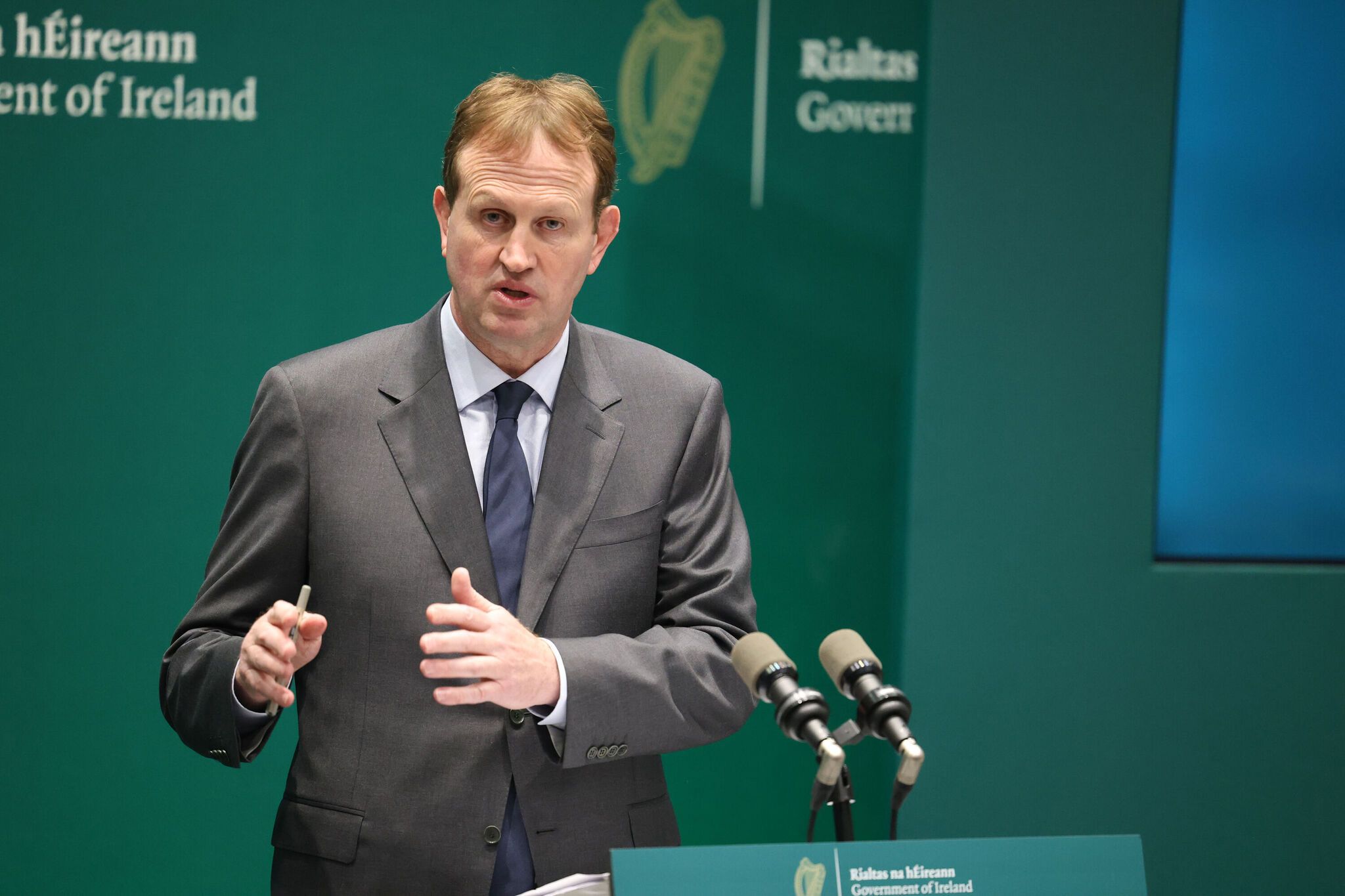
The Irish rate of inward migration is seven times the EU average and is putting pressure on services and the State's capacity, this according to Minister for Justice Jim O'Callaghan.

So all this arriving of others is not entirely a positive as far as the government is concerned. It's a compliment that so many people from other lands see a better future for themselves in Ireland.
Ah, but so many.
Minister O’Callaghan has said Ireland’s rate of population growth is too high and the government’s new restrictions on family reunification and citizenship grants are intended to reduce it.
According to reports, the minister said that population growth was a good thing and the government wanted to see it continue.
But he said Ireland’s rate, which was 1.6 per cent last year, was seven times the EU average and was putting pressure on services and State capacity.
According to the Irish Times the Department of Justice is preparing a national migration strategy that will set out the government’s position on population growth.
The government, according to the report, would seek to reduce the number of people arriving through family reunification procedures.
O'Callaghan said about 23,000 people came to Ireland last year through family reunification procedures, stressing that included the families of people who were in Ireland with work visas, as well as those who were granted asylum.
New rules would require a “clear financial capacity to provide for their family members if they are to be granted permission to come to Ireland”, this according to a statement from the minister's department.
Mr O’Callaghan said that the number of people who come to Ireland seeking asylum was “too high." He said that more than 80 percent of people who sought asylum were refused, and that on appeal between 60 and 70 percent were refused.
“So when you look at the statistics overall, the overwhelming majority of people who apply for asylum and international protection are not granted,” he said.
“And I think that’s a legitimate reason for me then to say that the numbers are too high because too many people are using it as a means to come in when in fact they should be applying for work visas.”
O'Callaghan said his department’s analysis found that about 87 percent of people who applied for asylum – or international protection – here were coming from the UK over the Border from Northern Ireland.
He said there were no plans to send asylum seekers back over the Border as the UK authorities were unlikely to agree, though they could be refused admission to the State.
The government was also looking at restricting the number of student visas, O'Callaghan said.
Added the Times report: "The route to citizenship for successful international protection applications will be tightened, with the requirement for them to reside in the State for three years lengthened to five.
He said that people seeking citizenship would no longer be permitted to be in receipt of social welfare payments." O'Callaghan said the intention was not to bar anyone who has ever received a welfare payment from citizenship, but to ensure that a person seeking citizenship has contributed to the country.
“Citizenship by naturalisation is not a right, it is a privilege conferred by the government on behalf of the people,” the minister said.
Mr. O’Callaghan said that immigration was “always a difficult topic” to talk about.
“But it is an absolutely important topic that needs to be responded to and addressed. I would be failing in my responsibility as a minister, and the government would be failing in its responsibility, if we didn’t take into account the extraordinary growth in the Irish population,” he said.
Immigration is for sure a fraught issue. That it would be such in Ireland, with its history of mass emigration, brings with it more than a hint of irony.
But irony is struggling everywhere these fraught times.